






Finding notaries in my area used to mean driving across town, scheduling appointments, and hoping the notary public would be available when you needed them. Today, you have two distinct options: traditional in-person notaries and online remote notarization services. Each approach has its strengths, and choosing the right one depends on your specific needs, timeline, and comfort level with technology.
The notary landscape has evolved dramatically over the past few years. While traditional notaries remain the go-to choice for many document signings, online notarization has emerged as a powerful alternative that offers convenience and accessibility. Understanding the differences between these two approaches will help you make the best choice for your situation.
Whether you’re a law firm managing multiple client signings, a real estate agent coordinating closings, or a title company processing documents, the type of notary service you choose can significantly impact your workflow and client satisfaction.
Understanding Your Notary Options
When searching for notaries in my area, you’ll encounter two primary categories of notary services. Traditional notaries operate through physical locations and require in-person meetings, while online notaries provide remote services through secure digital platforms.
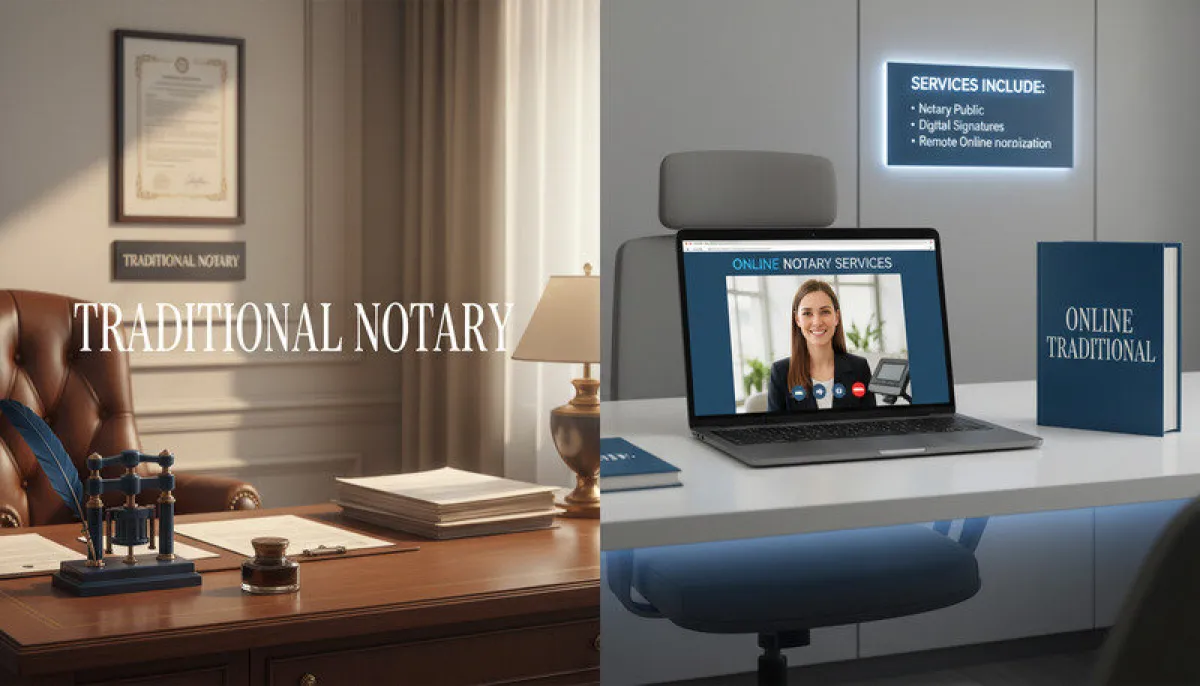
Traditional notary services include mobile notaries who travel to your location, notaries at banks and credit unions, UPS stores and shipping centers, law offices, and government buildings. These services have been the standard for decades and remain widely available across most communities.
Online notary services, also known as Remote Online Notarization (RON), allow you to complete the entire notarization process through a secure video connection. This technology-driven approach has gained legal recognition in most states and offers a completely different experience from traditional methods.
Why It Matters: The choice between online and traditional notaries isn’t just about convenience. It affects the speed of your transaction, the security measures involved, and even the legal validity of your documents in certain jurisdictions.
Geographic Availability Considerations
Traditional notary availability varies significantly by location. Urban areas typically offer numerous options, from dedicated notary offices to mobile services that come to your location. Rural areas may have limited choices, often requiring travel to the nearest town or city to find available notary services.
Online notary services eliminate geographic constraints entirely. As long as you have a stable internet connection and the necessary technology, you can access notary services regardless of your physical location. This accessibility proves particularly valuable for people in remote areas or those with mobility limitations.
The legal landscape for online notarization continues to evolve. Currently, over 40 states have enacted legislation authorizing remote online notarization, with more states considering similar measures. However, some documents still require traditional notarization in certain jurisdictions.
Comparing Notary Service Methods
Understanding the fundamental differences between traditional and online notary services helps you make an informed decision. Each method offers distinct advantages and potential limitations that may align differently with your specific needs.
Quick Comparison Overview
| Service Type | Availability | Average Cost | Time Required | Technology Needed |
|---|---|---|---|---|
| Traditional Mobile | Business hours, travel time | $75-150 per signing | 1-2 hours total | None |
| Traditional Office | Business hours only | $5-25 per signature | 30-60 minutes | None |
| Online RON | 24/7 availability | $25-50 per session | 10-20 minutes | Computer, internet, camera |
This comparison reveals the core trade-offs between convenience, cost, and accessibility. Traditional services often provide more personal interaction but require coordination of schedules and locations. Online services offer immediate availability but depend on technology and internet connectivity.
When to Choose Traditional Notary Services
Traditional notary services excel in situations requiring complex document review, multiple signers in the same location, or when dealing with elderly clients who prefer face-to-face interaction. Many people feel more comfortable with the familiar process of meeting a notary in person, especially for significant legal documents.
Legal requirements sometimes mandate traditional notarization. Certain states haven’t yet authorized online notarization for all document types, particularly real estate transactions or estate planning documents. Court filings and some government forms may also require traditional wet signatures and notarization.
When to Choose Online Notary Services
Online notarization shines when time is critical, when signers are in different geographic locations, or when scheduling conflicts make traditional appointments difficult. The 24/7 availability of many online platforms means you can complete urgent document signings outside normal business hours.
Technology-savvy users often prefer the streamlined digital process. Online notarization integrates seamlessly with digital document workflows, eliminating the need to print, sign, scan, and email documents. This efficiency particularly benefits businesses managing multiple transactions simultaneously.
Deep Dive: Traditional Notary Services
Traditional notary services encompass several different models, each with unique characteristics and optimal use cases. Understanding these variations helps you identify the best traditional option for your specific situation.
Mobile notary services represent the premium tier of traditional notarization. These professionals travel to your location, whether it’s your home, office, or another convenient meeting place. Mobile notaries typically charge higher fees to compensate for travel time and the personalized service they provide.
The mobile notary process begins with scheduling an appointment, usually requiring 24-48 hours advance notice. The notary arrives at your specified location with all necessary supplies, including stamps, journals, and identification verification tools. This service proves invaluable for real estate closings, estate planning signings, or business transactions requiring multiple document signatures.
Pro Tip: When hiring a mobile notary, confirm they carry errors and omissions insurance and are properly commissioned in your state. Ask about their experience with your specific document type to ensure a smooth signing process.
Storefront and Office-Based Notaries
Banks, credit unions, and shipping stores like UPS often provide notary services as a customer convenience. These locations offer the most affordable notarization options, sometimes providing free services to account holders or customers.
The trade-off for lower costs is reduced flexibility. You must visit during business hours and may encounter wait times, especially at busy locations. Some establishments limit notary services to specific document types or impose restrictions on the number of signatures they’ll notarize in a single visit.
Law offices and financial institutions also provide notary services, often as part of broader legal or financial services. These professionals typically have extensive experience with complex documents but may charge higher fees and require appointments well in advance.
Quality and Reliability Factors
Traditional notary services offer tangible benefits in terms of personal interaction and document handling. Experienced notaries can spot potential issues with documents, suggest corrections, and provide guidance on proper completion. This human element proves particularly valuable for complex legal documents or first-time signers.
The physical presence of a traditional notary also provides additional security measures. They can verify identification documents more thoroughly, observe signing behavior for signs of coercion, and maintain detailed records in their notary journal. These factors contribute to the legal strength and defensibility of traditionally notarized documents.
However, traditional services also introduce potential points of failure. Scheduling conflicts, travel delays, or notary unavailability can derail time-sensitive transactions. The reliance on physical documents creates opportunities for loss or damage during transport and handling.
Deep Dive: Online Notary Services
Online notary services leverage technology to provide secure, convenient document notarization through video conferencing platforms. This modern approach addresses many limitations of traditional services while introducing new considerations around technology requirements and digital security.
The online notarization process begins with document upload to a secure platform. Signers create accounts, verify their identities through multiple authentication methods, and schedule sessions with commissioned online notaries. The entire process occurs through encrypted video connections that record the signing session for legal compliance.

Identity verification for online notarization typically exceeds traditional standards. Most platforms use multi-factor authentication including credential analysis of government-issued IDs, knowledge-based authentication questions derived from public records, and biometric verification through facial recognition technology.
Technology Requirements and Setup
Successful online notarization requires reliable internet connectivity, a computer or tablet with camera and microphone capabilities, and a quiet, well-lit environment for the video session. Most platforms provide technical support to help users troubleshoot connection issues or equipment problems.
Document preparation for online notarization differs from traditional methods. Files must be uploaded in digital format, typically as PDFs, and may require specific formatting to ensure compatibility with the platform’s signing tools. Some services offer document conversion assistance for users with paper documents.
The learning curve for online notarization is generally minimal for users comfortable with video calling technology. Most platforms provide tutorials and practice sessions to familiarize users with the interface before their actual notarization appointment.
Expert Tip: Test your technology setup before your scheduled notarization session. Check your camera angle, lighting, and internet stability to avoid delays during the actual signing process.
Security and Legal Compliance
Online notary platforms implement multiple security layers to ensure document integrity and legal compliance. End-to-end encryption protects document transmission and storage, while blockchain technology in some platforms creates immutable records of the notarization process.
Session recordings provide additional legal protection by documenting the entire notarization process. These recordings typically include audio and video of the signer interaction, screen captures of document signing, and timestamp data for legal verification purposes.
Digital certificates and seals used in online notarization often provide stronger security than traditional paper-based methods. These cryptographic tools create tamper-evident documents that clearly show any unauthorized modifications after signing.
Benefits and Use Cases for Each Option
The choice between traditional and online notary services often depends on specific use cases and the unique benefits each approach provides. Understanding these advantages helps you align your notary selection with your particular needs and circumstances.
Traditional notary services excel in scenarios requiring personal attention and complex document handling. Real estate transactions involving multiple parties often benefit from the coordination and oversight that experienced mobile notaries provide. Estate planning documents, with their long-term legal implications, may warrant the additional security and personal interaction of traditional services.
Key Takeaway: Traditional services provide the highest level of personal attention and are often preferred for high-stakes legal documents where the cost of errors is significant.
Optimal Use Cases for Traditional Notaries
Business partnerships and corporate documents frequently require traditional notarization due to their complexity and the need for detailed explanation of terms. Traditional notaries can review documents for completeness, suggest corrections, and ensure all parties understand their obligations before signing.
Elderly clients or those with limited technology experience often prefer traditional notary services. The familiar face-to-face interaction provides comfort and confidence, particularly when dealing with important financial or legal documents. Traditional notaries can also accommodate clients with hearing or vision impairments more easily than video-based services.
International document authentication, such as apostille services, typically requires traditional notarization as a prerequisite. Many countries don’t yet recognize online notarization for international legal purposes, making traditional services necessary for global business transactions.
Optimal Use Cases for Online Notaries
Time-sensitive transactions benefit enormously from online notarization’s 24/7 availability. Loan documents with same-day funding requirements, urgent power of attorney authorizations, or last-minute contract signings can be completed immediately through online platforms.
Geographic distribution of signers makes online notarization particularly valuable. When parties are located in different cities, states, or countries, online services eliminate the need for travel or coordination of multiple notary appointments. This efficiency proves crucial for businesses operating across multiple locations.

Remote work environments have increased demand for online notarization services. Employees working from home or traveling can complete necessary document signings without disrupting their work schedules or requiring time off for notary appointments.
Cost-Effectiveness Analysis
Traditional notary costs vary widely based on service type and location. Mobile notaries typically charge premium rates to account for travel time and personalized service, while office-based notaries offer more affordable options with reduced convenience.
Online notary services often provide more predictable pricing structures with flat fees per session regardless of document complexity or number of signatures. This transparency helps businesses budget for notarization costs more accurately and can result in significant savings for high-volume users.
The total cost of notarization includes both direct fees and indirect costs such as travel time, scheduling delays, and productivity lost to coordination efforts. Online services typically reduce these indirect costs substantially, making them more cost-effective even when direct fees are comparable.
Common Mistakes and Misconceptions
Misunderstandings about notary services can lead to poor decisions, delays, and even legal complications. Addressing these misconceptions helps you make informed choices and avoid common pitfalls when selecting between traditional and online notarization options.
One persistent myth suggests that online notarization is less secure than traditional methods. In reality, online platforms often implement stronger security measures than traditional services, including multi-factor authentication, encrypted communications, and detailed audit trails. The technology used in online notarization frequently exceeds the security standards of paper-based processes.
Why It Matters: Security misconceptions can prevent you from choosing the most appropriate notary service for your needs. Understanding the actual security measures helps you make decisions based on facts rather than assumptions.
Technology-Related Misconceptions
Many people assume online notarization requires advanced technical skills or expensive equipment. Most platforms work with standard computers, tablets, or smartphones that people already own. The user interfaces are designed for simplicity, often requiring no more technical knowledge than making a video call.
Choosing the Right Service Provider
Research potential notary service providers thoroughly, whether traditional or online. Check credentials, read reviews, and verify licensing status through your state’s notary commission website. Look for providers with experience in your specific document type and industry requirements.
For traditional services, consider factors such as location convenience, availability, and additional services offered. Mobile notaries should carry appropriate insurance and demonstrate professional communication skills. Office-based notaries should provide clear information about fees, hours, and any service limitations.
Online notary platforms should demonstrate robust security measures, clear pricing structures, and responsive customer support. Look for platforms that comply with your state’s online notarization laws and offer the document types you need to process.
Preparation Strategies
Traditional notary appointments benefit from advance coordination and clear communication about requirements. Confirm the appointment time and location, discuss any special needs or circumstances, and prepare a clean, quiet space for the signing if using mobile services.
Online notarization preparation focuses on technology readiness and document formatting. Test your internet connection, camera, and microphone before your scheduled session. Ensure your workspace has adequate lighting and minimal background distractions for professional video interaction.
Document organization proves crucial for both service types. Arrange papers in signing order, mark locations requiring signatures or initials, and prepare any additional documentation that may be needed for identity verification or legal compliance.

Quality Assurance Measures
Verify the accuracy of all notarized documents before concluding your session. Check that signatures are properly placed, notary seals are clearly applied, and all required information is complete. Address any concerns immediately while the notary is available to make corrections.
Maintain copies of all notarized documents for your records. Traditional notarization may require scanning or photocopying, while online services typically provide digital copies automatically. Store these documents securely and consider backup storage options for important papers.
Follow up on any post-notarization requirements such as document filing, distribution to other parties, or additional authentication procedures. Some documents require immediate action after notarization to maintain their legal effectiveness.
Expert Tip: Keep detailed records of your notarization sessions, including dates, notary information, and document details. This documentation proves valuable for future reference and legal compliance purposes.
Common Questions About Notary Services
What identification documents are required for notarization?
Both traditional and online notary services require government-issued photo identification such as driver’s licenses, passports, or state ID cards. The identification must be current and clearly readable, with photos that match the signer’s appearance.
Online notary services may have additional identification requirements including secondary forms of ID or knowledge-based authentication questions. These enhanced verification measures compensate for the remote nature of online services and often exceed traditional identification standards.
Some document types or jurisdictions may require specific forms of identification. Real estate transactions, for example, might require additional proof of identity or authority to sign on behalf of entities. Consult with your notary service provider about any special identification requirements for your specific situation.
International signers may face additional identification challenges, particularly with online services. Some platforms accept foreign passports and identification documents, while others may require additional verification steps or documentation to confirm identity and legal capacity to sign.
How much do different notary services typically cost?
Traditional notary fees vary significantly based on location and service type. Office-based notaries at banks or shipping stores often charge $5-15 per signature, while mobile notaries typically charge $75-150 per appointment to account for travel time and personalized service.
Online notary services usually charge flat fees per session, ranging from $25-50 regardless of the number of signatures or document complexity. This pricing structure provides predictability and can offer significant savings for documents requiring multiple notarizations.
Additional costs may apply for special services such as same-day appointments, travel to remote locations, or complex document preparation assistance. Some online platforms offer subscription models for frequent users, providing reduced per-session costs for high-volume customers.
Geographic location significantly impacts pricing, with urban areas typically commanding higher fees than rural locations. However, online services often maintain consistent pricing regardless of the user’s location, providing cost advantages for people in high-cost markets.
Which states allow online notarization?
Over 40 states currently authorize remote online notarization, with the number continuing to grow as legislation evolves. States with comprehensive RON laws include Texas, Virginia, Florida, and many others that have embraced digital transformation in legal services.
Some states allow online notarization for specific document types or under certain circumstances, while others provide broad authorization for most notarial acts. The legal landscape continues to evolve, with additional states considering RON legislation regularly.
Interstate recognition of online notarization follows similar principles to traditional notarization, with documents properly notarized in one state generally accepted in others. However, some specific document types or legal proceedings may require verification of the notarization method’s acceptance in the destination jurisdiction.
Federal legislation has been proposed to standardize online notarization across all states, which would eliminate current variations in state laws and provide uniform recognition. Until such federal action occurs, it’s important to verify the legal status of online notarization for your specific needs and location.
How long does each type of notarization take?
Traditional notary appointments typically require 30-60 minutes for document review, identity verification, and signing completion. Mobile notary services may take longer due to travel time and setup requirements, potentially extending the total time to 1-2 hours.
Online notarization sessions usually complete in 10-20 minutes once the session begins. However, initial setup including account creation, document upload, and identity verification may add additional time for first-time users. Subsequent sessions with the same platform typically process much faster.
Complex documents or multiple signers can extend the time required for both traditional and online services. Real estate closings, estate planning documents, or corporate agreements may require additional time for document review and explanation regardless of the notarization method chosen.
Scheduling availability also affects total time investment. Traditional services may require waiting days or weeks for appointments, while online services often provide same-day or immediate availability. Factor in both session time and scheduling delays when planning your notarization timeline.
What happens if there are problems during the notarization process?
Traditional notary services can address problems immediately through direct communication and document review. Notaries can suggest corrections, explain requirements, and guide signers through proper completion procedures. This real-time problem-solving capability represents a significant advantage of in-person services.
Online notary platforms typically provide technical support and customer service to address connectivity issues, document problems, or process questions. Most platforms offer phone, chat, or email support during business hours, with some providing 24/7 assistance for urgent issues.
Document errors discovered during notarization can usually be corrected on the spot with traditional services, while online platforms may require session rescheduling if significant changes are needed. Minor corrections like initial additions or date updates can often be handled within the same online session.
Legal compliance issues require careful handling regardless of service type. Both traditional and online notaries are trained to identify potential problems such as incomplete documents, questionable signer capacity, or missing required elements. Professional notaries will refuse to proceed with problematic notarizations to protect all parties involved.
Key Takeaways
The choice between traditional and online notary services depends on your specific needs, timeline, and comfort level with technology. Traditional services excel when personal interaction is important, while online services provide unmatched convenience and accessibility. Both options offer secure, legally valid notarization when properly executed by licensed professionals. Get started with BlueNotary to experience the convenience and security of professional online notarization services. Ready to get started? Visit BlueNotary to learn more.