When you sell a car, that handshake agreement is just the start. The real legal heavy lifting comes with the title transfer, and getting that document notarized is a non-negotiable step in the process. Think of it as the official, legally binding stamp of approval that verifies everyone’s identity and confirms the signature is legitimate and voluntary.
This one act protects both you and the other party from a world of potential headaches down the road.
Why Notarizing a Car Title Is a Crucial Step

When you get a car title notarized, you’re creating an official, legally recognized record of a major transaction. It’s a powerful safeguard for everyone. The notary public serves as a neutral third-party witness whose job is to verify identities and make sure no one is signing under duress.
This verification is what gives the whole process its legal teeth. It stops someone from trying to sell a car they don’t actually own or later claiming their signature was forged. For the person buying the car, that notarized title is their golden ticket—it’s the proof of ownership they need to register the vehicle and get insurance. For the seller, it draws a clear line in the sand, ending their legal responsibility for that vehicle.
The Role of the Notary Public
It’s important to remember what a notary does and doesn’t do. They won’t give you legal advice or weigh in on the terms of your sale. Their job is incredibly specific and centers entirely on the integrity of the signing itself.
- Identity Verification: The notary will meticulously check government-issued photo IDs to confirm the person signing the title is exactly who they claim to be.
- Willing Signatory: They’ll make sure the signer understands what they’re signing and is doing it willingly, without any pressure.
- Official Record-Keeping: The notary completes a formal notarial certificate and logs the transaction in their journal, creating a permanent, traceable record of the event.
A notarized document carries serious legal weight. It’s a major deterrent to fraud and becomes powerful evidence in court if a dispute over the car’s ownership ever crops up.
The sheer volume of title transfers makes this security layer vital. In 2023 alone, the National Motor Vehicle Title Information System (NMVTIS) managed data for 99% of U.S. motor vehicles, processing a staggering 267 million state transactions. With that many vehicles changing hands, you can see why a secure and efficient notarization process is so critical for preventing fraud.
Good document hygiene isn’t just for car titles; it’s a principle that applies across the board. For a broader look at secure document handling, you can find helpful tips in these contract management best practices.
Now, let’s break down the two main ways you can get this done: the traditional in-person route and the modern online approach.
In-Person vs. Remote Online Notarization (RON) At a Glance
Choosing how to get your title notarized often comes down to convenience, speed, and your comfort level with technology. Both in-person and remote online notarization are legally valid, but they offer very different experiences.
Here’s a quick comparison to help you decide which path is right for you.
| Feature | In-Person Notarization | Remote Online Notarization (RON) |
|---|---|---|
| Location | Requires physical presence at a specific location (bank, notary office) | Can be done from anywhere with an internet connection |
| Scheduling | Limited to business hours and notary availability | 24/7 availability, often on-demand |
| Identity Verification | Manual check of physical government-issued IDs | Multi-factor authentication, including KBA and credential analysis |
| Security | Relies on the notary’s physical journal and stamp | Secure, encrypted digital platform with a tamper-evident audit trail |
| Speed | Can take hours or days depending on scheduling and travel | Typically completed in 15 minutes or less |
| Record Keeping | Physical journal entry and paper documents | Digital recording of the session and secure electronic documents |
While the traditional method is familiar, it’s clear that RON offers a faster, more flexible, and often more secure alternative for the modern world.
Getting Your Paperwork in Order for a Smooth Notarization
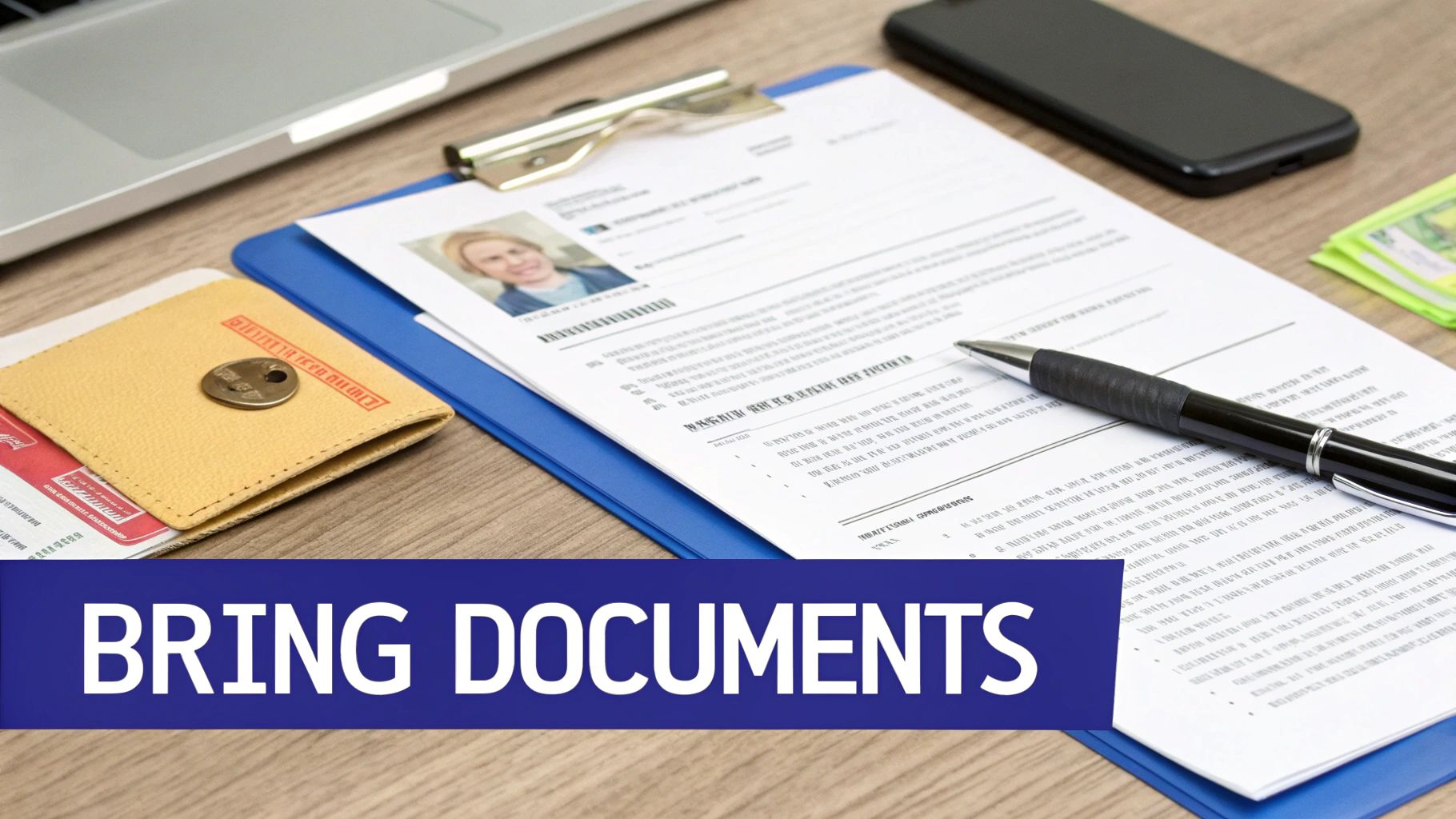
There’s nothing more frustrating than showing up for a notary appointment only to be turned away because of a missing document. A few minutes of prep work beforehand will save you a headache and a second trip. Think of it as a pre-flight check for your vehicle sale.
The main event, of course, is the original car title. Don’t bring a photocopy or a picture on your phone; it has to be the official, physical document from your state’s Department of Motor Vehicles (DMV).
And here’s the most important tip I can give you: Do not sign it ahead of time! I’ve seen this happen countless times. The entire point of the notarization is for the notary to witness your signature. If you sign it in the car on the way over, the document is void for notarization, and you’ll have to start over.
Your ID is Your Golden Ticket
Besides the title, you need to prove you are who you say you are. This means bringing a valid, government-issued photo ID. The key here is valid—as in, not expired.
An expired driver’s license is probably the number one reason people get turned away. Take a second to check the expiration date on your ID before you head out the door.
Here’s what typically works:
- State-Issued Driver’s License: This is the most common and easiest option.
- State-Issued Identification Card: The perfect alternative if you don’t drive.
- U.S. Passport or Passport Card: Federally issued and accepted everywhere.
- Military ID Card: Another solid, federally-issued ID.
Make sure the name on your ID is an exact match to the name printed on the car title. If you’ve recently married or changed your name and haven’t updated your driver’s license, you’re going to hit a wall. All your documents need to tell the same story.
Don’t Forget the Supporting Cast
Sometimes, the title and your ID aren’t quite enough. Depending on the situation, having a few other pieces of paper ready can prevent unexpected delays and make the whole process feel much more professional.
A formal bill of sale is always a good idea. While the notary might not need to see it, the DMV often requires it for the final title transfer. Having it signed and ready to go just makes the buyer’s life easier.
Pro Tip: If you just finished paying off your car loan, the lien release from your bank is non-negotiable. The title can’t be legally transferred until the lender officially signs off. This is usually a separate letter or a specific section on the title that the bank has already signed and stamped.
Finally, have your odometer disclosure statement handy. Federal law requires sellers to state the vehicle’s mileage when they transfer ownership. Most of the time, this is just a section on the title itself, but some states or specific sales might need a separate form. Bringing a completed (but unsigned) copy shows you’ve done your homework.
Getting these items together before your appointment turns a potentially tedious errand into a quick, successful transaction. It shows respect for your own time and the notary’s.
Handling In-Person Notarization Like a Pro
Even with all the new online options, sometimes the classic, in-person notarization just feels right for a car title transfer. There’s a certain peace of mind that comes with handling everything face-to-face. But to make sure it goes smoothly, you’ll need to do a little prep work.
First things first, you need to find a notary public. Thankfully, they’re usually not hard to track down and are often located in places you go to anyway.
- Banks and Credit Unions: A great first stop. Many banks offer notary services to their customers, sometimes for free or at a nice discount.
- Shipping and Mailbox Stores: Think places like The UPS Store or other local shipping centers. It’s a safe bet they have a notary on staff.
- DMV or Tag Agencies: This is a fantastic one-stop-shop option. Since you’re probably heading there eventually, see if they offer on-site notary services to get it all done at once.
Preparing for Your Appointment
Once you have a few options, a quick phone call can prevent a major headache. You’ll want to confirm the notary’s specific hours—they might not be the same as the store’s hours. I also always recommend asking about their fees upfront. They vary by state and even by business, so you’ll know exactly what to expect.
When you get there, the process is pretty formal, but that’s a good thing. The notary’s main job is to be an impartial witness. They’ll start by carefully checking your government-issued photo ID to make sure your name is an exact match for the name on the car title.
Crucial Tip: Do not, under any circumstances, sign the title beforehand. The entire point of the notarization is for the notary to watch you sign the document. If you show up with it already signed, they have to reject it, and you’ll have to start over.
After you’ve signed, the notary does their part. They’ll fill out the notarial certificate, add their own signature, and apply their official stamp or seal. That seal is what makes the whole thing legally binding. They’ll also log the details in their official journal, which creates a permanent record of the event.
Common Pitfalls of In-Person Notarization
I’ve seen simple mistakes turn a quick errand into a bureaucratic nightmare. Knowing what to watch out for is half the battle. If you want to get really granular on finding the right person for the job, our complete guide on finding a notary near you has even more tips.
One of the most common tripwires is not having everyone present. If the car title lists two owners joined by the word “and,” then both owners must be there to sign in front of the notary. No exceptions. If one person can’t make it, the notary can’t proceed.
Another classic mistake is trying to fix an error with white-out or by scratching it out. Any alteration like that can instantly void the entire title. That means a long, frustrating trip to the DMV to apply for a duplicate. It’s worth taking an extra minute to fill everything out slowly and carefully.
Finally, be absolutely sure you know which line you’re supposed to sign. Car titles are crowded documents with different spots for the seller, the buyer, and maybe a lienholder. Signing in the wrong box is an easy slip-up that’s incredibly difficult to fix. If you have any doubt, ask the notary to point out the exact field before you touch pen to paper. Getting these details right is the key to notarizing your car title correctly on the first try.
Using Remote Online Notarization for Car Titles
Let’s be honest, nobody enjoys trekking across town just to get a signature. Why bother when you can get your car title notarized right from your living room? Remote Online Notarization (RON) is completely changing the game for handling vehicle titles, bringing a level of convenience and security that old-school methods just can’t touch.
This isn’t some futuristic concept; it’s happening right now. Platforms like BlueNotary let you legally notarize a car title without leaving your house, turning what used to be a frustrating errand into a quick task you can knock out on your lunch break.
How Does RON Actually Work for a Title?
It’s a lot simpler than you might think. First, you upload a digital copy of your unsigned car title to a secure online platform. Then, you’ll jump on a live, two-way video call with a state-commissioned notary public—all from your computer or smartphone.
The notary is there to walk you through everything. The first thing they’ll do is verify your identity, and this is where RON really shines. It’s far more rigorous than just glancing at your driver’s license. The process typically involves a few layers of security:
- Credential Analysis: The system automatically scans your government-issued ID, checking for hidden security features and any signs of tampering.
- Knowledge-Based Authentication (KBA): You’ll be asked a few multiple-choice questions based on your public and credit history. Think old addresses or previous car loans—things only you would know.
- Biometric Verification: Some platforms even use facial recognition to match your live video feed directly to the photo on your ID.
Once you’re verified, you’ll electronically sign the document right on your screen as the notary watches. They then apply their own digital seal and signature to make it official. The entire video session is recorded and stored, creating a tamper-evident audit trail that adds a serious layer of security. If you’re curious about the tech behind it all, you can learn more about digital signatures and how they keep online transactions safe.
The Security and Convenience of Going Digital
It’s natural to wonder if an online process is as secure as meeting in person. In many ways, it’s actually more secure. That digital audit trail, combined with the multi-factor identity check, creates a rock-solid, verifiable record of the entire event.
This detail is a huge plus for everyone, from an individual selling their old sedan to a dealership processing hundreds of titles a month. For businesses, RON means a faster, fully auditable, and much more efficient workflow.
Think about the traditional in-person method. You have to find a notary, get all your documents ready, and then physically go to them for the signing.
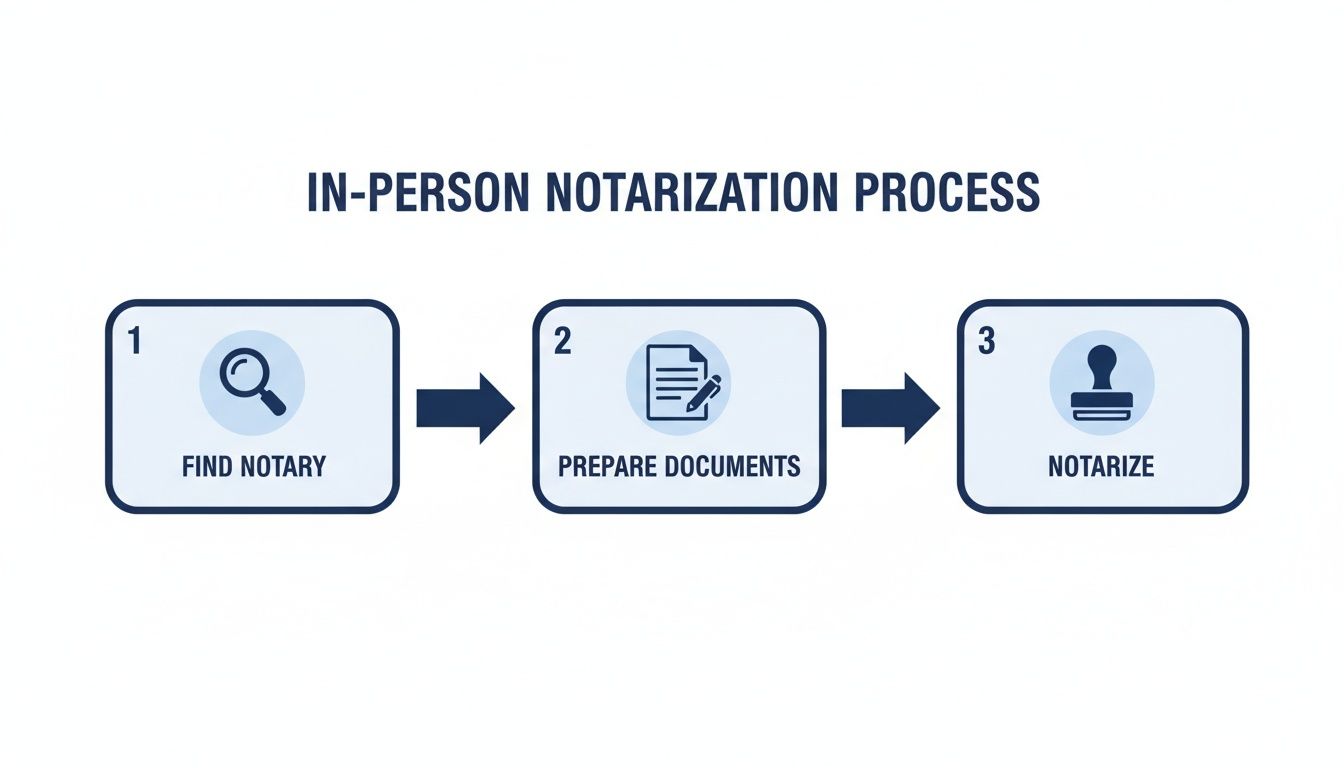
This graphic perfectly illustrates the old way of doing things—a linear process that RON condenses into one quick, digital session.
The demand for this kind of convenience is exploding. The mobile notary service market is expected to jump from USD 348.2 million in 2023 to a staggering USD 1,885.5 million by 2031. With 45 U.S. states now allowing it, RON is a huge part of that growth.
Is RON the Right Choice for Your Car Title?
Before you jump in, there’s one critical thing to check. You need to confirm that your local DMV will accept a remotely notarized car title. While RON is legally valid in most of the country, the agency receiving the document always has the final say.
Do yourself a favor and make a quick call to your DMV. Just ask them about their policy on accepting titles that were notarized using RON. It’s a simple step that can save you a major headache later.
Key Takeaway: Always check with your local DMV to confirm they accept remotely notarized titles before you start the process. This one call ensures your legally notarized document won’t get rejected.
If you’re comfortable with technology and value your time, RON is a fantastic option. It eliminates travel, works on your schedule, and often provides even better security than traditional methods. You can explore the features and see exactly how a remote online notary session works to decide if it’s the right fit for you.
Navigating State Rules and Avoiding Costly Mistakes
When you need to get a car title notarized, the biggest headache is that the rules can change the second you cross a state line. A standard procedure in one state might completely invalidate a title transfer in the next. This patchwork of regulations is exactly why you can’t just “wing it”—understanding your local laws is non-negotiable for a sale to be legal.
Some states are incredibly strict about this. For instance, if you’re selling a car in Arizona, Kentucky, or Pennsylvania, notarization is a mandatory part of the deal for most private sales. Show up to the DMV there without a proper notary seal, and your application will be dead on arrival.
Then you have states that are far more relaxed. In places like California, Florida, and Texas, you usually don’t need a notary for a private car sale. This huge difference is a common source of confusion, especially for people who’ve just moved or are buying a car from another state.
Who Signs Where?
Beyond a simple “yes” or “no,” you’ll run into other state-specific quirks. A question I hear all the time is which signature actually needs to be notarized. While a few states want both the buyer and seller to sign in front of a notary, it’s much more common for only the seller’s signature to require that official witness.
This makes a lot of sense when you think about it. The main point is to have a neutral third party confirm that the legal owner is willingly signing away their rights to the vehicle. Still, this is a detail you absolutely have to confirm with your local motor vehicle agency. Getting this simple rule wrong can mean a rejected title and a major hassle.
My Two Cents: Never, ever assume the process is the same everywhere. Your state’s DMV website is your single source of truth. A quick five-minute check there can save you hours of frustration down the road.
To make that easier, here’s a handy list of Secretary of State websites where you can find the official rules for your area. Going straight to the source is the best way to avoid the common pitfalls when you’re figuring out how to notarize a car title.
Costly Blunders and How to Sidestep Them
I’ve seen more title transfers get derailed by simple, preventable mistakes than I can count. We’re not talking about complex legal misinterpretations—these are small slip-ups with big consequences. Usually, they force you to apply for a duplicate title, which is a drain on both your time and your wallet.
Here are the most common ways people mess this up:
- Using White-Out or Correction Tape: This is the absolute cardinal sin of title documents. Any sign of correction fluid, tape, or even aggressive scribbling will almost certainly void the title. If you make a mistake, just stop. Contact the DMV for guidance.
- Signing in the Wrong Box: Car titles are notoriously cluttered with fields for the seller, buyer, and sometimes a lienholder. Take a deep breath and read every field before you put pen to paper. If you’re even slightly unsure, ask the notary to point you to the right signature line.
- Using an Out-of-State Notary (When It’s Not Allowed): While many states are fine with out-of-state notarizations, some are sticklers for local commissions. You have to confirm that the notary you use is authorized to perform a notarization for your state’s title. This is a critical detail, especially for traditional in-person notarizations.
Notarization Requirements in Key States
The differences between states can be stark. To give you a clearer picture, I’ve put together a quick comparison of how a few key states handle this.
| State | Notarization Typically Required for Private Sale? | Key Consideration |
|---|---|---|
| Kentucky | Yes | Both the seller’s and buyer’s signatures must be notarized. |
| Pennsylvania | Yes | Only the seller’s signature needs to be notarized. |
| Arizona | Yes | The seller’s signature must be notarized to release ownership. |
| California | No | Notarization is generally not required for private party sales. |
| Texas | No | A notarized title is not needed for a standard vehicle transfer. |
As you can see, there’s no one-size-fits-all answer. Staying on top of your state’s specific rules is the best defense against a complicated and delayed sale. Getting it right the first time ensures a smooth, stress-free transfer of ownership for you and the other party.
Common Questions About Notarizing a Car Title
Even when you think you have everything lined up perfectly for a title transfer, tricky situations can pop up. These are the kinds of real-world problems that don’t always make it into a standard DMV pamphlet, but getting them right is non-negotiable for a legal sale.
Let’s walk through some of the most common questions and sticky situations I see people run into. Think of this as your field guide for handling those unexpected moments with confidence.
What Happens If I Make a Mistake on the Title Before Notarization?
This is a classic “uh-oh” moment, and what you do next is critical. You’ve just misspelled a name or jotted down the wrong date on the title. Your instinct might be to grab the white-out or just scribble through it.
Don’t do it. Any attempt to “fix” the error—whether with correction fluid, a cross-out, or an eraser—will almost certainly void the title. To the DMV, any visible alteration is a massive red flag that calls the document’s authenticity into question.
Your only real move here is to stop immediately and call your state’s DMV. They’ll walk you through the (unfortunately) necessary process of applying for a duplicate title. Yes, it costs time and money, but it’s the only way to ensure the transfer is valid. It’s a painful lesson in the value of double-checking every single entry.
Can I Use a Remote Online Notary If My State Doesn’t Have a Permanent RON Law?
This is where things get interesting, thanks to a legal principle called “interstate recognition.” The short answer is often yes, but there’s a huge “but” you need to pay attention to.
Most states that have authorized Remote Online Notarization (RON) allow their notaries to perform notarizations for people located literally anywhere in the world. The one hard rule is that the notary themselves must be physically in their commissioning state during the online session.
However, the final say always comes down to the agency accepting the document.
Before you even book a RON session, you must call your local DMV and ask a simple question: “Do you accept a vehicle title that has been notarized online by an out-of-state notary?” A five-minute phone call can save you from having a perfectly legal notarization rejected because of a local policy.
Platforms like BlueNotary are built on these established legal frameworks, but that final check-in with the receiving agency is a step you absolutely cannot skip.
Does the Buyer Need to Be Present for the Seller’s Signature Notarization?
Generally, no. A notary’s job is to verify the identity of the person signing the document right then and there. When it comes to a car title, that’s almost always the seller—the person signing over ownership.
The seller can typically visit a notary on their own, sign the title, and have it notarized. The buyer can fill out their sections later without needing a notary. This really simplifies the logistics, as you’re not trying to sync up two different schedules for one short appointment.
That said, it never hurts to be sure. Some states have quirky rules, or a specific lender involved in the sale might require both parties to be present. When in doubt, a quick glance at your state’s DMV guidelines can prevent any last-minute snags.
What Is a Notary’s Role If There Is a Lien on the Title?
A lien doesn’t change the notary’s core job—they are still there to witness a signature and verify an identity. What it does change is the sequence of events you must follow before you even think about finding a notary.
You can’t legally sell the car or get the title notarized until the lienholder (the bank or credit union that financed the car) has been paid in full and officially releases their claim.
Once the loan is paid off, the lienholder will do one of two things:
- Sign the Lien Release Section: They’ll sign and stamp the designated spot directly on the title itself.
- Provide a Separate Lien Release Letter: They’ll issue an official, standalone document stating the loan is satisfied.
A notary might be needed to notarize the signature of the bank’s representative on that release document. Only after the lien is cleared can the seller move forward with the sale and get their own signature on the title notarized. The notary isn’t there to verify the lien status, but they will be looking to see that the title is ready for a clean transfer.
Navigating the finer points of title transfers can feel like a maze, but the right platform makes a world of difference. To see how you can handle notarizations securely and conveniently from anywhere, take a look at what BlueNotary offers for both individuals and businesses. Visit BlueNotary’s website to learn more.