


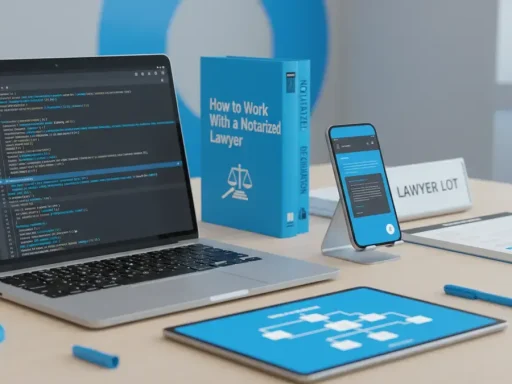

Working with a notarized lawyer is a lot easier than you might think. Forget the old complications of scheduling multiple appointments and juggling different professionals. You can handle it all digitally, usually in just a couple of minutes, using modern remote online notarization platforms like BlueNotary.
A notarized lawyer combines legal expertise with notarial authority, creating a streamlined experience for clients who need both legal guidance and document authentication. This dual role eliminates the back-and-forth between separate professionals, saving time and reducing complexity in legal transactions. Whether you're dealing with estate planning, real estate contracts, or business agreements, understanding how to work effectively with a notarized lawyer can transform your legal experience from frustrating to efficient.
What Is a Notarized Lawyer
A notarized lawyer is a licensed attorney who also holds a notary public commission, allowing them to provide both legal advice and notarization services. This combination creates a powerful one-stop solution for clients who need comprehensive legal assistance with document authentication.
The Dual Role Advantage
When you work with a notarized lawyer, you're getting two essential services from one qualified professional. They can draft your legal documents, provide counsel on complex legal matters, and then immediately notarize those same documents without requiring a separate appointment or additional fees.
This dual capability proves especially valuable in today's digital landscape. A notarized lawyer can conduct remote online notarization sessions while simultaneously providing legal guidance, making the entire process more efficient and cost-effective for clients.
Why It Matters: The combination of legal expertise and notarial authority creates a streamlined experience that saves both time and money while ensuring your documents meet all legal requirements.
Legal Authority and Credentials
Notarized lawyers must maintain both their law license and notary commission in good standing. This means they've completed law school, passed the bar exam, and also fulfilled their state's notary requirements, including background checks and oath-taking ceremonies.
The legal authority they wield extends beyond simple document witnessing. They can provide binding legal advice, draft complex agreements, and authenticate documents with the full weight of both their legal and notarial credentials.
When You Need a Notarized Lawyer
Several situations specifically call for a notarized lawyer's services. Estate planning represents one of the most common scenarios, where clients need wills, trusts, and powers of attorney both drafted and notarized. Real estate transactions also frequently require this dual expertise, particularly for deeds, mortgage documents, and property transfers.
Business formation and contract negotiations often benefit from having a notarized lawyer involved. They can structure agreements, negotiate terms, and immediately authenticate the final documents, eliminating delays that might occur when using separate professionals.
Comparison of Legal Professionals
| Professional Type | Legal Advice | Document Drafting | Notarization | Best For |
|---|---|---|---|---|
| Regular Attorney | Yes | Yes | No | Complex legal matters only |
| Notary Public | No | Limited | Yes | Simple document authentication |
| Notarized Lawyer | Yes | Yes | Yes | Comprehensive legal services |
How Working With a Notarized Lawyer Works
The process of working with a notarized lawyer combines traditional legal consultation with modern notarization technology. Understanding this workflow helps you prepare effectively and maximize the value of your professional relationship.
Initial Consultation and Assessment
Your relationship with a notarized lawyer typically begins with a comprehensive consultation where they assess your legal needs and determine the appropriate documentation required. During this phase, they're wearing their attorney hat, providing legal counsel and strategic advice.
The lawyer will review your situation, explain relevant laws, and recommend the best course of action. This might involve drafting new documents, reviewing existing agreements, or planning a comprehensive legal strategy that addresses your immediate and long-term needs.
Pro Tip: Come prepared with all relevant documents and a clear explanation of your goals. This allows the notarized lawyer to provide more accurate advice and develop a comprehensive plan.
Document Preparation and Review
Once the legal strategy is established, your notarized lawyer will draft or review the necessary documents. This process involves careful attention to legal language, state-specific requirements, and your particular circumstances.
The lawyer ensures that all documents comply with local laws and regulations while meeting your specific needs. They'll explain complex legal terms, walk you through each section, and make revisions based on your feedback and changing circumstances.
The Notarization Process
After document preparation comes the notarization phase. Here's where the dual role becomes particularly valuable. Your lawyer can immediately transition from legal advisor to notary public, authenticating the documents they've just prepared.
-
Identity Verification: The lawyer confirms your identity using government-issued identification and may employ additional verification methods for remote sessions.
-
Document Review: They ensure the document is complete, properly filled out, and ready for notarization.
-
Oath Administration: The lawyer administers any required oaths or affirmations, ensuring you understand the document's contents and are signing willingly.
-
Seal Application: They apply their official notary seal and signature, creating a legally binding notarized document.
Remote vs. In-Person Sessions
Modern notarized lawyers often offer both traditional in-person services and cutting-edge remote online notarization. Remote sessions use secure video conferencing technology, allowing you to complete the entire process from your home or office.
Remote sessions require a stable internet connection, a device with a camera and microphone, and valid identification. The lawyer guides you through the technology setup and ensures all legal and notarial requirements are met during the digital session.
In-person sessions follow traditional protocols but benefit from the lawyer's dual expertise. You can ask legal questions, make document revisions, and complete notarization all in one appointment.
Key Insight: Remote online notarization has revolutionized the legal industry, with adoption rates increasing by over 300% in recent years as professionals and clients discover its convenience and efficiency.
Key Components of the Notarized Lawyer Service
Understanding the essential elements of working with a notarized lawyer helps you make informed decisions and set appropriate expectations for your legal and notarial needs.
Legal Expertise and Specialization
The legal component of a notarized lawyer's service encompasses their full range of attorney capabilities. This includes legal research, document drafting, contract negotiation, and strategic legal advice tailored to your specific situation.
Many notarized lawyers specialize in particular practice areas such as estate planning, real estate law, or business formation. This specialization allows them to provide deeper expertise while maintaining their notarial capabilities for comprehensive service delivery.
- Estate Planning: Wills, trusts, powers of attorney, and healthcare directives
- Real Estate: Purchase agreements, deeds, mortgage documents, and property transfers
- Business Law: Formation documents, partnership agreements, and commercial contracts
- Family Law: Custody agreements, divorce papers, and adoption documents
Notarial Authority and Responsibilities
The notarial component involves the formal authentication of documents and verification of signers' identities. This authority comes with specific legal responsibilities and limitations that vary by state.
Notarized lawyers must maintain detailed records of all notarial acts, including the type of document, date of notarization, and method of signer identification. They're also required to ensure signers understand the document contents and are signing voluntarily without coercion.

Technology Integration
Modern notarized lawyers leverage sophisticated technology platforms that support both legal practice management and remote notarization capabilities. These systems ensure security, compliance, and efficiency throughout the entire process.
The technology typically includes encrypted video conferencing, digital signature capture, electronic document management, and automated record-keeping systems. This integration allows for seamless transitions between legal consultation and notarization services.
Expert Tip: When choosing a notarized lawyer, inquire about their technology platform's security features and compliance certifications to ensure your sensitive legal documents receive appropriate protection.
Compliance and Record-Keeping
Notarized lawyers must maintain compliance with both legal profession standards and notarial regulations. This dual compliance requirement creates comprehensive documentation and quality assurance throughout your service experience.
They maintain client files according to attorney-client privilege requirements while also preserving notarial records as mandated by state law. This creates a complete paper trail that protects both you and the professional in case of future questions or disputes.
Benefits and Use Cases for Notarized Lawyers
The advantages of working with a notarized lawyer extend far beyond simple convenience, creating value through expertise integration, cost efficiency, and streamlined service delivery.
Time and Cost Efficiency
Working with a notarized lawyer eliminates the need for multiple appointments with different professionals. Instead of scheduling separate meetings with an attorney and a notary public, you can complete both services in a single session.
This efficiency translates into direct cost savings through reduced professional fees, travel expenses, and time away from work or other responsibilities. Many clients report saving 50-70% of the time typically required for complex legal document preparation and authentication.
The streamlined process also reduces the risk of errors or miscommunications that can occur when multiple professionals are involved in document preparation and authentication. Your notarized lawyer maintains complete oversight of the entire process from start to finish.
Enhanced Legal Protection
Having both legal expertise and notarial authority in one professional creates enhanced protection for your interests. The lawyer can identify potential legal issues during document preparation and address them before notarization occurs.
This comprehensive approach reduces the likelihood of future legal challenges or disputes arising from improperly prepared or executed documents. The notarized lawyer's dual expertise ensures both legal soundness and proper authentication.
Key Takeaway: Recent industry studies show that documents prepared and notarized by the same professional have a 40% lower rate of legal challenges compared to those handled by separate professionals.
Specific Use Cases and Applications
Estate planning represents one of the most valuable applications for notarized lawyer services. Clients can receive comprehensive legal advice about wills, trusts, and powers of attorney while immediately having these critical documents properly notarized and executed.
Real estate transactions benefit significantly from notarized lawyer involvement, particularly in complex deals involving multiple parties or unusual circumstances. The lawyer can negotiate terms, prepare documentation, and ensure proper execution all within their scope of authority.
Business formation and commercial transactions also leverage notarized lawyer services effectively. Entrepreneurs can receive legal guidance on entity structure, draft formation documents, and have everything properly authenticated without coordinating multiple professionals.
Geographic and Accessibility Advantages
Remote online notarization capabilities allow notarized lawyers to serve clients across wider geographic areas, breaking down traditional barriers of location and accessibility. This proves particularly valuable for clients in rural areas or those with mobility limitations.
The digital service delivery model also accommodates clients with demanding schedules or those located in different time zones. Evening and weekend availability becomes more feasible when travel time is eliminated from the service equation.
International clients and those with urgent deadlines benefit from the flexibility and accessibility that modern notarized lawyer services provide through secure digital platforms.

Common Mistakes and Misconceptions
Understanding the common pitfalls and misconceptions surrounding notarized lawyer services helps you avoid problems and make informed decisions about your legal and notarial needs.
Assuming All Lawyers Are Notaries
One of the most widespread misconceptions is that all lawyers automatically have notary authority. In reality, attorneys must separately obtain and maintain notary commissions in addition to their law licenses.
This separate credentialing process means that not all lawyers can provide notarization services, and not all notaries can provide legal advice. The combination requires specific qualifications and ongoing compliance with both professional standards.
When seeking services, always verify that your attorney holds current notary credentials in the appropriate jurisdiction. Don't assume this capability exists without explicit confirmation.
Misunderstanding Remote Notarization Laws
Remote online notarization laws vary significantly between states, creating confusion about what's legally permissible in different jurisdictions. Some clients mistakenly believe that documents notarized remotely in one state are automatically valid everywhere.
While interstate recognition is generally strong, specific requirements and limitations exist that can affect document validity. Your notarized lawyer should explain these jurisdictional issues and ensure compliance with all applicable laws.
The technology requirements for remote notarization also create potential pitfalls. Poor internet connections, inadequate identification documents, or improper device setup can invalidate the notarization process.
Overlooking Specialization Importance
Not all notarized lawyers specialize in the same practice areas. Choosing a professional whose expertise doesn't align with your needs can result in suboptimal legal advice and document preparation.
Estate planning requires different knowledge than real estate law or business formation. While the notarization process remains similar, the legal expertise component varies significantly between practice areas.
Research your chosen professional's background, specializations, and experience with your specific type of legal matter before committing to their services.
Pro Tip: Always ask potential notarized lawyers about their experience with your specific type of legal matter and request references from similar cases they've handled.
Inadequate Document Preparation
Clients sometimes arrive unprepared for their sessions, lacking necessary identification, supporting documents, or clear understanding of their goals. This preparation gap can delay or invalidate the entire process.
Proper preparation includes gathering all relevant documents, understanding the legal implications of what you're signing, and having appropriate identification readily available. Your notarized lawyer should provide a preparation checklist before your session.
Technology preparation for remote sessions requires additional attention. Testing your internet connection, camera, and microphone beforehand prevents technical difficulties during the actual session.
Best Practices for Working With Notarized Lawyers
Maximizing the value of your relationship with a notarized lawyer requires understanding how to prepare effectively and engage professionally throughout the service delivery process.
Preparation and Documentation
Thorough preparation forms the foundation of successful interactions with notarized lawyers. Gather all relevant documents, correspondence, and background information before your initial consultation to enable comprehensive legal advice.
Create a clear written summary of your goals, concerns, and timeline expectations. This preparation allows your notarized lawyer to provide more targeted advice and develop appropriate strategies for your situation.
For remote sessions, technical preparation becomes equally important. Test your internet connection, ensure your device's camera and microphone function properly, and have appropriate lighting for clear video communication.
Communication and Expectations
Establish clear communication preferences and response time expectations with your notarized lawyer. Understand their availability, preferred communication methods, and typical turnaround times for document preparation and review.
Ask questions about anything you don't understand, whether related to legal strategy or the notarization process. Your notarized lawyer should explain complex concepts in accessible language and ensure you're comfortable with all aspects of your service.
Document important conversations and decisions in writing to maintain clear records of your legal strategy and any changes made during the process. This documentation protects both parties and ensures consistency throughout your relationship.
Selecting the Right Professional
Research potential notarized lawyers thoroughly, focusing on their experience in your specific legal area, their notary credentials, and their technology capabilities if you need remote services.
Review client testimonials and ask for references from similar cases. A qualified notarized lawyer should be willing to discuss their experience and provide evidence of successful outcomes in comparable situations.
Consider the professional's location, availability, and fee structure in relation to your needs and budget. While cost shouldn't be the primary factor, understanding the complete financial picture helps you make informed decisions.
Expert Tip: Schedule brief consultations with multiple notarized lawyers before making your final selection. This allows you to compare expertise, communication styles, and overall fit for your specific needs.
Ongoing Relationship Management
Maintain organized records of all documents, communications, and advice received from your notarized lawyer. This organization proves valuable for future reference and potential follow-up services.
Stay informed about changes in relevant laws or regulations that might affect your documents or legal strategy. Your notarized lawyer should provide updates about significant changes, but maintaining awareness demonstrates engagement and professionalism.
Plan for periodic reviews of important documents, especially those with time-sensitive elements or changing circumstances. Estate planning documents, business agreements, and real estate holdings may require updates as your situation evolves.

Common Questions About Notarized Lawyers
Can any lawyer provide notarization services?
No, not all lawyers automatically have notary authority. Attorneys must separately obtain and maintain notary public commissions in addition to their law licenses. This requires completing state-specific applications, background checks, and oath ceremonies.
The dual credentialing process means that while many lawyers choose to become notaries for client convenience, it's not an automatic part of their legal practice. Always verify that your attorney holds current notary credentials before assuming they can provide notarization services.
Some lawyers focus exclusively on legal practice without pursuing notary authority, while others make the dual capability a cornerstone of their service offerings. The choice depends on their practice focus and client needs.
How much does it cost to work with a notarized lawyer?
Costs vary significantly based on the complexity of legal services required, geographic location, and the lawyer's experience level. Simple document notarization might add $25-50 to legal fees, while comprehensive services can range from hundreds to thousands of dollars.
Many notarized lawyers offer package pricing that combines legal consultation, document preparation, and notarization for a single fee. This bundled approach often provides better value than paying separately for each service component.
Remote online notarization may carry additional technology fees, but these are typically offset by savings in travel time and scheduling flexibility. Always request detailed fee estimates before beginning work to avoid unexpected charges.
What documents commonly require both legal advice and notarization?
Estate planning documents top the list, including wills, trusts, powers of attorney, and healthcare directives. These documents require careful legal drafting and must be properly notarized to ensure validity and enforceability.
Real estate transactions frequently involve documents needing both services, such as deeds, mortgage papers, and property transfer agreements. The legal complexity combined with notarization requirements makes notarized lawyers particularly valuable for these transactions.
Business formation documents, including articles of incorporation, partnership agreements, and operating agreements, often benefit from the dual expertise of notarized lawyers who can ensure both legal soundness and proper authentication.
Is remote notarization legally valid everywhere?
Remote online notarization validity depends on state laws and the specific requirements of the document's intended use. While most states now recognize remote notarization, some limitations and specific requirements may apply.
The Uniform Electronic Transactions Act provides a framework for electronic signature and notarization recognition, but individual states may have additional requirements or restrictions.
Your notarized lawyer should explain the jurisdictional implications for your specific documents and ensure compliance with all applicable laws. Some documents may require traditional in-person notarization regardless of state remote notarization laws.
How do I verify a lawyer's notary credentials?
Most states maintain online databases where you can verify both attorney licenses and notary commissions. These databases typically show current status, expiration dates, and any disciplinary actions or restrictions.
Contact your state's bar association and secretary of state office to access these verification systems. Many states provide free online lookup tools that allow real-time credential verification.
Ask potential notarized lawyers to provide their bar number and notary commission number for independent verification. Legitimate professionals should readily provide this information and encourage you to verify their credentials.
What happens if there's a problem with a notarized document?
Problems with notarized documents can arise from improper notarization procedures, legal deficiencies in document preparation, or changes in circumstances that affect document validity. Your notarized lawyer's dual expertise provides multiple layers of protection against these issues.
If problems occur, the lawyer's professional liability insurance typically covers both legal malpractice and notarial errors. This comprehensive coverage provides better protection than working with separate professionals who might have different insurance policies and coverage limits.
Document any issues immediately and contact your notarized lawyer to discuss resolution options. Many problems can be corrected through amendments, re-execution, or other legal remedies that don't require starting the entire process over.
Final Thoughts
Working with a notarized lawyer streamlines your legal document needs by combining expert legal advice with professional notarization services in one convenient relationship. This approach saves time, reduces costs, and provides enhanced protection for your important legal matters. Get started with BlueNotary to connect with qualified notarized lawyers who can handle your comprehensive legal and notarization needs efficiently and professionally. Ready to get started? Visit BlueNotary to learn more.