



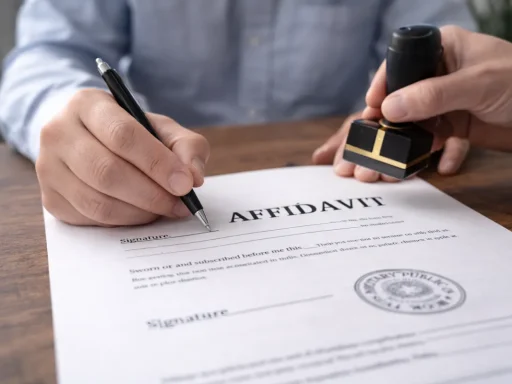


A notarized affidavit is a written statement of facts that you sign under oath in front of a notary public. It’s used when someone needs official, sworn proof of something—like your identity, residence, or that an event occurred. Lying on a notarized affidavit is perjury, which is why courts and government agencies accept them as reliable evidence. Here’s when you need one, what to include, and how to get it notarized.
What Is a Notarized Affidavit?
A notarized affidavit is a written statement of facts that you swear is true and sign in front of a notary public. The notary verifies your identity, watches you sign, and administers an oath—you’re swearing under penalty of perjury that everything in the document is accurate.
This matters because lying on a notarized affidavit is a crime. That’s why courts, government agencies, and businesses accept affidavits as reliable evidence—there are real consequences for false statements.
An affidavit without notarization is just a letter. The notary’s seal and signature transform it into a legal document that carries weight.
Why Do You Need a Notarized Affidavit?
Notarized affidavits serve one main purpose: providing sworn, verifiable proof when someone can’t be present to testify in person or when official documentation is required.
Legal Weight
Courts treat notarized affidavits as testimony. If you can’t appear in court, your affidavit can speak for you. Judges rely on affidavits for evidence in civil cases, custody disputes, immigration matters, and more.
Fraud Prevention
The notarization process verifies that you are who you claim to be and that you’re signing willingly. This makes it much harder for someone to forge your signature or claim statements were made under duress.
Official Documentation
Many government agencies and institutions require notarized affidavits because they need something more reliable than your word. The notary’s seal adds an official layer of verification.
When Do You Need a Notarized Affidavit?
Identity and Name
- Affidavit of Identity: Proves who you are when ID documents have discrepancies
- Name Change Affidavit: Documents a legal name change for records, banks, or government agencies
- Affidavit of Same Person: Confirms you’re the same person despite name variations on different documents
Residence and Domicile
- Affidavit of Residence: Proves where you live for school enrollment, voter registration, or legal matters
- Affidavit of Domicile: Establishes legal residence for estate proceedings or tax purposes
Financial and Business
- Affidavit of Support: Promises financial responsibility for someone (often for immigration)
- Affidavit of Debt: Documents money owed to or by you
- Small Estate Affidavit: Claims assets from a deceased person’s estate without full probate
- Affidavit of Lost Document: Declares that an important document (title, certificate, deed) has been lost
Family and Personal
- Affidavit of Heirship: Identifies legal heirs of a deceased person
- Affidavit of Marriage: Confirms a marriage exists (common for immigration or benefits)
- Affidavit of Single Status: Declares you’re not currently married (required for marriage abroad)
- Affidavit of Birth: Documents birth facts when a birth certificate is unavailable
Legal Proceedings
- Witness Affidavit: Provides testimony about something you witnessed
- Character Affidavit: Vouches for someone’s character (for court, immigration, or employment)
- Affidavit of Service: Confirms legal documents were properly delivered to someone
Vehicles and Property
- Gift Affidavit: Documents a vehicle or property transfer as a gift (not a sale)
- Affidavit of Correction: Fixes errors on a title or deed
- Lien Release Affidavit: States a lien has been satisfied when the lienholder can’t be contacted
What to Include in a Notarized Affidavit
Every affidavit needs these elements to be valid:
1. Title
Clearly state what type of affidavit it is: “Affidavit of Residence,” “Affidavit of Identity,” etc.
2. Affiant Information
The “affiant” is the person making the statement (you). Include your full legal name, address, date of birth, and contact information.
3. Statement of Facts
This is the core of the affidavit. Write each fact as a separate numbered paragraph. Be specific, clear, and stick to facts you personally know. Avoid opinions or assumptions.
Example: “I, John Smith, state that I have resided at 123 Main Street, Anytown, State 12345 since January 1, 2020.”
4. Statement of Truth
Include a sentence stating that everything above is true and accurate to the best of your knowledge, made under penalty of perjury.
5. Signature Line
Leave space for your signature, printed name, and the date. Do not sign until you’re in front of the notary.
6. Notary Section (Jurat)
Leave space for the notary’s certificate, which includes the state and county, date, notary’s signature, seal, and commission expiration. Most templates include this section.
How to Get an Affidavit Notarized
Step 1: Prepare Your Affidavit
Write or obtain your affidavit. You can draft it yourself, use a template, or have an attorney prepare it. Make sure all information is accurate—you’ll be swearing to its truth.
Step 2: Don’t Sign Yet
Critical: Leave the signature line blank. The notary must witness you signing. If you’ve already signed, the notary cannot notarize it.
Step 3: Bring Valid ID
You’ll need government-issued photo ID: driver’s license, state ID, passport, or military ID. The ID must be current (not expired).
Step 4: Visit a Notary
Find a notary at one of these locations:
- Banks: Free for customers
- Credit unions: Free for members
- UPS Store: $5-$15 per signature
- Law offices: $10-$25
- Online notarization: $25-$50, available 24/7
- Mobile notary: $50-$150, comes to your location
Step 5: Take the Oath and Sign
The notary will verify your ID, then administer an oath. You’ll swear (or affirm) that the statements in the affidavit are true. Then you sign in front of the notary.
Step 6: Notary Completes the Certificate
The notary signs, dates, and applies their official seal to the jurat section. Your affidavit is now notarized.
Getting an Affidavit Notarized Online
Can’t get to a notary in person? BlueNotary offers online notarization for affidavits—available 24/7 from anywhere.
How It Works
- Upload your unsigned affidavit
- Verify your identity (credential analysis + knowledge-based questions)
- Connect with a notary via video call
- Take the oath verbally on camera
- Sign electronically while the notary watches
- Download your notarized affidavit (about 15 minutes total)
Online notarization is legal in most states and accepted by courts, government agencies, and businesses.
How Much Does It Cost?
- Banks/Credit unions: Free for customers/members
- UPS Store: $5-$15 per signature
- Shipping centers: $5-$15 per signature
- Law offices: $10-$25 (may charge more if they draft the affidavit)
- Online notarization: $25-$50 per session
- Mobile notary: $50-$150 (includes travel)
Note: Some notaries charge extra for affidavits because they require administering an oath (a “jurat” notarization) rather than just witnessing a signature.
Important Tips
- Be truthful: Lying on a notarized affidavit is perjury—a criminal offense
- Stick to personal knowledge: Only include facts you know firsthand, not hearsay
- Be specific: Use dates, addresses, and full names—vague statements are less useful
- Check requirements: Ask the requesting party if they have a specific form or format
- Make copies: Keep a copy for your records before submitting
- Don’t pre-sign: Sign only in front of the notary
The Bottom Line
A notarized affidavit transforms a simple written statement into sworn legal testimony. You need one whenever someone requires official, verifiable proof of facts—for courts, government agencies, businesses, or legal proceedings.
Key points:
- Affidavits must be signed under oath in front of a notary
- Include only facts you know personally—lying is perjury
- Don’t sign before visiting the notary
- Bring valid government-issued photo ID
- Online notarization is available 24/7 if you can’t visit in person
Need to get an affidavit notarized? BlueNotary offers online notarization 24/7—connect with a licensed notary in about 15 minutes.
Frequently Asked Questions
What is a notarized affidavit?
A written statement of facts that you sign under oath in front of a notary public. The notary verifies your identity and witnesses your signature. Lying on a notarized affidavit is perjury.
Why do I need an affidavit notarized?
Notarization makes the affidavit legally binding and verifiable. Courts and government agencies require notarized affidavits because the oath and identity verification make the statement more reliable than an unsigned letter.
When is a notarized affidavit required?
Common situations include court proceedings, immigration applications, estate matters, name changes, identity verification, proof of residence, vehicle transfers, and insurance claims. If someone asks for “sworn” or “notarized” proof, you need an affidavit.
Can I write my own affidavit?
Yes. You can write your own affidavit as long as it includes all required elements: your information, numbered statements of fact, a statement of truth, signature line, and notary section. Templates are available online, or an attorney can draft one for you.
Can I get an affidavit notarized online?
Yes. Online notarization is legal in most states. You connect with a notary via video call, take the oath on camera, and sign electronically. BlueNotary offers this service 24/7.
What happens if I lie on a notarized affidavit?
Lying on a notarized affidavit is perjury, a criminal offense. Penalties vary by state but can include fines and imprisonment. Courts take false affidavits seriously because they rely on them as sworn testimony.