


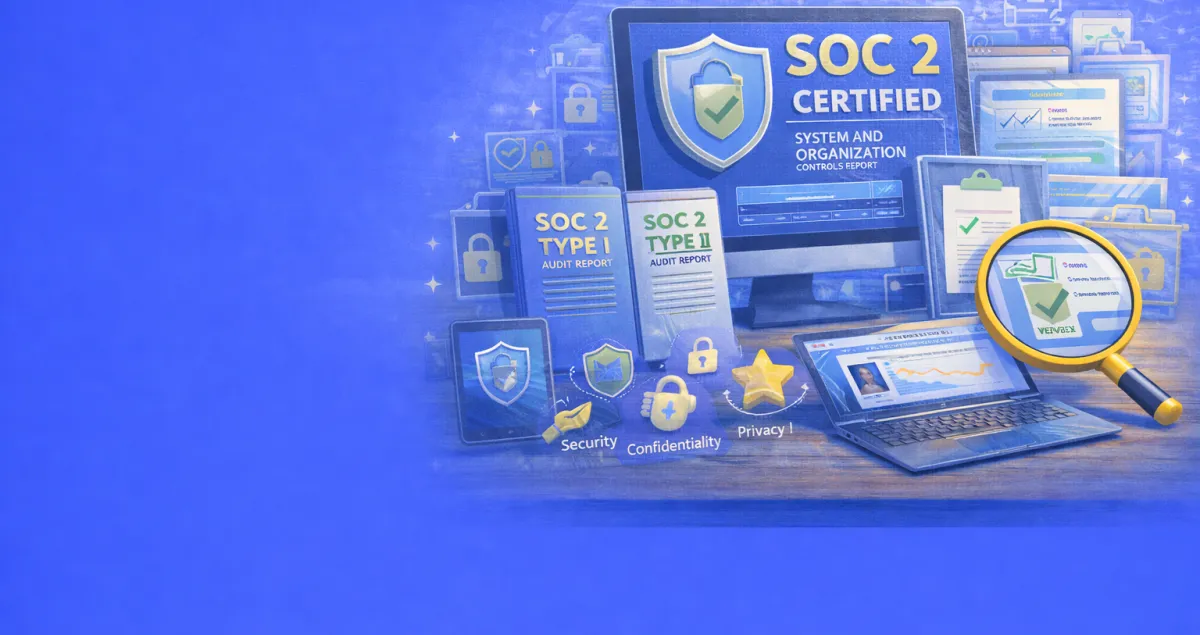

When a remote online notarization platform claims to be “SOC 2 compliant,” what does that actually mean for the security of your documents, video recordings, and identity information? The answer requires understanding what SOC 2 certification involves, what it actually verifies, and how to distinguish meaningful security credentials from marketing language.
SOC 2 has become the standard benchmark for evaluating how technology companies protect customer data. For remote online notarization platforms, which handle what industry professionals call “life event” data, including biometric identification, video recordings of signing sessions, and sensitive legal documents, this certification carries particular significance.
What SOC 2 Actually Is
SOC 2, which stands for System and Organization Controls 2, is an auditing framework developed by the American Institute of Certified Public Accountants (AICPA). Unlike certifications that simply check boxes against a requirements list, SOC 2 involves an independent examination by a licensed CPA firm that evaluates how an organization actually protects customer data.
The framework originated in 2010 as a way for service organizations to demonstrate their commitment to data security through verified, third-party assessment rather than self-attestation. Unlike internal security reviews or vendor questionnaires, SOC 2 audits produce detailed reports that document specific controls, testing procedures, and results.
For remote online notarization platforms, SOC 2 compliance addresses a fundamental trust question. When you provide your identification documents, appear on video, and sign legal documents through a digital platform, you need assurance that the organization handling that information has implemented genuine security measures verified by independent auditors.
The Five Trust Services Criteria
SOC 2 audits evaluate organizations against five categories called Trust Services Criteria. Understanding these categories helps clarify what a platform’s SOC 2 report actually covers.
Security (Required)
Security is the only mandatory criterion for every SOC 2 audit. It addresses whether information and systems are protected against unauthorized access, unauthorized disclosure, and damage to systems that could compromise the availability, integrity, confidentiality, or privacy of information.
The security criterion encompasses nine areas of focus based on the COSO framework (Committee of Sponsoring Organizations of the Treadway Commission). These areas include control environment, communication and information, risk assessment, monitoring activities, control activities related to the design and implementation of controls, logical and physical access controls, system operations, change management, and risk mitigation.
For RON platforms, security controls might address how the platform prevents unauthorized access to stored notarization recordings, how it protects identity verification data, and how it secures the video streams during live sessions.
Availability (Optional)
The availability criterion examines whether systems are available for operation and use as committed or agreed. This involves evaluating backup protocols, disaster recovery procedures, system redundancy, and capacity management.
For notarization platforms, availability matters because signers often need to complete time-sensitive transactions. If the platform experiences downtime during a real estate closing or urgent document signing, the consequences extend beyond inconvenience.
Processing Integrity (Optional)
Processing integrity addresses whether system processing is complete, valid, accurate, timely, and authorized to meet the organization’s objectives. This criterion ensures that data moves through systems correctly without corruption or unauthorized modification.
In the notarization context, processing integrity relates to ensuring that the document you sign is the same document that receives the notary seal, that timestamps accurately reflect when events occurred, and that no unauthorized modifications happen between signing and delivery.
Confidentiality (Optional)
The confidentiality criterion evaluates how organizations protect information designated as confidential. This differs from security (which addresses unauthorized access broadly) by focusing specifically on information classification and protection of sensitive business data.
For RON platforms, confidentiality controls address how the platform handles business documents that might contain trade secrets, financial information, or other sensitive content that clients need protected from disclosure.
Privacy (Optional)
The privacy criterion examines how organizations handle personally identifiable information (PII). This includes how personal data is collected, used, retained, disclosed, and disposed of in accordance with the organization’s privacy policy.
Given that RON platforms collect extensive personal information, including government identification details, biometric facial recognition data, and video recordings, the privacy criterion has particular relevance.
Which Criteria Matter for RON Platforms
Not every SOC 2 report covers all five criteria. Organizations choose which optional criteria to include based on their services and customer expectations. For remote online notarization platforms, certain criteria carry more weight than others.
Security should be considered baseline. Any platform handling identity verification and legal documents should demonstrate security controls through SOC 2. This addresses the fundamental question of whether unauthorized parties can access your data.
Privacy deserves attention because RON platforms collect significant personal information. The identity verification process involves government IDs, facial recognition, and often knowledge-based authentication questions derived from credit history. Privacy controls address how this sensitive information is handled throughout its lifecycle.
Availability matters for platforms serving time-sensitive transactions. Real estate closings, loan signings, and legal deadlines do not accommodate platform downtime. If availability is in scope, the auditor has verified that the platform has tested backup and recovery procedures.
Processing integrity becomes relevant when you need assurance that documents are not altered between signing and delivery. For legally binding notarizations, knowing that the platform has verified data integrity controls provides meaningful assurance.
Confidentiality applies when the platform handles sensitive business documents beyond the notarization itself.
When evaluating a RON platform’s SOC 2 report, note which criteria are actually covered. A platform with only the security criterion addressed has undergone less comprehensive evaluation than one covering security, availability, and privacy.
Type I vs. Type II: The Critical Distinction
SOC 2 reports come in two types, and understanding the difference is essential for evaluating what a platform’s compliance actually demonstrates.
Type I: Design of Controls
A SOC 2 Type I report evaluates whether an organization’s controls are suitably designed at a specific point in time. Think of it as a snapshot assessment. The auditor examines whether appropriate policies exist, whether systems are configured correctly, and whether controls appear adequate to meet the stated criteria.
Type I audits can be completed relatively quickly, often within a few months of an organization deciding to pursue compliance. The auditor might examine a single example of each control to confirm that it is designed appropriately.
For example, if a RON platform claims to perform background checks on all employees, a Type I audit might verify that a background check policy exists and examine one completed background check to confirm the process is designed correctly.
Type I reports serve as a reasonable starting point for organizations new to SOC 2 compliance. They demonstrate that an organization has invested in building a security framework and engaged independent auditors to verify the design. However, Type I does not prove that controls actually work consistently over time.
Type II: Operating Effectiveness Over Time
A SOC 2 Type II report goes further by evaluating whether controls operated effectively over a defined period, typically six to twelve months. The auditor does not just check that controls exist; they test whether those controls were followed consistently throughout the observation window.
Using the background check example, a Type II audit would sample multiple new hires across the entire audit period to verify that background checks were actually performed for all of them, not just the single example shown in a Type I audit.
Type II audits require organizations to collect evidence throughout the observation period. Auditors sample from complete populations, examining logs, access reviews, incident records, and other documentation to confirm controls operated as designed.
The extended evaluation provides substantially greater assurance. A policy can look excellent on paper while failing in practice. Type II verification catches those gaps by testing real-world operation over months rather than examining design at a single moment.
What This Means for RON Platform Evaluation
For platforms handling sensitive notarization data, Type II compliance provides meaningfully stronger assurance than Type I. The distinction matters because:
Type I confirms the platform has designed appropriate controls. Type II confirms those controls have been working consistently for six to twelve months.
When evaluating RON platforms, consider Type I as a minimum threshold and Type II as the standard for critical services. A platform with only Type I compliance may be early in its compliance journey or may have struggled to maintain consistent controls over an extended period.
Watch for platforms that have been “working toward Type II” for extended periods without achieving it. The typical timeline from Type I to Type II runs twelve to eighteen months for organizations with mature operations. Prolonged delays can indicate underlying operational challenges.
What Auditors Actually Verify
Understanding what happens during a SOC 2 audit helps clarify what the resulting report demonstrates about a platform’s security posture.
The Audit Process
SOC 2 audits are conducted by independent CPA firms with expertise in information security. The auditor examines the organization’s systems, policies, and procedures, then tests controls to verify they meet the applicable Trust Services Criteria.
For Type II audits, the process involves extensive evidence gathering. Auditors conduct interviews with personnel, inspect documentation, observe control activities, and perform detailed testing across the audit period.
The audit produces a formal report, typically running fifty to several hundred pages, that documents the system description, lists specific controls in place, describes testing procedures, and reports results including any exceptions identified.
Specific Controls Examined
The controls examined depend on what the organization has implemented to meet the Trust Services Criteria. Common areas evaluated include:
Access controls address how the platform restricts who can access systems and data. Auditors examine authentication mechanisms, password policies, multi-factor authentication implementation, and user provisioning and deprovisioning procedures.
Change management covers how the platform handles modifications to systems and applications. This includes code review processes, testing requirements before deployment, and documentation of changes.
Incident response examines how the organization detects, responds to, and recovers from security incidents. Auditors look for documented procedures, evidence of testing, and records of actual incident handling if incidents occurred during the audit period.
Data protection controls address encryption of data at rest and in transit, key management procedures, and data retention and disposal practices.
Vendor management evaluates how the organization oversees third parties with access to systems or data. For RON platforms that rely on cloud infrastructure providers or identity verification services, this can be particularly relevant.
Physical security covers how physical access to facilities and equipment is controlled, relevant for any on-premises infrastructure or data centers.
Employee security includes background checks, security awareness training, and procedures for handling employee terminations and access revocation.
What the Report Contains
A SOC 2 report includes several key sections:
The auditor’s opinion states whether the organization’s controls were suitably designed (Type I) or suitably designed and operating effectively (Type II) to meet the applicable Trust Services Criteria. An unqualified opinion means no significant issues were identified. A qualified opinion indicates the auditor found at least one control that was not operating effectively or as designed.
The system description provides detailed information about the organization’s infrastructure, services, and control environment. This section should describe the actual technology stack, data flows, and organizational structure in specific terms.
The testing matrix documents each control, the testing procedure used to evaluate it, and the results. For Type II reports, this includes information about sample sizes and time periods covered.
Management’s response addresses any exceptions identified during the audit, explaining what happened and how the organization is addressing the issue.
Exceptions and Their Significance
Most SOC 2 reports identify some exceptions, which are instances where a control did not operate as intended. Not every exception represents a serious security concern.
Minor exceptions might include an employee who completed security awareness training late or a single access review that was documented incompletely. These isolated incidents, while noted, do not necessarily indicate systemic problems.
Significant exceptions involve controls failing repeatedly, material weaknesses in security posture, or issues affecting core data protection. Multiple exceptions in the same control area, or exceptions that persist across audit periods, deserve careful attention.
When reviewing a platform’s SOC 2 report, examine exceptions in context. Ask whether the issue affects your specific use case, whether management’s response indicates genuine remediation, and whether similar exceptions appeared in previous reports.
Evaluating RON Platform Security Claims
Not all SOC 2 compliance is equal. Knowing how to evaluate a platform’s security claims helps distinguish genuine security commitment from marketing language.
Request the Actual Report
Platforms with legitimate SOC 2 compliance should be willing to share their full report, typically under a non-disclosure agreement. Be wary of platforms that offer only summary documents, attestation letters, or vague statements about being “SOC 2 certified.”
The term “SOC 2 certified” itself represents marketing language rather than technical accuracy. SOC 2 produces attestation reports, not certifications. Platforms using precise terminology demonstrate familiarity with the actual compliance framework.
A full SOC 2 Type II report typically runs fifty to several hundred pages. If you receive a two-page summary, you have not received the actual audit report.
Verify Auditor Credentials
SOC 2 audits must be conducted by licensed CPA firms enrolled in the AICPA Peer Review Program. The auditor’s credentials appear at the bottom of the opinion letter in Section 1 of the report.
Unknown or unqualified auditors undermine the report’s value. While any licensed CPA firm may technically perform SOC 2 audits, firms with established reputations for technology company audits provide greater confidence in audit rigor.
Check whether the auditing firm is registered with state boards of accountancy through the NASBA (National Association of State Boards of Accountancy) database. Firms not appearing in this database warrant skepticism.
Examine the Scope
The system description section should clearly identify what is actually covered by the audit. Verify that the scope includes the services you plan to use.
A SOC 2 report covering only a platform’s marketing website provides no assurance about the notarization platform itself. Similarly, a report covering only certain product lines might not address the specific service you need.
For RON platforms, look for scope that explicitly covers the notarization system, identity verification processes, video recording storage, and document management. If these components are not in scope, the audit does not address your primary security concerns.
Check the Report Date
SOC 2 reports cover specific time periods. A Type I report states the assessment date. A Type II report states the observation period’s start and end dates.
Reports older than twelve months may not reflect current security practices. Major changes to systems or controls since the report date can render findings outdated.
Look for reports covering recent periods, ideally with observation windows ending within the past year. Platforms should pursue annual SOC 2 audits to maintain current compliance status.
Review Exceptions Carefully
The testing matrix and management’s response sections reveal how controls actually performed. Pay attention to:
Whether exceptions involve areas relevant to your use case. An exception in physical security controls may not concern you if you are using a fully cloud-based service, while exceptions in access controls or data protection warrant serious consideration.
Whether management’s responses indicate genuine remediation or vague promises. Specific, accountable responses with clear timelines demonstrate commitment to addressing issues.
Whether similar exceptions appeared in previous audit periods, which might indicate persistent operational challenges.
Assess Which Criteria Are Covered
A SOC 2 report covering only the security criterion provides less comprehensive assurance than one covering multiple relevant criteria.
For RON platforms handling personal information, privacy criterion coverage adds meaningful assurance about PII handling practices. For platforms supporting time-sensitive transactions, availability criterion coverage verifies disaster recovery and business continuity controls.
Consider Subservice Organizations
Many platforms rely on third-party providers for infrastructure, identity verification, or other critical functions. SOC 2 reports handle these relationships in two ways:
Inclusive reports include the subservice organization’s controls within the audit scope. The auditor evaluated controls at both the primary organization and its key vendors.
Carve-out reports exclude subservice organizations from the audit scope. The report notes that certain controls depend on these third parties, but those controls were not tested.
If a RON platform relies on a major cloud provider for infrastructure but carves that provider out of their SOC 2 scope, you may need to independently review the cloud provider’s own SOC 2 report to get complete assurance.
Understand Complementary User Entity Controls
SOC 2 reports often identify Complementary User Entity Controls (CUECs), which are controls that customers must implement for the vendor’s controls to be fully effective.
For example, a platform might encrypt data but expect customers to use strong passwords and enable multi-factor authentication. If customers fail to implement these complementary controls, the platform’s security measures may be insufficient.
Review the CUEC section to understand your organization’s responsibilities when using the platform.
Why SOC 2 Matters for Online Notarization
Remote online notarization platforms handle an unusual combination of sensitive data types. Understanding why SOC 2 compliance matters requires considering what these platforms actually collect and store.
The Data at Stake
A typical RON session generates multiple categories of sensitive information:
Identity documents including driver’s licenses and passports, captured as images that contain government ID numbers, photographs, addresses, and birth dates.
Biometric data from facial recognition matching, comparing the live video feed to the photo on the identity document.
Video and audio recordings of the entire notarization session, which may capture confidential conversations about the documents being signed.
Knowledge-based authentication data derived from credit bureau records and public databases, revealing financial history information.
The documents themselves, which might include real estate contracts, powers of attorney, medical directives, or other sensitive legal instruments.
Digital signatures and notary seals that have legal significance and could cause substantial harm if compromised.
This data collection creates significant security obligations. A breach could expose victims to identity theft, financial fraud, or legal complications from compromised documents.
Regulatory Expectations
While no federal regulation explicitly requires SOC 2 compliance for RON platforms, the standard has become a de facto expectation in the industry. Title companies, lenders, and other enterprise customers increasingly require SOC 2 reports as part of vendor due diligence.
State RON laws generally require platforms to implement security measures protecting the confidentiality and integrity of notarization records. SOC 2 compliance provides documented evidence that these requirements are being met through verified controls.
The Audit Trail Consideration
RON platforms must maintain audit trails that support the legal validity of notarizations. These records may need to be produced years later if a notarization is challenged.
SOC 2 controls addressing data integrity, access controls, and retention practices provide assurance that audit trails will remain accurate and available. The processing integrity criterion specifically addresses whether system processing maintains data accuracy over time.
Frequently Asked Questions
Is SOC 2 compliance required for RON platforms?
No federal or state law explicitly requires SOC 2 compliance for RON platforms. However, enterprise customers increasingly require it as part of vendor security assessments, and it has become an industry standard for demonstrating security commitment. Platforms without SOC 2 compliance may face challenges winning enterprise contracts or serving regulated industries.
What is the difference between SOC 2 Type I and Type II?
- Type I evaluates whether controls are suitably designed at a single point in time.
- Type II evaluates whether controls operated effectively over an extended period, typically six to twelve months. It provides significantly stronger assurance because it verifies that controls work consistently in practice, not just on paper.
How long is a SOC 2 report valid?
SOC 2 reports cover specific time periods and are generally considered current for twelve months after the report date. After this period, reports become “stale” and may not reflect the organization’s current security posture. Organizations pursuing ongoing compliance typically complete annual audits.
Can I see a platform’s full SOC 2 report?
Platforms with legitimate SOC 2 compliance should be willing to share their complete report under a non-disclosure agreement. If a platform offers only summary documents or attestation letters rather than the full report, consider this a red flag. The full report typically runs fifty to several hundred pages and contains detailed information about controls, testing procedures, and results.
What does a qualified opinion mean?
A qualified opinion indicates the auditor found at least one control that was not operating effectively or as designed. This does not necessarily indicate a catastrophic security failure. Review the specific exceptions to understand their nature and severity. Minor, isolated issues differ significantly from systemic control failures.
Which Trust Services Criteria should a RON platform cover?
At minimum, expect security criterion coverage. For platforms handling personal information (which includes all RON platforms), privacy criterion coverage provides meaningful additional assurance. Availability coverage matters for platforms supporting time-sensitive transactions. Processing integrity addresses data accuracy concerns relevant to legal documents.
How do I verify that a SOC 2 report is legitimate?
Check that the auditing firm named in Section 1 is a registered CPA firm by searching the NASBA database. Verify the firm is enrolled in the AICPA Peer Review Program. Examine whether the system description accurately reflects the platform’s actual services. Be wary of reports from unknown firms or those that appear templated and generic.
What happens if a platform loses SOC 2 compliance?
There is no formal “loss” of SOC 2 compliance in the way a license might be revoked. However, if a platform fails to complete subsequent annual audits, or if an audit reveals significant control failures resulting in a qualified or adverse opinion, the platform can no longer claim current SOC 2 compliance. Previous reports remain valid for their stated periods but do not provide assurance about current practices.
Conclusion:
SOC 2 compliance provides a structured, independently verified way to evaluate whether a remote online notarization platform has implemented genuine security controls. For platforms handling sensitive identity information, video recordings, and legal documents, this verification matters.
Understanding the difference between Type I and Type II reports, knowing which Trust Services Criteria apply to your needs, and learning how to evaluate the actual content of SOC 2 reports equips you to make informed decisions about platform security.
When selecting a RON platform, look beyond marketing claims to the documented evidence of security practices. Request the full SOC 2 report, verify auditor credentials, examine the scope and exceptions, and assess whether the compliance covers the criteria most relevant to your security concerns.
For secure, compliant remote online notarization with verified security controls, BlueNotary provides a platform built with data protection at its foundation, offering the security assurance that sensitive notarization transactions require.