




Your mother needs her power of attorney notarized before surgery. She has advanced Parkinson’s disease and can no longer hold a pen. The notary at the bank seems unsure what to do. They suggest coming back another day. That delay could cost your family everything.
This situation happens to real people every week across the United States. Physical disabilities, age-related frailty, and illiteracy affect millions of Americans who still need legal documents notarized. According to the Administration for Community Living, about 21 percent of adults over 65 have the lowest measurable literacy levels. Many more lose fine motor control through stroke, injury, or disease. When you need to notarize a document and the signer cannot sign in the usual way, the process does not stop. A legal solution called signature by mark exists for exactly this reason. This guide explains every step, the state-specific rules that apply, and what to do when even a mark is impossible.
What Is a Signature by Mark?
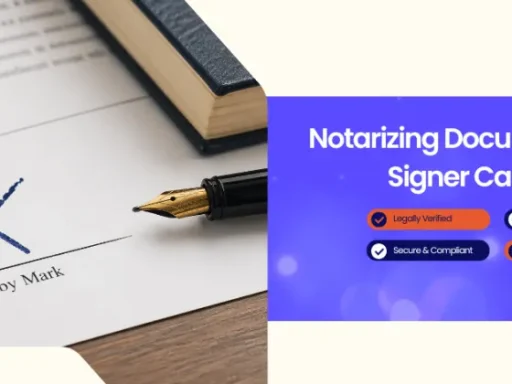
A signature by mark is a legal alternative to a handwritten signature. When a person cannot write their name due to disability, illness, or illiteracy, they make a simple mark on the document instead. Common marks include an X, a line, or a thumbprint. When properly witnessed and notarized under state law, that mark carries full legal validity.
Under the laws of most states, any intentional mark a person makes on a document qualifies as their signature. The National Notary Association confirms that a mark functions as a legally binding signature when the correct notarization procedure is followed. The critical phrase there is “correct procedure.” Without the right witnesses, the right certificate format, and proper journal documentation, the mark may not hold up if challenged later.
If you want to understand how standard notarizations work before exploring mark-based alternatives, the Notary Public Explained guide covers the basics in plain language.
What Counts as a Mark?
The most common mark is an “X.” However, most states accept any intentional mark the person can physically make. That includes a scribble, a line, a checkmark, or even a thumbprint, depending on state law. The specific shape matters less than the signer’s clear intent to execute the document.
Who Can Use a Signature by Mark?
Three groups of people most commonly need to notarize a document when the signer cannot sign in the traditional sense. Understanding which group applies helps you prepare the right procedure in advance.
The first group includes people with physical disabilities. Conditions like Parkinson’s disease, severe arthritis, stroke-related paralysis, or spinal cord injuries can make writing physically impossible. The second group includes elderly signers. Frailty, tremors, or advanced age often reduce the ability to hold a pen or form legible letters. The third group includes people who never learned to write. According to the National Center for Education Statistics, roughly 32 million adults in the United States have very limited literacy skills.
Mental Capacity Is Non-Negotiable
Physical inability to write does not affect legal capacity. A signer who cannot hold a pen may still fully understand what they are agreeing to. However, the notary must confirm mental competency before proceeding. Without confirmed mental capacity, no mark or signature is legally valid. This step matters as much as any other part of the appointment.
How to Notarize a Document When the Signer Cannot Sign: Step by Step
The procedure for notarizing a document when the signer cannot sign follows a specific legal sequence. Each step serves a clear purpose. Skipping any one of them can invalidate the entire notarization.
Step 1: Confirm Identity
Standard identification rules apply exactly as they do for any notarization. The notary must first confirm who the signer is. Acceptable identification typically includes a government-issued photo ID or credible witnesses who can vouch for the signer’s identity. The American Society of Notaries notes that state law dictates exactly what qualifies as satisfactory evidence of identity.
Step 2: Verify Mental Competency
Before proceeding, the notary must confirm the signer understands what they are agreeing to. This does not mean reading the entire document aloud. Instead, ask the signer direct questions. “What does this document do?” and “What happens once you sign it?” are two useful starting points. Confused or off-topic answers are a warning sign. Stop the appointment if you have genuine doubt about comprehension.
Step 3: Prepare the Signature Line
The signature line must be set up in a specific format before the signer makes their mark. Write the signer’s first name to the left of the mark line. Write their last name to the right. Place the words “(His/Her Mark)” or “(Their Mark)” below the line. The American Society of Notaries provides this format in its official signature by mark guidance.
The formatted line looks like this:
John ____________ X ____________ Doe (His Mark)
Step 4: Arrange Two Disinterested Witnesses
Most states require two witnesses for a signature by mark notarization. These witnesses must be disinterested, meaning they have no financial stake in the document and no personal relationship with the signer that could influence their testimony. Neither the notary nor a beneficiary of the document may serve as a witness. Arrange the witnesses before the appointment begins.
Step 5: The Signer Makes the Mark
The signer must make the mark entirely on their own. No one may guide the signer’s hand. No one may place a pen in their grip or assist in any physical way. The notary and both witnesses observe the signer completing the mark. Even minimal physical assistance can be used to challenge the notarization in court.
Step 6: Witnesses Sign the Certificate
After the signer makes the mark, both witnesses sign the notarial certificate. In California, one witness additionally writes the signer’s full name next to the mark on the document. In Florida, witnesses print their names and addresses clearly beneath their signatures. Always confirm your state’s specific witness signature requirements before the appointment.
Step 7: Complete the Notarial Certificate
The notary uses a notarial certificate specifically designed for signature by mark. This certificate differs from a standard acknowledgment or jurat. It includes space for witness signatures and language confirming the signer appeared by mark. The notary then signs, dates, and applies their seal as usual.
Step 8: Record in the Notary Journal
Where state law requires a notary journal, the signer must place their mark in the journal entry for that appointment. California specifically requires this. Both witnesses may also sign the journal entry, particularly if they served as credible witnesses for identity purposes.
State-by-State Witness Requirements for Signature by Mark
State law governs almost everything about how to notarize a document when the signer cannot sign. Requirements differ meaningfully from one state to the next. The table below gives a clear comparison of four of the most frequently encountered states.
| State | Witnesses Required | Notary Can Sign for Signer? | Journal Mark Required? |
|---|---|---|---|
| California | 2 | No | Yes |
| Florida | 2 | Yes (2 witnesses present) | Verify with state |
| Texas | 1 (proxy method) | Yes (under §406.0165) | Verify with state |
| Pennsylvania | 2 (for POA) | No specific provision | Verify with state |
For a broader breakdown of notarization rules across all 50 states, the BlueNotary State Notarization Requirements page is updated regularly with current laws.
California
California requires two disinterested witnesses for any signature by mark notarization. Under California Civil Code Section 1185, one witness must write the signer’s full name next to the mark. Both witnesses then sign the document. Additionally, the signer must place their mark in the notary’s official journal entry.
Florida
Florida also requires two disinterested witnesses. Both must print their names and addresses beneath their signatures on the document. Florida law further permits the notary to sign on behalf of a signer who cannot make any mark, provided two witnesses observe the act and the signing occurs in the signer’s physical presence.
Texas
Texas follows a different model. Under Section 406.0165 of the Texas Government Code, a notary may sign on behalf of a physically unable signer. The notary adds specific statutory language beneath the signature block. Texas requires only one disinterested witness when using this notary-signed method, rather than two.
Pennsylvania
Pennsylvania requires two witnesses for a signature by mark notarization, both of whom must be at least 18 years old. This rule applies specifically to powers of attorney signed by mark, as stated in Pennsylvania’s Power of Attorney statute. For other document types, consult the Pennsylvania Department of State directly.
What If the Signer Cannot Make Any Mark at All?
Some signers cannot physically produce even an “X.” Severe paralysis, advanced neurological disease, or total loss of fine motor function can make any physical mark impossible. In those situations, a different legal method applies: signature by proxy.
How Signature by Proxy Works
In a proxy signing, the signer directs another person to sign the document on their behalf. The signer must be mentally competent and must actively direct the proxy to act. The proxy signs their own name and adds a notation such as “For [Signer’s Name], at their direction.” The signer’s clear intent is the legal cornerstone of this approach. Without clear intent, the signing is not valid.
States That Allow Proxy Signing
Not all states permit signature by proxy. Some grant this authority exclusively to notaries. Others require specific statutory language on the document itself. Texas explicitly allows notaries to act as signing proxies under its government code. Florida follows a similar rule. Before attempting a proxy signing, always confirm that your state’s notary law authorizes it. Contact your state’s notary commissioning authority if the law is unclear.
What No Other Guide Covers: The Mental Capacity Blind Spot in Signature by Mark Notarizations
Most guides on how to notarize a document when the signer cannot sign focus on the physical steps. They explain witness counts, certificate formats, and journal entries. Almost none address the most common real-world point of failure: assessing mental capacity without a clinical background.
Why This Gap Matters in Practice
A signer who cannot write may also have a condition that affects cognition. Dementia, recent stroke, or significant brain injury can all be present even when the signer appears calm and cooperative. A person in mid-stage dementia may smile, nod, and seem willing to sign. That behavior does not mean they understand what they are agreeing to.
The notary carries legal responsibility for confirming the signer knowingly and voluntarily entered into the notarial act. The notary is not a doctor. However, they cannot delegate that responsibility to the family members present in the room, who may have a direct financial interest in the document being signed.
A Practical Framework for Notaries
Before proceeding with any signature by mark appointment, ask the signer three specific questions. First: “Can you tell me what this document does?” Second: “Who asked you to sign this?” Third: “What happens after you sign?” These questions require no medical training to ask. They do require careful, patient listening.
Then document your observations in your notary journal. Note that you asked capacity-related questions and summarize the signer’s responses. This record protects you if the notarization faces a legal challenge later. Courts and attorneys have used notary journal records to validate or void disputed notarizations. This step takes under two minutes and costs nothing extra. Yet almost every competitor guide skips it entirely because it sits between the physical and legal dimensions of the appointment, and no single authority fully owns the guidance.
When to Refer Out
If you have genuine doubt about a signer’s capacity, do not proceed. Suggest that the family consult the signer’s physician or an elder law attorney before rescheduling. A notary who declines a questionable notarization makes the professionally correct call, even if the family is frustrated in the moment. Proceeding when capacity is in doubt creates legal exposure for everyone involved.
Can You Notarize a Document When the Signer Cannot Sign Remotely?
Remote online notarization (RON) has changed what is possible in a notarial appointment. Many people assume RON requires a signer to type their name or use a standard electronic signature tool. That assumption is not always accurate.
Whether RON can accommodate signers who cannot sign depends on the state and the signer’s ability to interact with a device. The BlueNotary guide to remote online notarization explains how the RON process works and which states currently support it.
RON and Physical Inability to Sign
During a RON appointment, the notary conducts the session via audio-video technology. The signer still needs to interact with the document in some way. For signers who can make a touchscreen mark or use a stylus, RON platforms may accept that mark on an electronic document. The notary would then proceed with identity verification, mental competency confirmation, and witness arrangements per the state’s RON laws.
For signers who cannot interact with any device, an in-person appointment will generally be necessary. The Americans with Disabilities Act, Title III, requires that public-facing services provide equal access. A notary service that fails to arrange an in-person option when no accessible digital alternative exists may not meet that standard.
When RON Works for Non-Standard Signers
RON can work when the signer can make a physical mark on a touchscreen, and when the state’s RON statute explicitly allows witnesses to participate via video. Some states have updated their RON rules to include provisions for non-standard signers. Others have not. Always confirm your state’s specific rules before scheduling a remote session for a signer who cannot sign in the traditional way. If you are unsure where to start, the guide on how to get something notarized outlines the general steps for both in-person and remote appointments.
Common Mistakes That Invalidate a Mark Signature
Even careful notaries make errors in these appointments. Knowing the four most frequent mistakes in advance helps prevent them from happening.
The first mistake is using the wrong notarial certificate. A standard acknowledgment certificate does not include the language or space required for a mark signature. Always use a certificate specifically designed for signature by mark.
The second mistake is using the wrong witnesses. A witness who benefits financially from the document, who is a close relative of the signer, or who is the notary themselves will often invalidate the notarization. Disinterested means genuinely unrelated to the transaction and its outcome.
The third mistake is physical contact during the mark. Even resting a hand on the signer’s shoulder while they mark the document can be used to challenge the result. The signer must complete the mark without any physical assistance from anyone present.
The fourth mistake is omitting the journal mark. In states that require a notary journal, the signer’s mark must appear in the journal entry itself, not only on the document. A journal entry without the mark may be considered an incomplete record and could weaken the notarization if challenged.
Frequently Asked Questions
What is a signature by mark in notarization?
A signature by mark is a legal alternative to a handwritten signature. When a person cannot write their name due to physical disability, illness, or illiteracy, they make a simple mark on the document. That mark, when properly witnessed and notarized following state-specific procedures, carries the same legal validity as a full written signature.
How many witnesses does a signature by mark require?
Most states require two disinterested witnesses. California and Florida both mandate two witnesses. Texas allows a notary to sign on behalf of the signer with one witness under its government code. Always confirm your state’s specific requirement before scheduling the appointment, as the number varies meaningfully by jurisdiction.
Can a notary sign on behalf of someone who cannot sign?
Yes, in some states. This process is called signature by proxy. Texas and Florida explicitly authorize notaries to sign on behalf of physically unable signers under specific statutory conditions. The signer must be mentally competent and must clearly direct the notary to act. Not all states permit this, so verify your state’s notary law before attempting a proxy signing.
Is a signature by mark legally valid?
Yes. Under the laws of most states, any intentional mark a signer makes on a document qualifies as a legal signature. When the correct procedures are followed, including proper witnesses, the appropriate notarial certificate, and journal documentation where required, a mark signature is fully enforceable in legal transactions and court proceedings.
Does remote online notarization work for signers who cannot sign?
It depends on the state and the signer’s ability to interact with a device. Signers who can make a touchscreen mark may be able to use a RON platform. Signers who cannot interact with any device will generally need an in-person appointment. Always verify your state’s RON statute and accommodation requirements before scheduling a remote session for a non-standard signer.
What happens if a signer cannot make any mark whatsoever?
If a signer cannot physically make any mark, some states allow a third party or the notary to sign on their behalf at the signer’s direction. This is called signature by proxy. The signer must be mentally competent and must clearly express their intent. Not all states permit proxy signing, so confirm your state’s specific notary law before proceeding.
Do witnesses need to bring identification for a signature by mark?
In most states, witnesses for a signature by mark notarization are not required to show identification to the notary. However, witnesses must sign the notarial certificate and, in states like Florida, must also print their names and addresses. Always confirm whether your state requires witness identification to avoid a procedural error on the day of the appointment.
What documents commonly use a signature by mark?
Powers of attorney, wills, real estate documents, medical directives, and affidavits are among the most common documents notarized using a signature by mark. These documents frequently arise when elderly or seriously ill signers are involved. The document type does not change the core procedure, though Pennsylvania applies additional witness requirements specifically for powers of attorney signed by mark.
Conclusion:
Knowing how to notarize a document when the signer cannot sign is a practical skill that notaries and families need more often than most guides acknowledge. Aging populations, rising disability rates, and persistent literacy gaps mean these situations arise regularly across every state. The process is clear, lawful, and fully enforceable when done correctly: confirm identity, verify mental capacity, prepare the signature line, secure disinterested witnesses, and use the right notarial certificate.
For individuals and notaries looking for a platform built to handle a wide range of signer situations and state-specific notarization requirements, BlueNotary provides secure notarization options that meet current state law standards.