

Ever needed to get a document notarized but couldn’t make it to a notary’s office during business hours? For decades, that meant juggling schedules, taking time off work, and hoping the notary would be available when you showed up. Online notarization services completely transform that experience by bringing the notary to you through secure video technology. Whether you’re a law firm handling urgent client documents, a real estate agent closing deals across state lines, or a title company processing multiple transactions daily, understanding how these digital services work can streamline your operations and serve your clients better.

What Are Online Notarization Services?
Online notarization services represent a fundamental shift in how notarial acts are performed, moving from traditional in-person meetings to secure digital platforms. These services allow notaries public to verify identities, witness signatures, and apply their official seals to documents through video conferencing technology, creating legally binding notarized documents without physical presence.
Key Definition: Online notarization services are digital platforms that enable notaries public to perform notarial acts remotely using audio-video technology, identity verification systems, and electronic document management tools.
The Digital Evolution of Notarization
Remote Online Notarization (RON) emerged from the need to modernize a centuries-old practice while maintaining the legal integrity that makes notarization valuable. Traditional notarization requires three core elements: identity verification, willing participation, and proper documentation. Online notarization services preserve these requirements while leveraging technology to eliminate geographic barriers and time constraints.
The legal foundation for these services comes from state-by-state legislation that specifically authorizes remote notarization. Currently, over 40 states have passed RON laws, with more states adding legislation each year. Each state maintains specific requirements for technology platforms, notary training, and record-keeping that online notarization services must follow.
Core Components of Online Notarization Platforms
Modern online notarization services integrate several sophisticated technologies to replicate and enhance traditional notarial practices. The identity verification process typically uses multi-factor authentication, combining government-issued ID analysis, knowledge-based authentication questions, and biometric verification through facial recognition technology.
Document management systems within these platforms handle secure upload, real-time collaboration, and permanent storage of notarized documents. The video conferencing component isn’t just a simple video call—it includes recording capabilities, screen sharing for document review, and integration with the notary’s digital seal application process.
Why It Matters: The technology stack behind online notarization services must meet strict legal and security standards. This isn’t just convenient video calling—it’s a regulated process that creates legally binding documents with the same force as traditional notarization.
Legal Recognition and Interstate Validity
One of the most significant advantages of online notarization services is their broad legal recognition. The Uniform Electronic Transactions Act (UETA) and Electronic Signatures in Global and National Commerce Act (ESIGN) provide the federal framework that supports electronic notarization across state lines. When a document is notarized online in one state, it’s generally recognized as valid in all other states, similar to how traditional notarizations work.
This interstate recognition proves particularly valuable for law firms with clients in multiple states, real estate agents handling cross-state transactions, and title companies processing deals involving parties from different jurisdictions. The digital nature of these services actually enhances portability compared to physical documents that might need to be shipped or scanned.
How Online Notarization Services Work
The process of online notarization follows a structured workflow designed to maintain security while providing convenience. Understanding each phase helps legal professionals, real estate agents, and title companies set proper expectations with their clients and integrate these services into their existing workflows.
Identity Verification Phase
The session begins with comprehensive identity verification that often exceeds the scrutiny of traditional in-person notarization. The signer uploads a clear photo of their government-issued ID, which the platform’s software analyzes for security features, formatting, and authenticity markers. Advanced systems can detect photo manipulation, expired documents, and even subtle signs of forgery.
Knowledge-Based Authentication (KBA) follows, presenting the signer with multiple-choice questions generated from their personal records. These questions cover information only the legitimate person would know, such as previous addresses, loan amounts, or family member names. The questions are generated in real-time from credit bureaus and public records databases, making them nearly impossible to fake.
Biometric verification completes the identity confirmation process. The platform captures a live selfie and compares it to the photo on the uploaded ID using facial recognition algorithms. Some systems also analyze micro-movements and liveness detection to ensure the person is physically present and not using a photograph or video.
Pro Tip: The multi-layered identity verification in online notarization services often provides stronger identity confirmation than traditional notarization, where notaries might accept expired IDs or rely solely on visual comparison.
Document Review and Preparation
Once identity verification is complete, the document review phase begins. The signer uploads the document that needs notarization, and the system checks for completeness, proper formatting, and notarial requirements. The platform identifies signature fields, initial locations, and areas where the notarial certificate will be attached.
The notary reviews the document before the live session to ensure it’s properly prepared and contains all necessary information. This pre-review helps streamline the actual notarization session and reduces the likelihood of delays or complications during the live interaction.
Live Video Session
The heart of online notarization services is the live video session between the notary and the signer. This session is recorded and stored for legal compliance, creating a permanent record of the notarial act. The notary confirms the signer’s identity by comparing them to their ID photo and verification results.
During the session, the notary explains the document, confirms the signer understands what they’re signing, and ensures they’re signing willingly without coercion. The signer electronically signs the document while the notary watches, maintaining the witnessing requirement that’s central to notarization.
The notary then applies their electronic seal and signature to complete the notarization. This digital seal contains encrypted information that links the notary’s commission to the specific document and timestamp, creating a tamper-evident record of the notarial act.
Digital Seal and Certificate Application
The final technical step involves applying the notary’s digital seal and completing the notarial certificate. Unlike traditional rubber stamps, digital seals use Public Key Infrastructure (PKI) encryption to create a unique, tamper-evident mark that’s virtually impossible to forge or replicate.
The notarial certificate contains all the same information as traditional certificates: the notary’s name and commission details, the type of notarial act performed, the date and location, and confirmation of proper identity verification. The digital format actually provides more detailed information than paper certificates, including precise timestamps and verification method details.
Key Components of Online Notarization Platforms
Understanding the essential components that make online notarization services function helps legal professionals evaluate platforms and set appropriate client expectations. These systems integrate multiple technologies to create a seamless, secure experience that meets strict legal requirements.
Technology Infrastructure
The foundation of any reliable online notarization service is its technology infrastructure. Cloud-based platforms ensure accessibility from anywhere with internet connectivity while maintaining the processing power needed for real-time identity verification and document management. Enterprise-grade security protocols protect sensitive personal information and legal documents throughout the entire process.
Data encryption occurs at multiple levels, from transmission encryption that protects information traveling between devices to storage encryption that secures documents in the platform’s databases. The most robust platforms use end-to-end encryption, ensuring that even platform administrators cannot access the unencrypted content of documents or conversations.
Identity Verification Systems
Modern online notarization services employ sophisticated identity verification that combines multiple authentication methods. Credential analysis uses artificial intelligence to examine government-issued IDs for security features, proper formatting, and signs of tampering. This automated analysis can detect subtle forgery attempts that might fool human examination.
The knowledge-based authentication component draws from extensive databases maintained by credit reporting agencies and public records systems. Questions are generated dynamically and scored based on the accuracy and speed of responses. Failed authentication attempts trigger additional verification steps or session termination for security.
Expert Tip: The identity verification used by reputable online notarization services often exceeds what’s possible in traditional face-to-face notarization, especially when dealing with unfamiliar signers or complex documents.
Document Management and Storage
Comprehensive document management systems handle everything from initial upload through long-term storage and retrieval. These systems support multiple file formats, automatically optimize documents for digital signing, and maintain detailed audit trails of every action taken during the notarization process.
Version control ensures that the exact document reviewed and signed is preserved permanently, preventing any confusion about which version was actually notarized. Automated backup systems and geographic redundancy protect against data loss while maintaining compliance with state record-keeping requirements.
Compliance and Audit Features
Online notarization services must maintain detailed records to satisfy state regulatory requirements. Audit trails capture every action taken during the notarization process, from initial identity verification through final document delivery. These records typically include timestamps, IP addresses, device information, and verification results.
The recording and storage of video sessions creates an additional layer of legal protection. These recordings serve as evidence of proper notarial procedure and can be accessed if questions arise about the validity of the notarization. Storage periods vary by state but typically range from 5 to 10 years.
Integration Capabilities
For law firms, real estate agencies, and title companies, integration capabilities determine how well online notarization services fit into existing workflows. API connections allow these services to work with practice management software, document management systems, and client relationship management tools.
Some platforms offer white-label solutions that allow businesses to provide online notarization services under their own branding while leveraging the platform’s technology and compliance infrastructure. This approach helps maintain client relationships while offering modern convenience.
Benefits and Use Cases for Professional Services
Online notarization services deliver tangible benefits that extend far beyond simple convenience, particularly for professional service providers who handle high volumes of documents or serve geographically dispersed clients. Understanding these advantages helps legal professionals, real estate agents, and title companies make informed decisions about implementing these services.
Efficiency and Time Savings
The time savings from online notarization services compound quickly across multiple transactions. Traditional notarization often requires scheduling coordination between multiple parties, travel time, and potential delays if documents need corrections. Online services eliminate these friction points, allowing notarizations to occur within minutes of scheduling.
For law firms, this efficiency translates directly to improved client service and reduced administrative overhead. Client intake processes can include immediate document notarization, eliminating the need for separate appointments or mailed documents. Real estate agents benefit from the ability to handle time-sensitive documents without coordinating physical meetings, particularly valuable during evenings, weekends, or holidays when traditional notaries might be unavailable.
Title companies see perhaps the greatest efficiency gains, as they often handle multiple notarizations daily across various time zones. Online notarization services allow these companies to process closings more quickly and handle last-minute document changes without delaying settlement dates.
Key Takeaway: Law firms using online notarization services report reducing document processing time by 60-80% compared to traditional methods, with some urgent documents completed in under 15 minutes from start to finish.
Geographic Flexibility and Client Access
Online notarization services eliminate geographic barriers that often complicate legal and real estate transactions. Clients can complete notarizations from anywhere with internet access, whether they’re traveling internationally, living in rural areas without nearby notaries, or simply unable to leave their homes due to illness or mobility issues.
This geographic flexibility proves particularly valuable for real estate transactions involving out-of-state buyers or sellers. Instead of requiring expensive travel or complex coordination with local notaries, all parties can complete their notarizations remotely while maintaining full legal validity.
Law firms with clients in multiple states benefit from the ability to serve those clients directly rather than referring them to local attorneys or notaries. This capability helps maintain client relationships and ensures consistent service quality across different jurisdictions.
Enhanced Security and Compliance
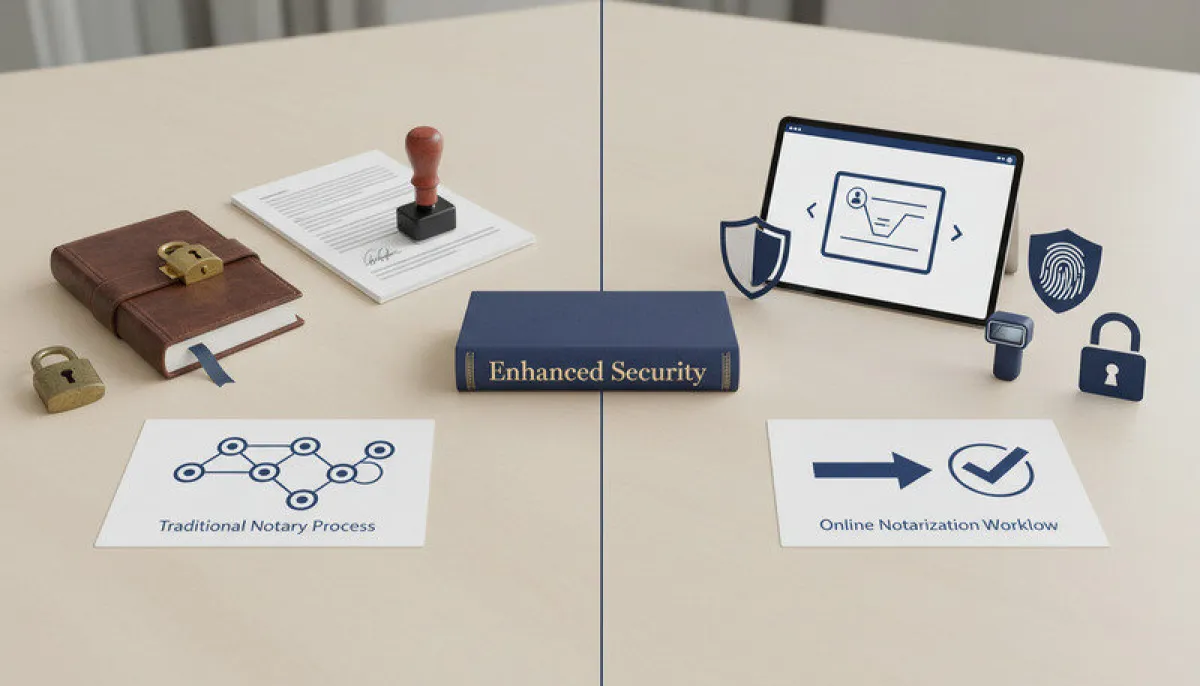
Contrary to common assumptions, online notarization services often provide superior security compared to traditional notarization. The multi-factor identity verification process creates a more thorough confirmation of signer identity than the simple ID check typical in face-to-face notarization.
Digital audit trails provide comprehensive documentation of every step in the notarization process. These records include detailed timestamps, verification results, video recordings, and document version histories that create a complete legal record. Traditional notarizations typically leave only the notary’s journal entry and the completed certificate as evidence.
Cost-Effectiveness for High-Volume Users
While individual online notarizations might cost slightly more than traditional services, the total cost of ownership often favors digital solutions when factoring in time savings, travel costs, and administrative efficiency. Law firms can reduce staff time spent coordinating notarizations, and real estate agents can close more deals in the same time period.
Title companies particularly benefit from volume pricing and the ability to process multiple notarizations simultaneously. The reduced need for physical office space dedicated to notarizations and the elimination of travel reimbursements for mobile notary services contribute to overall cost savings.
Client Satisfaction and Modern Expectations
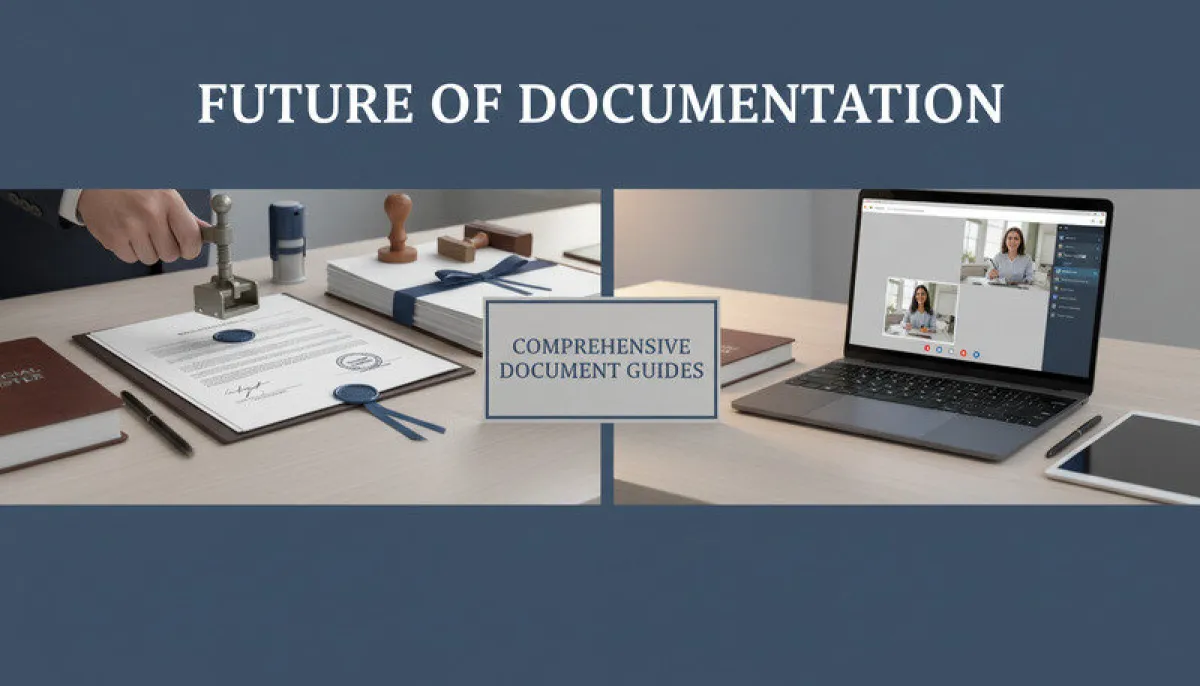
Today’s clients increasingly expect digital solutions that match the convenience they experience in other areas of their lives. Online notarization services meet these expectations while maintaining the legal protections that notarization provides. The ability to complete notarizations from home or office, often outside traditional business hours, significantly improves client satisfaction.
For elderly clients or those with mobility limitations, online notarization services provide access to notarial services that might otherwise be difficult or impossible to obtain. This accessibility ensures that important legal documents can be properly executed regardless of physical limitations or geographic constraints.
Common Misconceptions About Online Notarization
Despite growing adoption and legal recognition, several misconceptions persist about online notarization services. These misunderstandings often stem from unfamiliarity with the technology or confusion about legal requirements. Addressing these misconceptions helps legal professionals make informed decisions about implementing these services.
Security and Fraud Concerns
One of the most persistent misconceptions is that online notarization services are less secure than traditional methods. In reality, the multi-layered verification process used by reputable platforms often provides stronger security than face-to-face notarization. Traditional notarization relies primarily on visual ID verification and the notary’s judgment, while online services use automated credential analysis, database verification, and biometric confirmation.
The digital nature of online notarization actually makes fraud more difficult to accomplish. Every action is recorded and timestamped, creating a comprehensive audit trail that would be nearly impossible to falsify. The video recording of the session provides visual evidence of the signer’s identity and willing participation that doesn’t exist with traditional notarization.
Legal Validity Questions
Another common misconception concerns the legal validity of documents notarized online. Some professionals worry that these documents might not be accepted by courts, government agencies, or other institutions. In practice, properly executed online notarizations carry the same legal weight as traditional notarizations and are widely accepted.
The legal framework supporting online notarization services includes both federal legislation (ESIGN Act and UETA) and state-specific RON statutes. This dual-layer legal foundation ensures that online notarizations are recognized across jurisdictions and maintain their validity even when documents cross state lines.
Expert Tip: Documents notarized through authorized online notarization services are accepted by the vast majority of courts, government agencies, and financial institutions. The few exceptions are typically for specific document types that explicitly require in-person notarization by statute.
Technology Complexity Assumptions
Many legal professionals assume that online notarization services require extensive technical knowledge or complex software installations. Modern platforms are designed for ease of use, typically requiring only a web browser, webcam, and stable internet connection. The user experience is intentionally streamlined to accommodate users with varying levels of technical comfort.
The learning curve for most online notarization services is minimal. Signers receive clear instructions and often have access to technical support during their sessions. For legal professionals integrating these services into their practice, most platforms provide comprehensive training and ongoing support to ensure smooth implementation.
Cost and Value Perceptions
Some professionals view online notarization services as an unnecessary expense compared to traditional notary fees. This perception often fails to account for the total cost of traditional notarization, including travel time, scheduling delays, potential document corrections, and the opportunity cost of staff time spent coordinating appointments.
When evaluating the true cost-effectiveness of online notarization services, successful firms consider the value of faster transaction completion, improved client satisfaction, and the ability to handle urgent documents outside normal business hours. These factors often justify the service fees through improved operational efficiency and client retention.
Types of Online Notarization Services
Understanding the different types of online notarization services helps legal professionals, real estate agents, and title companies choose the right solution for their specific needs. The market offers various service models, each designed for different use cases and volume requirements.
Full-Service Platforms
Full-service online notarization platforms provide end-to-end solutions that handle every aspect of the notarization process. These platforms maintain their own network of commissioned notaries, provide all necessary technology, and manage compliance with state regulations. Users simply upload their documents and schedule sessions without worrying about finding qualified notaries or managing technical requirements.
BlueNotary exemplifies this full-service approach, offering law firms, real estate agents, and title companies a complete solution that integrates identity verification, document management, and notarial services. These platforms typically provide 24/7 availability, support for multiple document types, and integration capabilities with existing business systems.
Enterprise Integration Solutions
Some online notarization services focus specifically on enterprise integration, providing APIs and white-label solutions that allow businesses to embed notarization capabilities directly into their existing systems. These solutions work particularly well for large law firms or title companies that process hundreds of notarizations monthly and want to maintain their existing client interfaces.
Enterprise solutions often include advanced features like bulk processing, custom branding, detailed analytics, and integration with specific practice management software. The trade-off is typically higher implementation complexity and minimum volume requirements that make these solutions unsuitable for smaller practices.
Specialized Industry Platforms
Certain online notarization services specialize in specific industries or document types. Real estate-focused platforms might integrate directly with MLS systems and offer specialized templates for common real estate documents. Legal-focused platforms might provide enhanced security features and integration with legal document management systems.
These specialized platforms often provide industry-specific training for their notaries and maintain templates optimized for common document types. The specialization can result in faster processing and fewer complications, but might limit flexibility for handling unusual document types or requirements.
Comparison of Service Types
| Service Type | Best For | Key Advantages | Considerations |
|---|---|---|---|
| Full-Service | Small to medium firms | Complete solution, easy setup | Per-transaction fees |
| Enterprise | High-volume users | Custom integration, bulk pricing | Complex implementation |
| Industry-Specific | Specialized practices | Tailored features, expert notaries | Limited flexibility |
Implementation Best Practices
Successfully implementing online notarization services requires careful planning and attention to both technical and procedural details. Legal professionals, real estate agents, and title companies can maximize the benefits of these services by following proven implementation strategies.
Client Education and Communication
Effective client education begins before the first online notarization session. Clients need to understand what to expect, what technology they’ll need, and how the process differs from traditional notarization. Clear communication reduces anxiety and ensures smoother sessions.
Preparation materials should include technical requirements, step-by-step guides, and answers to common questions. Many successful firms create brief video tutorials or FAQ documents that clients can review before their sessions. This preparation significantly reduces technical difficulties and session delays.
Pro Tip: Provide clients with a technical checklist at least 24 hours before their scheduled session. Include items like “test your webcam and microphone,” “ensure stable internet connection,” and “have your government-issued ID ready.” This preparation prevents most common session delays.
Staff Training and Workflow Integration
Staff training should cover both the technical aspects of the chosen platform and the procedural changes required for online notarization. Front desk staff need to understand how to schedule sessions, prepare clients, and troubleshoot common technical issues. Legal professionals need to understand how online notarizations fit into their document workflows and client service procedures.
Workflow integration involves updating existing procedures to accommodate online notarization options. This might include modifying intake forms, updating client communication templates, and establishing protocols for handling urgent notarizations outside normal business hours.
Technology Infrastructure Requirements
While online notarization services don’t require extensive technical infrastructure, ensuring reliable performance requires attention to basic technology needs. Stable internet connectivity is essential—both for the firm’s staff and for client sessions. Backup internet connections or mobile hotspot capabilities can prevent disruptions during important sessions.
Device requirements are typically minimal, but having dedicated equipment for notarization sessions can improve reliability and professionalism. A quality webcam, noise-canceling microphone, and large monitor enhance the session experience for both notaries and clients.
Document Management Integration
Integrating online notarization services with existing document management systems streamlines workflows and ensures proper record-keeping. Many platforms offer integration with popular legal practice management software, allowing notarized documents to be automatically filed in the correct client matters.
For firms using document templates, working with online notarization platforms to optimize these templates for digital signing can improve efficiency. This might involve adjusting signature block formatting, adding digital signature fields, or creating templates specifically designed for online notarization.

Security and Compliance Considerations
Security and compliance represent critical aspects of online notarization services that legal professionals must understand to protect their clients and maintain professional standards. The regulatory framework surrounding these services continues to evolve, making ongoing compliance monitoring essential.
Data Protection and Privacy
Online notarization services handle sensitive personal information and confidential legal documents, making data protection a paramount concern. Reputable platforms implement comprehensive data protection measures that often exceed what’s possible with traditional notarization methods.
Encryption protocols protect data both in transit and at rest. Advanced platforms use AES-256 encryption for stored documents and TLS encryption for data transmission. Access controls ensure that only authorized personnel can view specific documents or session recordings, and detailed access logs track every interaction with sensitive data.
Privacy policies for online notarization services must comply with various regulations, including state privacy laws and industry-specific requirements. For legal professionals, understanding these policies helps ensure compliance with attorney-client privilege and other confidentiality obligations.
Regulatory Compliance Framework
Each state that authorizes online notarization maintains specific regulatory requirements that platforms must follow. These requirements typically cover notary training and certification, technology standards, record-keeping obligations, and audit procedures. Reputable online notarization services maintain compliance across all jurisdictions where they operate.
The regulatory framework includes requirements for session recording quality, storage duration, and access procedures. Most states require video recordings to be stored for 5-10 years and made available to regulatory authorities upon request. Understanding these requirements helps legal professionals choose platforms that meet their compliance obligations.
Professional Liability Considerations
Using online notarization services introduces new professional liability considerations that legal professionals should address. While the notarization itself is performed by the platform’s commissioned notaries, the legal professional retains responsibility for ensuring that notarization is appropriate for the specific document and situation.
Professional liability insurance policies should be reviewed to ensure coverage extends to online notarization activities. Some insurers have specific provisions or exclusions related to electronic notarization that might require policy adjustments or additional coverage.
Key Insight: The detailed audit trails and session recordings provided by online notarization services often provide stronger legal protection than traditional notarization records, but legal professionals should still maintain their own documentation of why online notarization was chosen for specific documents.
Choosing the Right Online Notarization Service
Selecting an appropriate online notarization service requires evaluating multiple factors beyond basic functionality. Legal professionals, real estate agents, and title companies have different priorities and requirements that should guide their platform selection process.
Evaluation Criteria
Platform reliability stands as the most critical factor, encompassing both technical uptime and consistent service quality. Look for platforms that publish uptime statistics, offer service level agreements, and maintain redundant systems to prevent service disruptions. The platform’s track record with similar businesses provides insight into long-term reliability.
Integration capabilities determine how well the service will fit into existing workflows. Evaluate available APIs, supported file formats, and compatibility with current practice management software. The ability to maintain existing client communication patterns while adding online notarization can significantly impact adoption success.
State Authorization and Compliance
Verify that any online notarization service operates with proper authorization in all relevant states. Each state maintains its own list of approved platforms and notaries, and using unauthorized services can invalidate notarizations. Reputable platforms clearly display their state authorizations and maintain current compliance documentation.
The platform’s compliance monitoring procedures should include regular audits, ongoing notary training, and immediate updates when state regulations change. Platforms that provide compliance reporting and audit support help legal professionals meet their own regulatory obligations.
Cost Structure and Value Analysis
Online notarization service pricing varies significantly based on service model, volume commitments, and included features. Per-transaction pricing works well for occasional users, while subscription models or volume discounts benefit high-frequency users. Consider the total cost including any setup fees, training costs, and integration expenses.
Value analysis should include both direct cost savings and indirect benefits like improved client satisfaction, faster transaction completion, and reduced administrative overhead. Many firms find that the ability to handle urgent notarizations outside normal business hours justifies the service costs through improved client retention.
Support and Training Resources
Comprehensive support and training resources are essential for successful implementation. Look for platforms that provide multiple support channels, including phone, email, and chat support during extended hours. Training resources should cover both technical platform usage and best practices for client communication.
The quality of notary training and ongoing education provided by the platform affects service quality. Platforms that invest in comprehensive notary training and continuing education typically provide more consistent, professional service that reflects well on the businesses that use them.
Common Questions About Online Notarization Services
What Documents Can Be Notarized Online?
Most documents that can be traditionally notarized can also be notarized online, including contracts, affidavits, powers of attorney, loan documents, and real estate papers. However, some document types are specifically excluded from online notarization in certain states. Wills, trusts, and adoption papers often require in-person notarization due to their sensitive nature and potential for coercion.
The specific list of acceptable documents varies by state, so it’s important to verify that your document type is eligible for online notarization in the relevant jurisdiction. Reputable online notarization services maintain current lists of acceptable document types for each state where they operate.
Real estate documents represent one of the most common use cases for online notarization services. Purchase agreements, deeds, mortgage documents, and closing papers can typically be notarized online, though some states maintain exceptions for specific real estate document types.
For law firms, common documents include client affidavits, powers of attorney, settlement agreements, and various litigation-related papers. The key is ensuring that the document type is specifically authorized for online notarization in the state where the notarization occurs.
How Much Do Online Notarization Services Cost?
Pricing for online notarization services typically ranges from $15 to $50 per notarization, depending on the platform, service level, and any additional features required. This cost often compares favorably to mobile notary services, which can charge $50-150 per appointment plus travel fees.
Volume users often receive significant discounts through subscription plans or bulk pricing agreements. Law firms and title companies that process multiple notarizations monthly might pay as little as $10-20 per notarization under volume pricing agreements. These arrangements often include additional features like priority scheduling, dedicated support, and integration assistance.
The total cost comparison should include time savings, reduced travel expenses, and improved client satisfaction. Many businesses find that the operational efficiency gains justify the service fees even when the per-transaction cost exceeds traditional notary fees.
Are Online Notarizations Legally Binding Across State Lines?
Yes, properly executed online notarizations are legally binding across state lines under federal and state law. The ESIGN Act and Uniform Electronic Transactions Act provide the federal framework that ensures interstate recognition of electronic notarizations. This means a document notarized online in one state is generally accepted as valid in all other states.
However, the specific requirements for online notarization vary by state. A document must be notarized according to the laws of the state where the notary is commissioned, not necessarily where the signer is located. This distinction is important for legal professionals working with clients in multiple states.
Some exceptions exist for specific document types or jurisdictions that explicitly require in-person notarization. Banking regulations, court rules, or local government requirements might specify traditional notarization for certain documents, regardless of general RON authorization.
What Happens If Technical Problems Occur During a Session?
Technical problems during online notarization sessions are handled through established protocols designed to maintain security while resolving issues quickly. Most platforms provide immediate technical support during sessions and can often resolve connectivity or audio/video problems without restarting the entire verification process.
If technical problems cannot be resolved quickly, the session is typically terminated and rescheduled at no additional cost. The identity verification results are usually saved, allowing the rescheduled session to proceed more quickly since the signer doesn’t need to repeat the full verification process.
Platform reliability has improved significantly as the technology has matured. Most established online notarization services report session completion rates above 95%, with technical problems becoming increasingly rare as both platforms and users become more experienced with the technology.
How Long Does the Online Notarization Process Take?
A typical online notarization session takes 10-30 minutes from start to finish, depending on document complexity and the signer’s familiarity with the process. The identity verification phase usually takes 5-10 minutes, while the actual notarization and document signing typically require another 5-15 minutes.
First-time users generally take longer as they familiarize themselves with the platform and process. Experienced users can often complete simple notarizations in under 10 minutes. Complex documents with multiple signatures or special requirements might take longer, but even complicated notarizations rarely exceed 45 minutes.
The scheduling flexibility of online notarization services often provides faster overall turnaround than traditional methods. While the session itself might take similar time to an in-person appointment, the elimination of travel time and scheduling constraints often results in same-day or next-day completion rather than waiting days or weeks for appointments.
Can Multiple People Sign the Same Document Online?
Yes, online notarization services can handle documents requiring multiple signers, though the process varies depending on the platform and document requirements. Some platforms allow multiple participants in a single session, while others require separate sessions for each signer with the document being passed between sessions.
For documents requiring simultaneous signing, platforms typically provide virtual meeting rooms where all parties can participate in the same session. Each signer must complete their own identity verification process, and the notary must confirm each person’s identity and willing participation individually.
Sequential signing workflows work well for documents where signers don’t need to sign simultaneously. The document is notarized after the final signature is applied, with the notary confirming that all required signatures are present and properly executed.
Advanced Features and Capabilities
Modern online notarization services offer sophisticated features that extend beyond basic notarization to support complex business workflows and specialized requirements. Understanding these advanced capabilities helps professional service providers maximize the value of their platform investment.
Bulk Processing and Workflow Automation
High-volume users benefit from bulk processing features that streamline multiple notarizations. These systems can handle batch uploads of similar documents, automatically schedule sessions based on signer availability, and process multiple notarizations simultaneously using different notaries.
Workflow automation reduces manual coordination by automatically sending appointment reminders, preparing documents for signing, and distributing completed notarized documents to relevant parties. For title companies processing multiple closings daily, these automation features can reduce administrative overhead by 50% or more.
Integration with existing business systems enables automated workflow triggers. For example, when a real estate purchase agreement is uploaded to the firm’s document management system, the integration can automatically initiate the online notarization process and notify relevant parties of their required actions.
Advanced Security and Audit Features
Enterprise-grade online notarization services provide enhanced security features that exceed basic platform requirements. Multi-factor authentication for business users, role-based access controls, and detailed audit logging help organizations maintain security standards and regulatory compliance.
Advanced platforms offer customizable security policies that allow businesses to set their own requirements for document handling, user access, and retention periods. These policies can be tailored to meet specific industry regulations or internal compliance standards.
Audit and reporting capabilities provide detailed insights into notarization activities, including success rates, common failure points, and user behavior patterns. This data helps businesses optimize their processes and identify training needs for staff or clients.
Custom Branding and Client Experience
White-label solutions allow businesses to provide online notarization services under their own branding, maintaining consistent client experience across all service offerings. Custom branding extends to email communications, session interfaces, and completed document presentation.
Client portal integration enables businesses to embed online notarization capabilities directly into their existing client service platforms. Clients can access notarization services through familiar interfaces without learning new systems or creating additional accounts.
Customizable communication templates help maintain consistent messaging and professional presentation throughout the notarization process. Businesses can customize appointment confirmations, reminder emails, and completion notifications to match their communication standards and branding guidelines.
Expert Tip: Businesses that invest in custom branding and seamless integration often see higher client adoption rates and improved satisfaction scores compared to those using generic platform interfaces.
Future Trends in Online Notarization
The online notarization industry continues to evolve rapidly, driven by technological advances, regulatory changes, and shifting client expectations. Understanding emerging trends helps legal professionals, real estate agents, and title companies prepare for future opportunities and challenges.
Artificial Intelligence Integration
AI-powered enhancements are beginning to appear in online notarization services, particularly in identity verification and fraud detection. Machine learning algorithms can analyze identity documents with increasing sophistication, detecting subtle signs of tampering or forgery that might escape human notice.
Predictive analytics help platforms identify potential fraud patterns and flag suspicious sessions for additional review. These systems learn from successful and failed verification attempts to continuously improve their accuracy and reduce false positives that can delay legitimate notarizations.
Natural language processing capabilities enable automated document analysis that can identify potential issues before sessions begin. These systems can flag incomplete documents, missing signature fields, or other problems that would otherwise cause delays during live sessions.
Blockchain and Distributed Verification
Some platforms are exploring blockchain technology to create immutable records of notarizations that can be independently verified without relying on the original platform. These distributed verification systems could provide additional security and reduce concerns about platform reliability or longevity.
Smart contracts integrated with notarization services could automate document execution based on notarization completion. For example, a real estate closing could automatically trigger fund transfers and title transfers when all required documents are properly notarized.
Expanded Document Types and Use Cases
Regulatory trends suggest continued expansion of document types eligible for online notarization. States are gradually removing restrictions on specific document categories as the technology proves its reliability and security. This expansion will likely include more estate planning documents, court filings, and specialized business documents.
International recognition of online notarizations is also developing, with some countries beginning to accept RON documents for various purposes. This trend could significantly benefit businesses with international clients or operations.
The integration of online notarization services with other legal technology tools continues to deepen. Connections with electronic discovery platforms, contract management systems, and legal research tools create comprehensive digital workflows that eliminate paper-based processes entirely.
Final Thoughts
Online notarization services have fundamentally changed how legal professionals, real estate agents, and title companies handle document execution, offering security, convenience, and efficiency that traditional methods simply can’t match. The technology has matured to the point where these services often provide superior identity verification and audit trails compared to in-person notarization while eliminating geographic and scheduling barriers. Get started with BlueNotary to experience how streamlined and secure online notarization can transform your document workflows. Ready to get started? Visit BlueNotary to learn more.