


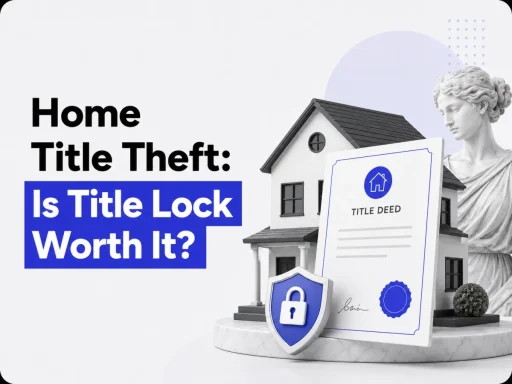

Quick answer: Home title theft is when a fraudster forges a deed to transfer your property into their name or borrow against it. It’s rare but rising. You can protect your home largely for free by enrolling in your county’s property-fraud alerts and making sure any deed is properly notarized. Paid “title lock” services only monitor and alert, they can’t actually “lock” your title.
What is home title theft?
Home title theft, also called deed fraud or “house stealing”, happens when a criminal forges documents to transfer your property’s title into their name, or uses a fake deed to take out loans against your home. Using a forged signature (and sometimes a faked or tricked notarization), they record a fraudulent deed with the county, making it look like ownership changed hands.
It’s a genuinely scary idea, but perspective matters: it’s relatively rare and often preventable, though the FBI and FTC have flagged it as rising. The good news is that the strongest protections are simple and mostly free and understanding how the fraud works shows you exactly where to block it. A properly done notarization is one of those blocks, which is why notarization fraud prevention matters here.
How title fraud happens (and who’s targeted)
The scheme usually follows a pattern:
- A fraudster forges a deed transferring your property to themselves or a shell entity.
- They get it notarized fraudulently by tricking a notary, using a fake notarization, or (rarely) a complicit one.
- They record the deed with the county, which updates the public record.
- They then try to sell the home or borrow against it before you notice.
Fraudsters favor properties where the owner isn’t watching closely:
- Paid-off homes (no lender monitoring the title)
- Vacant, second, or rental homes
- Elderly owners or estates
- Properties of people who’ve recently died
If your home fits one of these, extra vigilance pays off.
How to protect your home (mostly for free)
You don’t need to buy anything to build strong protection:
- Enroll in your county’s property-fraud alert: Most county recorders offer a free service that emails you whenever a document is recorded against your property. This is the single best (and free) early-warning tool.
- Insist on proper notarization: Legitimate notarization verifies the true owner signed, a forged transfer is much harder when identity is properly checked. This is where fraud-resistant online notarization helps.
- Watch your mail: Missing property-tax or mortgage statements, or unexpected loan/refi mail, can signal tampering.
- Check your property records: Periodically at your county recorder’s site.
These steps cover the vast majority of homeowners without a monthly fee.
Is title lock worth it?
Here’s the honest answer that vendor-sponsored articles often skip: “title lock” services do not lock your title. Despite the name, they are monitoring services — they watch public records and alert you if something is filed against your property. They cannot prevent a fraudulent deed from being recorded; they only tell you after the fact.
So are they worth it? For many homeowners, not necessarily, because:
- Your county likely offers the same monitoring free through its property-fraud alert.
- They don’t stop the fraud they notify you, just like the free alert.
- Title insurance may already cover certain fraud losses.
Where a paid service can add value, convenience, monitoring across multiple counties/properties, and packaged support if something happens. But if budget matters, free county alerts plus vigilance deliver the core protection without a subscription. Decide based on that, not the ad.
Does title insurance cover title theft?
Sometimes, and it’s worth checking your policy. An owner’s title insurance policy (bought at purchase) protects against title defects and certain fraud/forgery that existed or occurred, and many policies include coverage for post-policy forgery. It’s a one-time premium, unlike a monthly monitoring fee.
But title insurance is not monitoring, it doesn’t alert you to a new filing. So the strongest combo for most owners is owner’s title insurance (protection) + free county alerts (monitoring) + proper notarization (prevention). Review your existing policy or ask your title company what your coverage includes.
What to do if you’re a victim of home title theft
If you suspect a fraudulent filing, act fast, speed limits the damage:
- Contact your county recorder’s office to confirm what was filed and how to flag it.
- File a police report and report to the FBI’s IC3 and the FTC.
- Notify your title insurer if you have a policy.
- Consult a real estate attorney, undoing a fraudulent deed usually requires a court action to correct the record.
- Alert your mortgage servicer if loans were taken against the property.
Documentation and quick reporting are your best allies here.
Conclusion
Home title theft is a real but relatively rare crime that’s getting more attention and the strongest defenses are the least glamorous. Enroll in your county’s free property-fraud alert, make sure any deed or property document is properly notarized, keep an owner’s title insurance policy, and watch your mail. On the much-advertised “title lock” services: understand that they monitor and alert they don’t lock anything, and your county often provides the same monitoring for free. Buy one for convenience if you like, but don’t assume it prevents fraud. If the worst happens, move fast: county recorder, police, FBI/FTC, your insurer, and a real estate attorney.
Selling, transferring, or refinancing? Make sure the deed is notarized with real identity verification, a first-line defense against forged transfers. BlueNotary notarizes property documents online with credential checks and a tamper-evident record, 24/7. Learn how fraud prevention works in detecting notarization fraud.
Frequently asked questions
What is home title theft?
Home title theft is deed fraud, a criminal forges documents to transfer your property’s title into their name or to borrow against your home, then records the fraudulent deed with the county.
How does deed or title fraud happen?
A fraudster forges a deed, gets it fraudulently notarized, and records it with the county, then tries to sell or borrow against the property before the real owner notices. Paid-off, vacant, and elderly-owned homes are common targets.
Is home title lock worth it?
Often not necessarily. “Title lock” services only monitor public records and alert you, they don’t lock your title or prevent a filing. Many counties offer the same monitoring free, so weigh that before paying.
How can I protect my home from title theft for free?
Enroll in your county’s free property-fraud alert, insist on proper notarization of deeds, watch your mail for missing statements, and periodically check your property records with the county recorder.
Does title insurance cover title theft?
Sometimes. An owner’s title insurance policy may cover certain forgery and fraud losses, and many include post-policy forgery coverage. But it’s protection, not monitoring, so check your specific policy.
What do you do if you’re a victim of home title theft?
Contact your county recorder, file a police report, report to the FBI’s IC3 and the FTC, notify your title insurer, and consult a real estate attorney to correct the record, as fast as possible.