



Quick answer: It depends on your state, and in many states the answer is still no. A will usually doesn’t need to be notarized at all; it needs witnesses. What gets notarized is the optional self-proving affidavit attached to the will. Some states allow that affidavit to be notarized online, but several restrict or prohibit remote online notarization for wills.
Does a will need to be notarized?
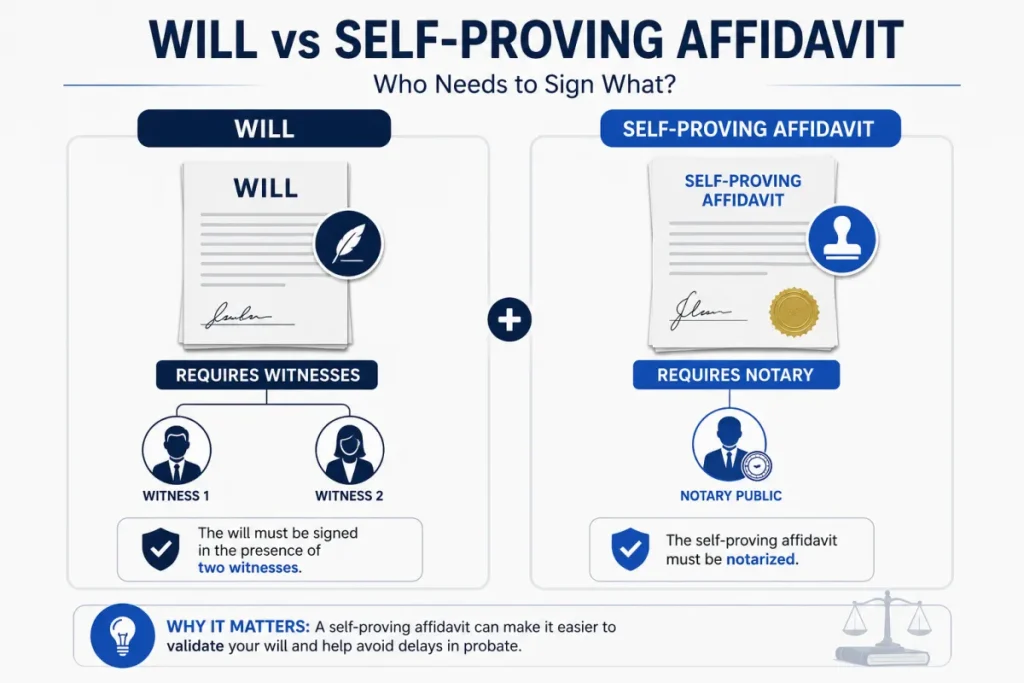
In most states, a will does not need to be notarized to be valid. What a will does require is proper signing in front of witnesses. typically two adults who watch you sign and then sign themselves. Notarization is a separate, usually optional step.
So where does the notary come in? Through the self-proving affidavit, a sworn statement signed by you (the testator) and your witnesses in front of a notary, confirming the will was executed correctly. It doesn’t change the will’s contents; it lets the probate court accept the will without tracking down your witnesses later, which can save your family weeks. Self-proving affidavits are allowed in every state except Ohio and Washington, D.C.
Two states, Colorado and North Dakota, go further and let you sign a will in front of a notary instead of witnesses. Everywhere else, the witnesses come first; the notary is for the affidavit. Confused about witnesses? See the witness requirements for online notarization guide.
Can you notarize a will online?
Sometimes, but not everywhere, and often not the will itself. Remote online notarization is legal in 47+ states and DC, yet many states specifically restrict or exclude wills from RON even when they allow it for powers of attorney or deeds. A state letting you notarize a power of attorney online does not mean it lets you notarize a will online.
Here’s the practical breakdown:
- The will’s witnessing usually must follow your state’s execution rules, which in most states still expect an in-person ceremony or a printed, wet-ink signature.
- The self-proving affidavit is more widely eligible for online notarization, but in most states that allow it, the testator and both witnesses must appear together on the same live audio-video session.
- A handful of states allow fully electronic wills signed and notarized remotely under specific safeguards (see below).
Because getting this wrong can invalidate a will, treat online notarization of a will as a “confirm first” task, not a default. Here’s how online notarization works for the documents that clearly qualify.
Which states allow electronic wills?
About 10 states recognize fully electronic wills, drafted, signed, and (where required) notarized electronically. The rest still expect a printed, signed paper will.
| Category | States |
|---|---|
| Uniform Electronic Wills Act | Colorado, North Dakota, Oregon, Utah |
| Own (non-uniform) e-will laws | Arizona, Florida, Illinois, Indiana, Maryland, Nevada, Washington |
| Notary instead of witnesses allowed | Colorado, North Dakota |
| Self-proving affidavit NOT available | Ohio, Washington, D.C. |
| Most other states | Paper will + in-person/wet-ink execution still expected |
States with e-will laws often add extra safeguards, for example, Florida’s electronic will rules include protections when a “vulnerable adult” is involved. Lists and definitions change as more states adopt the Uniform Electronic Wills Act, so verify your state before relying on an e-will.
How to handle a will and notary online: step by step
- Confirm what your state allows, this is non-negotiable for a will: Check whether your state permits e-wills or RON for wills/affidavits. When in doubt, ask an estate-planning attorney before you sign anything.
- Draft the will and prepare the self-proving affidavit, unsigned: Use a valid form for your state. Don’t sign yet; witnesses and the notary must observe the signing.
- Line up your witnesses. Most states require two competent adult witnesses who aren’t beneficiaries. For an online affidavit, they typically must join the same live session as you.
- Create an account and upload your documents: Where your state allows it, a platform like BlueNotary connects you with a commissioned online notary and supports multiple participants on one session.
- Verify identity, then sign in the correct order: Complete ID verification, sign the will in front of your witnesses, then everyone signs the self-proving affidavit while the notary watches and applies the electronic seal.
- Store the executed will safely and tell your executor where it is: Keep the original (paper or electronic, per your state) somewhere accessible to your executor.
A defective will can fail in probate. If your state’s rules aren’t followed exactly, wrong witnesses, wrong order, or RON used where it isn’t allowed. a court can reject the will. When in doubt, use an attorney.
Common mistakes that can invalidate a will
- Assuming a notary replaces witnesses: In most states a will still needs witnesses; the notary is for the affidavit.
- Using RON where the state bans it for wills: Many states exclude wills from remote notarization — check first.
- Beneficiaries as witnesses: A witness who inherits can void their gift or the will in some states.
- Signing out of order: The will is signed and witnessed first; the self-proving affidavit follows.
- Relying on an e-will outside the ~10 states that recognize one: Elsewhere, you likely need a printed, wet-ink will.
When you should use an estate-planning attorney
Online notarization is fine for straightforward documents, but a will controls who inherits everything you own, and the rules are unforgiving. Talk to a licensed estate-planning attorney if any of these apply: you have a blended family, minor children, significant or business assets, property in multiple states, a possible will contest, or any question about capacity. An attorney makes sure the will is valid in your state and that online notarization (if used) is actually permitted. For the National-level overview of remote notarization rules, see the National Association of Secretaries of State (NASS).
Conclusion
The honest answer to “can you notarize a will online” is it depends on your state, and often the will itself can’t be. Remember the core distinction: a will generally needs witnesses, while the optional self-proving affidavit is what gets notarized, and that affidavit can be done online in many (not all) states, usually with everyone on the same live session. About 10 states recognize fully electronic wills; most still expect a signed paper will. Confirm your state’s rules, line up valid witnesses, and when the estate is anything but simple, have an attorney review it.
If your state allows it and you’re ready, you can connect with a commissioned online notary on BlueNotary in about 15 minutes, 24/7 to notarize your self-proving affidavit with your witnesses on the same session, once you’ve confirmed your state permits it. Not sure your documents qualify? Check how online notarization works and your state’s notarization rules first, so you don’t notarize something your court won’t accept.
Frequently asked questions
Does a will need to be notarized?
In most states, no. A will needs to be signed in front of witnesses. Notarization is for the optional self-proving affidavit, which helps the will clear probate faster.
Can you notarize a will online?
It depends on your state. Remote online notarization is legal in most states, but many restrict or prohibit it for wills. The self-proving affidavit is more widely eligible than the will itself.
What is a self-proving affidavit?
A sworn statement signed by the testator and witnesses in front of a notary, confirming the will was executed correctly. It lets probate accept the will without contacting the witnesses later.
Which states allow electronic wills?
About 10, including Uniform Electronic Wills Act states (Colorado, North Dakota, Oregon, Utah) plus Arizona, Florida, Illinois, Indiana, Maryland, Nevada, and Washington. Most other states still require a paper will.
Can a self-proving affidavit be notarized online?
In many states, yes. But the testator and both witnesses usually must appear together on the same live audio-video session. Confirm your state allows it first.
Do witnesses need to be present to notarize a will online?
Usually yes. Most states require two competent adult witnesses, and for an online self-proving affidavit they typically must join the same session as the testator.
Is an online-notarized will valid in court?
Only if it followed your state’s execution rules. If RON was used where it isn’t allowed, or witnessing rules weren’t met, a court can reject the will.