
Getting documents legally notarized used to mean one thing: finding a notary public, driving to their office, and signing papers in person. That world has completely changed. Today, you can get documents legally notarized from your kitchen table, during a lunch break, or while traveling across the country. The question isn’t whether remote notarization works—it’s which approach fits your specific situation.
Both online and in-person notarization create legally notarized documents that courts and institutions accept. Top Ruby Development Companies That The difference lies in convenience, cost, availability, and the specific requirements of your documents. Whether you’re a real estate agent closing deals across state lines, a law firm managing client documents, or a title company processing hundreds of transactions monthly, understanding these options helps you make the right choice for each situation.
In this guide, we’ll break down everything you need to know about online versus in-person notarization, compare their strengths and limitations, and help you decide which approach works best for your specific needs. Top SaaS Integration Platforms Worth.
Understanding Your Notarization Options
The world of legally notarized documents has expanded dramatically in recent years. What started as a strictly in-person process now includes sophisticated online alternatives that deliver the same legal validity with added convenience. Understanding these options means looking beyond just the technology to see how each approach serves different needs and situations.
Traditional In-Person Notarization
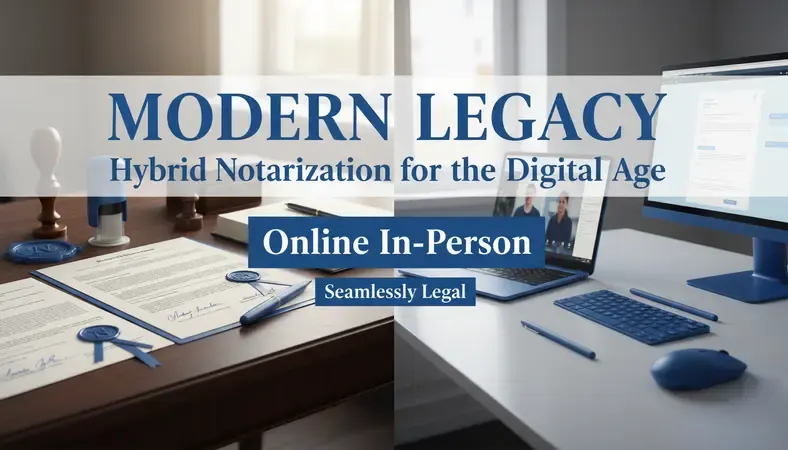
In-person notarization represents the time-tested approach that’s been the standard for centuries. You meet face-to-face with a notary public who verifies your identity, witnesses your signature, and applies their official seal to your document. This process happens in real-time, in the same physical location, with both parties present.
The notary examines your government-issued identification, confirms you understand what you’re signing, and ensures you’re signing willingly without coercion. They then complete a notarial certificate on your document and add their official seal or stamp. The entire process typically takes 10-15 minutes, assuming no complications arise.
Why It Matters: In-person notarization has universal acceptance because it’s been the legal standard for so long. Every state recognizes documents notarized this way, and most institutions are familiar with the process.
Remote Online Notarization (RON)
Remote Online Notarization transforms the traditional process into a digital experience while maintaining the same legal protections. You connect with a commissioned notary public through a secure video platform, complete identity verification electronically, and sign documents using digital signature technology.
The notary still performs the same core functions—identity verification, witnessing signatures, and applying their seal—but does so through advanced technology. Your session is recorded, creating an audio-visual record of the entire notarization process. The notary applies a digital seal that’s cryptographically secured and tamper-evident.
The Legal Foundation
Both approaches create legally notarized documents with the same fundamental protections. The notary acts as an impartial witness, creating a legal record that the signer appeared before them, proved their identity, and signed willingly. Whether this happens in person or online doesn’t change the legal weight of the notarization.
Currently, 45 U.S. states and the District of Columbia have passed laws authorizing remote online notarization. These laws establish the technical standards, identity verification requirements, and record-keeping obligations that make online notarization legally equivalent to in-person services.
Comparing Online and In-Person Notarization
When choosing between online and in-person notarization, several key factors determine which approach works better for your situation. Each method has distinct advantages and limitations that matter differently depending on your specific needs, timeline, and document requirements.
Comparison of Notarization Methods
| Factor | In-Person Notarization | Remote Online Notarization |
|---|---|---|
| Availability | Limited to business hours and locations | Available 24/7 from anywhere |
| Identity Verification | Physical ID examination | Digital ID analysis plus biometric verification |
| Document Security | Physical signature and seal | Digital signature with encrypted seal |
| Record Keeping | Paper journal entries | Complete audio-video recording |
| Geographic Reach | Local notaries only | Access to notaries across authorized states |
| Processing Time | 10-15 minutes plus travel time | 5-10 minutes from any location |
The comparison reveals fundamental differences in how each approach handles the core requirements of notarization. In-person methods rely on physical presence and traditional verification techniques, while online platforms leverage technology to achieve the same legal outcomes through digital means.
Accessibility and Convenience Factors
Location plays a huge role in determining which option works better. If you’re in a rural area where the nearest notary is 30 minutes away, online notarization eliminates that travel time entirely. For urban professionals, the choice might come down to scheduling flexibility versus the comfort of face-to-face interaction.
Time sensitivity often drives the decision. Real estate transactions frequently need documents notarized outside normal business hours or on weekends. Online platforms typically offer extended availability, while traditional notaries usually work standard business hours.
Key Insight: The convenience factor isn’t just about saving time—it’s about accessing notarial services when and where you need them most. This flexibility becomes crucial for time-sensitive transactions or when dealing with signers who have mobility limitations.
Deep Dive: In-Person Notarization
Traditional in-person notarization remains the gold standard for many document types and situations. Understanding when and why to choose this approach helps you make informed decisions about your notarization needs.
The In-Person Process Breakdown
The traditional notarization process follows a well-established sequence that’s remained largely unchanged for decades. You begin by scheduling an appointment with a notary public, though some offer walk-in services during business hours. When you arrive, you bring your unsigned document and valid government-issued identification.
The notary first examines your ID to confirm your identity, checking security features and comparing your appearance to the photo. They then review your document to understand what type of notarization you need—acknowledgment, jurat, or another specific notarial act. This review helps them complete the proper notarial certificate.
Next comes the actual signing and notarization. For acknowledgments, you can sign beforehand, and the notary simply confirms your identity and that you signed willingly. For jurats, you must sign in the notary’s presence after taking an oath or affirmation about the document’s truthfulness.
Finally, the notary completes the notarial certificate, applies their official seal or stamp, and records the transaction in their notarial journal. The entire process typically takes 10-15 minutes for straightforward documents, though complex transactions may require additional time.
When In-Person Works Best
Certain situations strongly favor in-person notarization. High-stakes legal documents like wills, trusts, and powers of attorney often benefit from the traditional approach. The face-to-face interaction allows the notary to better assess the signer’s mental state and willingness to sign, which becomes crucial for documents that could face legal challenges.
Complex real estate transactions sometimes require in-person notarization, particularly when multiple parties need to sign simultaneously or when local customs and regulations favor traditional approaches. Some title companies and law firms prefer in-person closings for their most valuable transactions.
Pro Tip: If your document will be used internationally or in jurisdictions that haven’t fully adopted remote notarization, in-person notarization provides broader acceptance and fewer potential complications.
Limitations of Traditional Notarization
The biggest limitation is accessibility. Finding a notary public during convenient hours can be challenging, especially in rural areas or for people with mobility issues. Business hours restrictions mean you might need to take time off work or rearrange your schedule around the notary’s availability.
Geographic constraints also create problems. If you’re traveling or living temporarily in a different location, finding a local notary who can accommodate your needs adds complexity to what should be a straightforward process.
Cost considerations extend beyond the notary’s fee to include travel time, parking, and potentially taking time off work. These indirect costs can make in-person notarization more expensive than it initially appears.

Deep Dive: Remote Online Notarization
Remote online notarization represents a fundamental shift in how we think about notarial services. By leveraging technology to maintain the same legal protections as traditional notarization, RON platforms open up new possibilities for when, where, and how documents get legally notarized.
The Technology Behind Online Notarization
The foundation of remote online notarization rests on three core technologies working together seamlessly. Identity verification systems use artificial intelligence to analyze government-issued IDs, checking security features, detecting tampering, and comparing photos to live video feeds. These systems often exceed the accuracy of human examination.
Digital signature technology ensures document integrity through cryptographic methods. When you sign electronically, the system creates a unique digital fingerprint of the document at that exact moment. Any subsequent changes to the document become immediately detectable, providing stronger security than traditional paper signatures.
Audio-visual recording captures the entire notarization session, creating a permanent record that can be reviewed if questions arise later. This recording includes everything from identity verification through final document signing, providing a complete audit trail that paper-based notarization can’t match.
The Online Notarization Process
Starting an online notarization session begins with uploading your documents to the platform and scheduling a session with an available notary. Most platforms offer both scheduled appointments and on-demand services, with many providing 24/7 availability.
The identity verification phase uses multiple layers of authentication. You’ll photograph your government-issued ID, which the system analyzes for authenticity. Knowledge-based authentication questions, generated from public records, verify your identity beyond just the ID. Finally, biometric verification compares a live selfie to your ID photo using facial recognition technology.
Once identity verification completes, you connect with the notary via secure video conference. The notary reviews your documents, explains the notarization process, and confirms your willingness to sign. You then apply your electronic signature to the document, and the notary adds their digital seal.
Expert Tip: The digital seal applied by online notaries contains encrypted information that permanently links the notary’s commission to that specific document. This creates a tamper-evident record that’s actually more secure than traditional wax seals or rubber stamps.
Advantages of Remote Notarization
Accessibility stands as the primary advantage of remote notarization. Whether you’re homebound due to illness, traveling for business, or living in a rural area without nearby notarial services, online platforms provide access to commissioned notaries regardless of your location.
Time efficiency goes beyond just eliminating travel. Online platforms typically complete notarizations faster than in-person services because the technology streamlines identity verification and document handling. What might take 45 minutes including travel time can be completed in 10 minutes from your desk.
Enhanced security features actually make online notarization more secure than traditional methods in many ways. The complete audio-visual record provides evidence that paper-based notarization can’t match. Digital seals and signatures create tamper-evident documents that immediately reveal any unauthorized changes.
Addressing Common Concerns
Security concerns about online notarization often stem from misunderstanding the technology involved. The encryption, identity verification, and audit trails used in remote notarization typically exceed the security measures available in traditional notarization. The recorded sessions provide evidence that paper-based transactions simply can’t offer.
Legal acceptance continues expanding as more states authorize remote online notarization and institutions become familiar with the process. Major banks, title companies, and government agencies increasingly accept documents notarized online, recognizing their legal validity.
Technical requirements remain minimal for most users. A stable internet connection, working webcam, and microphone are typically all you need. Most smartphones and computers already have these capabilities built-in.

Key Components of Legally Notarized Documents
Understanding what makes a document legally notarized helps you evaluate whether online or in-person notarization better serves your specific needs. The core components remain the same regardless of the method used, but the execution differs in important ways.
Essential Elements of Notarization
Every legally notarized document must contain specific elements to be valid and enforceable. The notarial certificate provides the official record of the notarization, stating what type of notarial act was performed, when it occurred, and confirming the signer’s identity. This certificate becomes part of the document and cannot be removed or altered without invalidating the notarization.
The notary’s signature and seal create the official authentication. In traditional notarization, this appears as a physical signature and embossed seal or rubber stamp. Online notarization uses digital signatures and encrypted seals that serve the same legal function while providing enhanced security features.
Identity verification documentation varies between methods but serves the same purpose. In-person notaries examine physical identification documents, while online platforms use digital ID analysis combined with biometric verification and knowledge-based authentication. Both approaches must meet the same legal standards for confirming signer identity.
Key Takeaway: The legal weight of a notarized document comes from the notary’s official act, not the specific method used to perform that act. Whether completed in person or online, the notarization creates the same legal protections and enforceability.
Record Keeping Requirements
Notarial records serve as the permanent proof that proper procedures were followed during notarization. Traditional notaries maintain paper journals with entries for each notarial act, recording the date, type of document, signer’s name, and identification method used. These journals must be kept for specific periods defined by state law.
Online notarization platforms maintain electronic records that often exceed traditional record-keeping requirements. The complete audio-visual recording of each session provides detailed evidence of the entire process, from identity verification through final signing. Digital journals automatically capture all required information with timestamps and cannot be altered after completion.
The permanence and accessibility of these records differ significantly between methods. Paper journals can be lost, damaged, or difficult to access when needed. Electronic records remain permanently accessible and can be retrieved instantly when questions arise about a notarization.
Quality Assurance Measures
In-person notarization relies primarily on the individual notary’s training and judgment to ensure proper procedures are followed. While notaries receive initial training and ongoing education, the quality of each notarization depends largely on that person’s attention to detail and adherence to proper procedures.
Online platforms build quality assurance into the technology itself. Automated identity verification systems follow consistent procedures for every notarization. Required fields must be completed before the system allows the process to continue. The recorded sessions provide supervisors with the ability to review notarizations for quality and compliance.
Document Types and Compatibility
Certain document types work equally well with both notarization methods. Standard acknowledgments for contracts, deeds, and powers of attorney can be completed effectively either in person or online. The choice often comes down to convenience and availability rather than legal requirements.
Complex documents requiring multiple signers or witnesses may favor one approach over another. In-person notarization can accommodate multiple parties signing simultaneously, while online platforms typically handle one signer per session. However, some online services now offer multi-party capabilities for complex transactions.
Specialized documents like wills and healthcare directives may have specific requirements that favor traditional notarization. Some states require witnesses in addition to notarization for certain documents, which can be easier to arrange in person than through online platforms.
Pro Tip: Before choosing your notarization method, verify the specific requirements for your document type in the jurisdiction where it will be used. While most documents work with either approach, some have particular requirements that make one method more suitable.
Benefits and Use Cases for Each Method
The choice between online and in-person notarization often depends on your specific situation, timeline, and the nature of your documents. Understanding the unique advantages of each approach helps you make the right decision for different scenarios.
When In-Person Notarization Excels
High-value real estate transactions often benefit from in-person notarization, particularly when multiple parties need to sign simultaneously. Title companies frequently prefer traditional closings for complex deals involving multiple properties or unusual circumstances. The face-to-face interaction allows all parties to discuss questions immediately and ensures everyone understands their commitments.
Legal documents that might face future challenges, such as wills, trusts, and powers of attorney, sometimes benefit from the traditional approach. The in-person interaction provides additional evidence of the signer’s mental capacity and willingness to sign, which can be crucial if the document’s validity is questioned later.
International document use often favors in-person notarization because some foreign jurisdictions haven’t yet recognized remote notarization. If your document will be used in another country, traditional notarization provides broader acceptance and fewer potential complications with foreign officials or institutions.
Why It Matters: The personal interaction in traditional notarization allows the notary to better assess subtle signs of coercion, confusion, or incapacity that might be harder to detect through video conferencing. This human judgment becomes particularly valuable for sensitive documents.
Online Notarization Success Stories
Remote workers and digital nomads find online notarization invaluable for maintaining their legal and business affairs while traveling. A consultant working from different cities can handle contract notarizations without interrupting their schedule or searching for local notaries in unfamiliar locations.
Healthcare situations demonstrate online notarization’s accessibility advantages. Patients with mobility limitations, chronic illnesses, or those in long-term care facilities can handle important legal documents without the stress and difficulty of traveling to a notary’s office.
Time-sensitive business transactions benefit enormously from online notarization’s availability. When a contract needs notarization outside normal business hours or on weekends, online platforms can complete the process immediately rather than waiting for traditional offices to open.
Industry-Specific Applications
Law firms increasingly use online notarization for routine client documents, reserving in-person services for complex or sensitive matters. This hybrid approach optimizes efficiency while maintaining the personal touch where it matters most. Attorneys can handle standard powers of attorney, affidavits, and contracts online while conducting important estate planning documents in person.
Real estate agents working with out-of-state buyers or sellers rely heavily on remote notarization to keep transactions moving smoothly. Instead of coordinating schedules across time zones for in-person meetings, agents can arrange online notarizations that work for everyone’s schedule.
Title companies process hundreds of documents monthly and find that online notarization significantly reduces processing time for routine transactions. They can offer extended hours and weekend services without maintaining physical offices or paying overtime to staff.
Cost-Benefit Analysis
Direct costs for online notarization typically range from $15-35 per document, while in-person services usually charge $5-15 per signature. However, the total cost calculation must include travel time, parking fees, and potential lost wages from taking time off work.
For businesses processing multiple documents regularly, online notarization often provides better value despite higher per-transaction costs. The time savings and increased availability more than offset the price difference, especially when considering employee productivity and client satisfaction.
Individual consumers might find different value propositions depending on their circumstances. Someone living near multiple notary offices might prefer the lower direct cost of in-person services, while others in rural areas or with mobility challenges find online services worth the premium for accessibility.
Common Misconceptions About Online Notarization
Despite growing acceptance and legal recognition, several misconceptions about remote online notarization persist. Understanding the facts helps you make informed decisions about which notarization method serves your needs best.
Security and Fraud Concerns
Many people assume online notarization is less secure than traditional methods, but the opposite is often true. Remote platforms use multi-layered identity verification that typically exceeds what’s possible in person. Digital ID analysis checks dozens of security features simultaneously, while knowledge-based authentication verifies information only the real person would know.
The recorded sessions provide evidence that paper-based notarization simply cannot match. If questions arise about a notarization’s validity, the complete audio-visual record shows exactly what happened during the session. Traditional notarization relies solely on the notary’s memory and journal entries, which provide much less detailed evidence.
Digital signatures and seals offer superior tamper detection compared to physical signatures and stamps. Any alteration to an electronically notarized document becomes immediately apparent, while changes to paper documents can be much harder to detect.
Expert Tip: The encryption used in online notarization platforms typically meets or exceeds banking industry standards. Your notarization session is more secure than most online financial transactions you conduct regularly.
Legal Validity Questions
Some people worry that online notarization isn’t “real” notarization or won’t be accepted by institutions. This concern stems from unfamiliarity with the technology rather than actual legal limitations. Documents notarized online have the same legal weight as those notarized in person when completed according to state law.
The 45 states that have authorized remote online notarization have established comprehensive legal frameworks that make online notarizations legally equivalent to traditional ones. Courts, banks, government agencies, and other institutions increasingly recognize and accept these documents without question.
Interstate recognition follows the same principles that apply to traditional notarization. A document notarized online in one state is generally valid in other states, just as traditional notarizations are accepted across state lines.
Technology Barriers
The belief that online notarization requires advanced technical skills prevents many people from considering this option. In reality, most platforms are designed for users with basic computer skills. If you can make a video call or take a photo with your smartphone, you have the technical ability to complete online notarization.
Equipment requirements are minimal and use devices most people already own. A smartphone, tablet, or computer with a camera and microphone provides everything needed for online notarization. No special software downloads or installations are typically required.
Internet connectivity needs are modest compared to streaming video or other common online activities. A stable broadband connection handles online notarization easily, and many platforms work well even with basic internet service.
Cost Misconceptions
While online notarization typically costs more per transaction than traditional services, focusing only on the direct fee ignores the total cost picture. Travel time, parking, gas, and potentially taking time off work can make in-person notarization more expensive overall.
The convenience premium for online services often provides value that justifies the higher cost. Being able to complete notarization at any time from any location can be worth significantly more than the few dollars saved with traditional services.
Bulk pricing and subscription options available through some online platforms can reduce per-transaction costs for frequent users. Businesses and professionals who need regular notarization services often find online platforms cost-competitive when considering volume discounts.
Best Practices and Decision Framework
Choosing between online and in-person notarization becomes straightforward when you apply a systematic decision-making process. Consider your specific circumstances, document requirements, and priorities to determine which approach serves you best.
Evaluating Your Specific Needs
Start by assessing the urgency of your notarization needs. If you need documents completed outside normal business hours or on short notice, online platforms provide availability that traditional services cannot match. However, if timing is flexible, you might prefer the lower direct cost of in-person services.
Consider the document type and its intended use. Standard business documents, contracts, and routine legal papers work well with either method. However, documents that will be used internationally or in jurisdictions unfamiliar with remote notarization might benefit from traditional approaches.
Evaluate your comfort level with technology and the importance of personal interaction. Some people prefer face-to-face communication for important legal matters, while others appreciate the efficiency and convenience of online services.
Key Insight: The “best” choice often varies by situation rather than being universally better. Many professionals use both methods strategically, choosing the approach that fits each specific circumstance.
Decision Criteria Checklist
Choose Online Notarization When:
* You need services outside normal business hours
* Travel to a notary’s office is difficult or inconvenient
* You’re working with signers in different geographic locations
* Time efficiency is a priority
* You want detailed records of the notarization process
* The document will be used domestically in states that recognize RON
Choose In-Person Notarization When:
* Multiple parties need to sign simultaneously
* The document will be used internationally
* Local regulations or customs favor traditional approaches
* You prefer face-to-face interaction for important documents
* Direct cost is the primary consideration
* You’re dealing with complex or unusual document types
Hybrid Approaches for Businesses
Many organizations adopt hybrid strategies that leverage the strengths of both methods. Law firms might use online notarization for routine client documents while conducting important estate planning sessions in person. This approach optimizes efficiency while maintaining personal service where it matters most.
Real estate companies often use online notarization for preliminary documents and remote parties while conducting final closings in person when all parties can attend. This flexibility keeps transactions moving smoothly regardless of participants’ locations or schedules.
Title companies increasingly offer both options to accommodate different client preferences and transaction requirements. Having both capabilities available allows them to serve a broader range of clients and handle various document types efficiently.
Quality Assurance Considerations
Regardless of which method you choose, verify that the notary is properly commissioned and authorized to perform notarizations in the relevant jurisdiction. Online platforms typically handle this verification automatically, while with in-person services, you should confirm the notary’s current commission status.
For online notarization, ensure the platform complies with relevant state laws and uses appropriate security measures. Reputable services will clearly explain their compliance status and security protocols. Look for platforms that maintain proper insurance and bonding for additional protection.
Document the notarization properly regardless of method used. Keep copies of notarized documents and any related certificates or acknowledgments. For online notarizations, save any confirmation emails or transaction records provided by the platform.
Common Questions About Notarization Methods
Understanding the practical aspects of both online and in-person notarization helps you navigate the process smoothly and make informed decisions about which approach works best for your specific situations.
How do I know if my document can be notarized online?
Most common document types can be notarized online, including contracts, powers of attorney, affidavits, deeds, and loan documents. The key factor is whether your state authorizes remote online notarization and whether the receiving institution accepts online notarizations.
Some documents have specific requirements that might favor in-person notarization. Wills and certain healthcare directives may require witnesses in addition to notarization, which can be more complex to arrange online. International documents or those intended for use in countries that don’t recognize remote notarization might need traditional services.
Check with the institution that will receive your document to confirm their acceptance of online notarization. Most banks, title companies, and government agencies now accept online notarizations, but verification prevents potential delays or complications.
What happens if there’s a technical problem during online notarization?
Reputable online notarization platforms have technical support available during sessions to resolve connectivity issues, audio problems, or other technical difficulties. Most platforms also allow you to reschedule without additional fees if technical problems prevent completion of your session.
The recorded nature of online notarization actually provides protection against technical issues. If a session is interrupted after identity verification but before completion, the partial record helps restart the process more efficiently than starting completely over.
Platform redundancy and backup systems minimize technical disruptions. Professional services maintain multiple servers and connection options to ensure reliable service even during high-demand periods or minor technical issues.
Can multiple people sign the same document online?
Many online notarization platforms now support multi-party sessions where multiple signers can participate in the same notarization. However, each signer typically goes through the identity verification process separately, even if they’re signing the same document.
Some complex documents requiring multiple signatures might be easier to handle in person, where all parties can gather in the same location. However, online platforms continue improving their multi-party capabilities to handle increasingly complex scenarios.
The choice often depends on the specific document requirements and the signers’ locations. If parties are in different geographic areas, online notarization might be the only practical option for completing the transaction efficiently.
How long do online notarization records last?
Online notarization platforms typically maintain records for much longer periods than required by law, often 10-25 years compared to the 5-10 years required for traditional notarial journals. The digital nature of these records makes long-term storage more practical and cost-effective.
The permanent availability of complete session recordings provides ongoing protection that paper-based records cannot match. If questions arise years later about a notarization’s validity, the audio-visual record provides detailed evidence of exactly what occurred during the session.
Access to these records varies by platform, but most provide secure online portals where authorized parties can retrieve notarization certificates and session information when needed for legal or business purposes.
What identification is required for each method?
Both online and in-person notarization accept the same types of government-issued identification, including driver’s licenses, passports, state ID cards, and military IDs. The verification process differs, but the acceptable forms of identification remain consistent.
In-person notarization relies on the notary’s visual examination of physical documents, checking security features and comparing photos to the signer’s appearance. Online platforms use digital analysis to examine the same security features while adding biometric verification and knowledge-based authentication.
Some online platforms may have more restrictive ID requirements than in-person notaries, particularly for less common forms of identification. However, standard driver’s licenses and passports work universally with both methods.
Are there documents that cannot be notarized remotely?
While most documents can be notarized online, some states maintain restrictions on specific document types for remote notarization. Wills, certain real estate deeds, and some court documents may require in-person notarization depending on local laws.
The restrictions vary by state and continue evolving as legislators become more comfortable with remote notarization technology. What might require in-person notarization today could become eligible for online services as laws are updated.
Always verify current requirements for your specific document type and jurisdiction. Laws change frequently in this area, and what applies in one state may differ significantly from requirements in another state.
Wrapping Up
Both online and in-person notarization create legally valid documents that serve the same essential function. The choice comes down to your specific needs, timeline, and preferences rather than legal effectiveness. Get started with BlueNotary to experience the convenience and security of professional remote online notarization services. Ready to get started? Visit BlueNotary to learn more.