


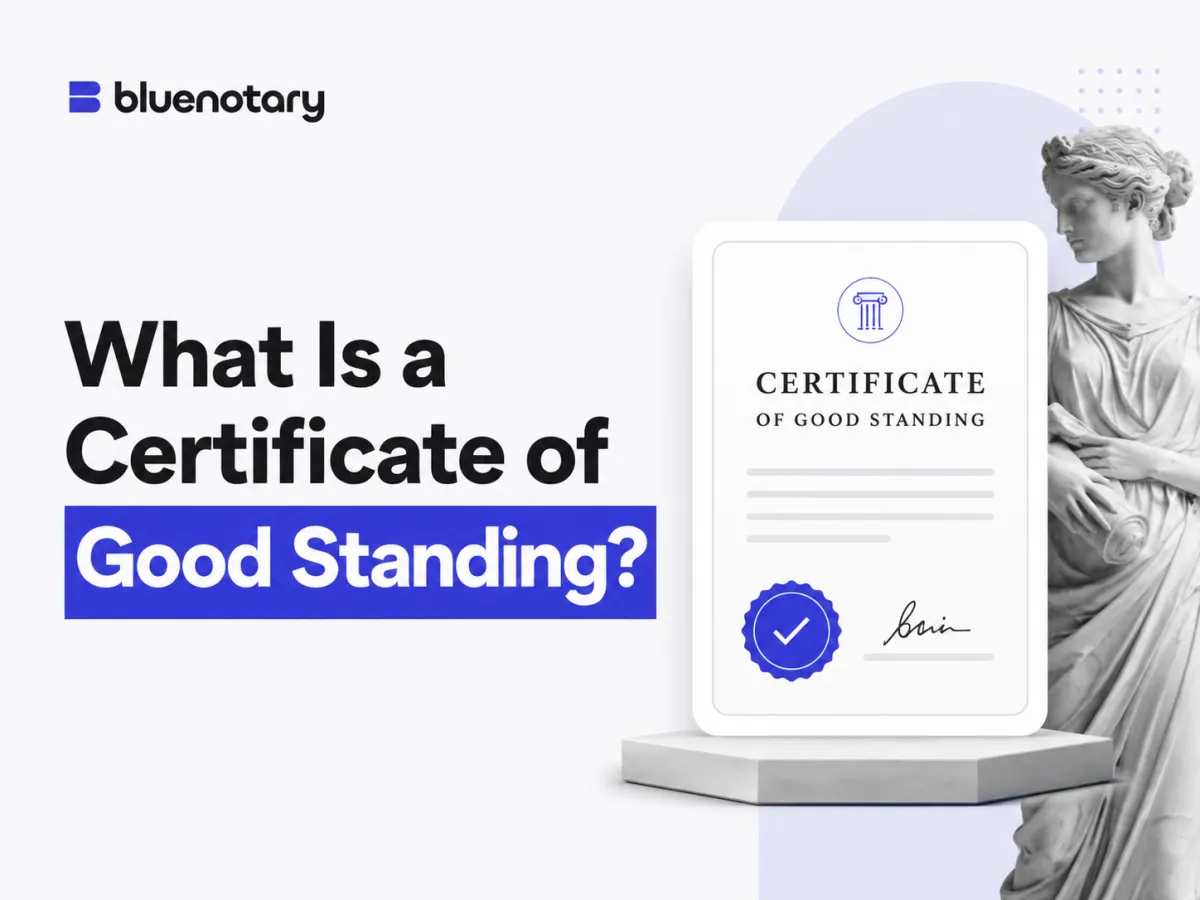

Quick answer: A certificate of good standing is an official state document (usually from the Secretary of State) confirming your business is legally registered, current on its filings and fees, and authorized to operate. You need one to open a business bank account, get financing, expand to another state, or for use abroad, have it apostilled.
What is a certificate of good standing?
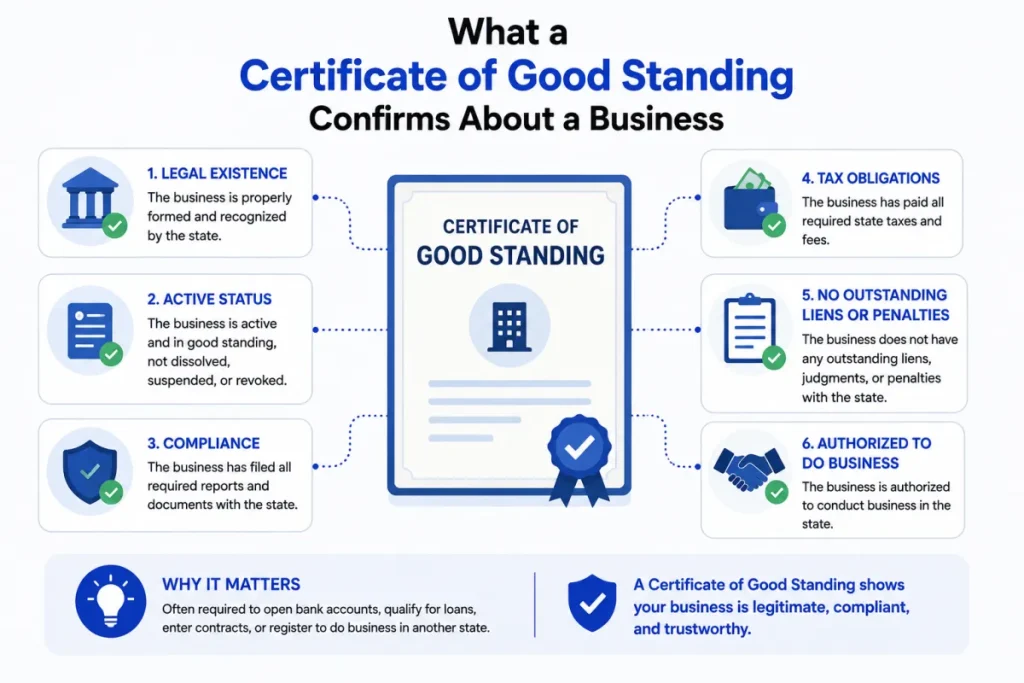
A certificate of good standing is an official document your state government issues to confirm that your business entity, an LLC or corporation, is legally registered and in compliance with state requirements. In plain terms, it’s the state’s stamp that your company exists, is up to date, and is authorized to do business.
It doesn’t describe what your business does; it certifies its status. To qualify, your entity generally must have filed its annual reports and paid its fees or franchise taxes. If you’ve fallen behind, you won’t be able to get one until you’re current, which is exactly why third parties ask for it.
When do you need a certificate of good standing?
You’ll usually be asked for one at moments when someone needs proof your company is legitimate and compliant:
- Opening a business bank account, many banks require it.
- Getting a loan or financing, lenders verify your entity’s status.
- Expanding to another state (foreign qualification), the new state requires it to register.
- Selling the business or an M&A deal, buyers and their counsel request it in due diligence.
- Signing major contracts or vendor agreements.
- Raising investment, investors confirm the entity is in good standing.
- Renewing licenses or permits.
If none of these apply, you may never need one but when they do, it’s often a gating requirement.
How to get a certificate of good standing
The process is straightforward:
- Make sure your entity is compliant: File any overdue annual reports and pay outstanding fees or franchise taxes — you can’t get the certificate otherwise.
- Request it from your Secretary of State: Most states offer online ordering; others accept mail or in-person requests.
- Pay the fee: Fees are typically modest and vary by state.
- Receive the certificate: Often instantly online, or by mail. Some states issue a digital/e-certificate with an online verification code.
Because you must be current to obtain one, getting a certificate of good standing is also a quick way to confirm your own compliance.
Certificate of good standing vs. certificate of existence/status
Don’t get thrown by the name, it varies by state:
- Certificate of Good Standing: The most common term.
- Certificate of Existence: Used by some states (often for the same thing).
- Certificate of Status: Used in states like Florida.
- Certificate of Authorization / Authority: Sometimes used for entities operating out of state.
They generally serve the same purpose, proving your entity is registered and compliant. If a bank or agency asks for one term and your state issues another, they’re usually interchangeable but confirm with the requester.
Does it need to be notarized or apostilled?
For domestic use, a certificate of good standing usually doesn’t need notarization, it’s already an official, state-certified document, which is authority enough for a U.S. bank or agency.
The exception is international use. If you’re using your certificate to open a foreign bank account, register a subsidiary abroad, or close an overseas deal, it typically needs an apostille (for Hague Convention countries) or consular legalization to be recognized. That process authenticates the state’s certificate for foreign use, walk through it in the apostille process guide. Related corporate documents in the same deal like board resolutions, may also need to be notarized first.
How long is a certificate of good standing valid?
A certificate reflects your status on the date it’s issued, so it doesn’t technically “expire”, but the party requesting it usually wants a recent one, commonly issued within the last 30 to 90 days. An old certificate may be rejected because your compliance could have changed since.
So don’t pull one months in advance; request it close to when you need it, and order a fresh copy if a deal drags on.
Conclusion
A certificate of good standing is the state’s confirmation that your LLC or corporation is registered, compliant, and authorized to operate, the document banks, lenders, new states, buyers, and investors ask for before they’ll do business with you. Getting one is simple, stay current on your filings and fees, then request it from your Secretary of State (and remember it may be called a certificate of existence or status). It rarely needs notarization for domestic use, but for international deals it usually needs an apostille and any related corporate documents may need notarizing first. Order it fresh, close to when you need it.
Taking your certificate of good standing overseas? Get it apostilled and notarize any related corporate documents online with BlueNotary, 24/7. Learn the authentication steps in the apostille process guide.
Frequently asked questions
What is a certificate of good standing?
An official document from your state (usually the Secretary of State) confirming your business is legally registered, current on its filings and fees, and authorized to operate.
When do you need a certificate of good standing?
Commonly to open a business bank account, get a loan, expand to another state, sign major contracts, sell the business, or raise investment anytime someone needs proof your entity is compliant.
How do you get a certificate of good standing?
Make sure your entity is current on annual reports and fees, then request the certificate from your Secretary of State, usually online for a small fee, sometimes issued instantly.
How long is a certificate of good standing valid?
It reflects your status on the issue date and doesn’t strictly expire, but requesters usually want one issued within the last 30 to 90 days, so order it close to when you need it.
Does a certificate of good standing need to be notarized or apostilled?
For domestic use, usually neither, it’s already state-certified. For international use, it typically needs an apostille or consular legalization to be recognized abroad.
Is a certificate of good standing the same as a certificate of existence or status?
Generally yes. States use different names, certificate of existence, certificate of status, for essentially the same document proving your entity is registered and compliant.