


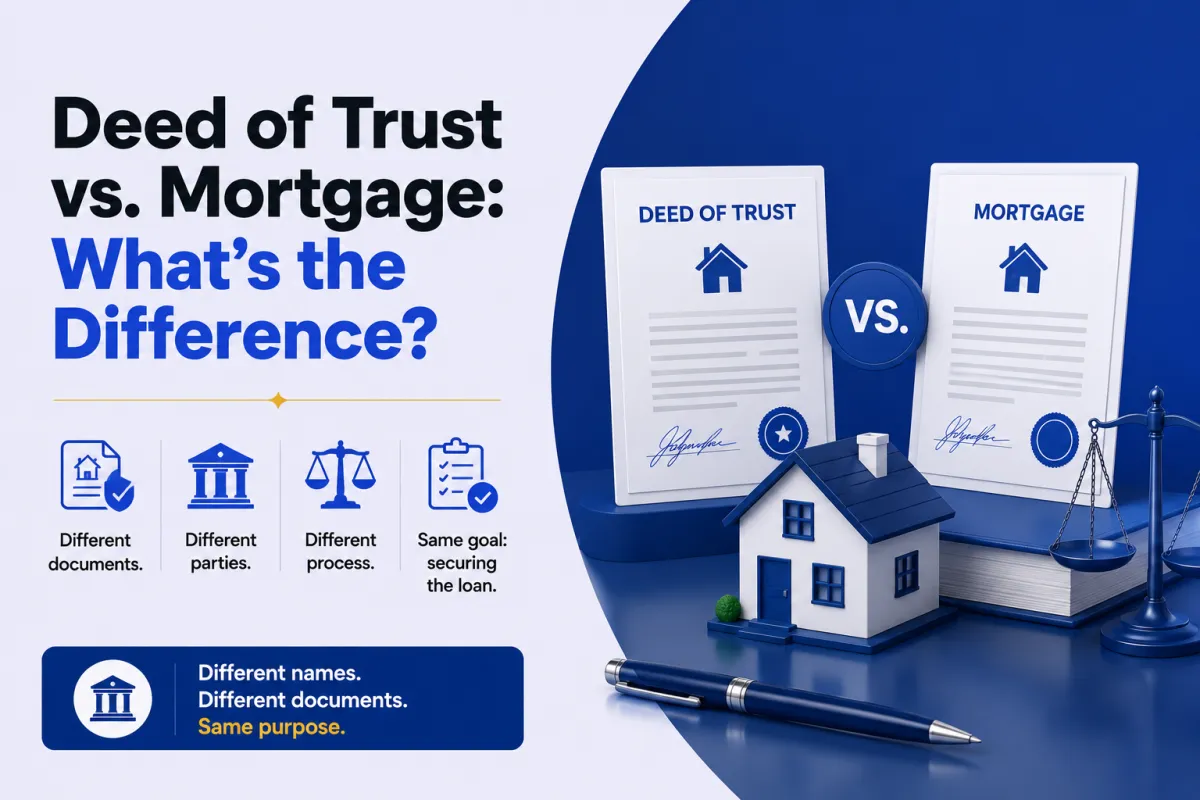

Quick answer: A mortgage and a deed of trust both secure a home loan. A mortgage has two parties (you and the lender) and usually a court (judicial) foreclosure. A deed of trust adds a neutral trustee who holds title and allows a faster non-judicial foreclosure. Which one you get depends on your state.
Deed of trust vs. mortgage at a glance
Both do the same core job, securing the loan, but they’re structured differently:
| Mortgage | Deed of Trust | |
|---|---|---|
| Parties | 2 (borrower, lender) | 3 (borrower, lender, trustee) |
| Who holds title | You (the borrower) | A neutral trustee, until payoff |
| Foreclosure type | Usually judicial (court) | Usually non-judicial (power of sale) |
| Speed of foreclosure | Slower | Faster |
| Released at payoff by | Satisfaction of mortgage | Deed of reconveyance |
| Where used | “Mortgage” states | “Deed of trust” / title-theory states |
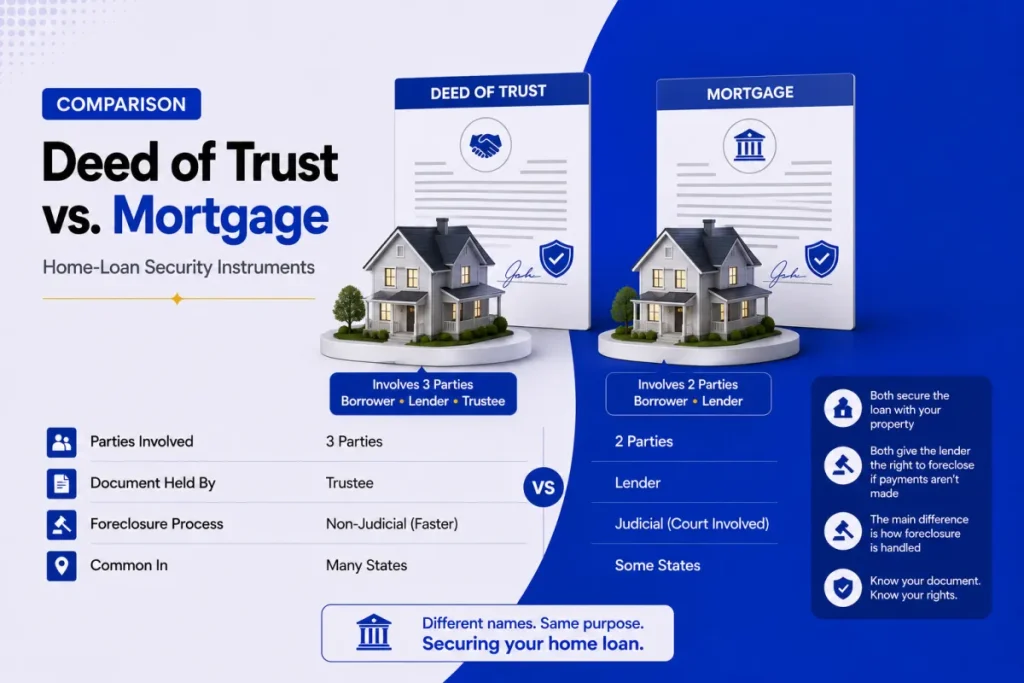
The single biggest practical difference is the foreclosure process, judicial vs. non-judicial, which flows from that third party, the trustee. Details below.
What is a mortgage?
A mortgage is a security instrument with two parties: you (the mortgagor) and your lender (the mortgagee). You keep title to the home, and the mortgage gives the lender a lien, the right to force a sale if you default.
In mortgage states, if a borrower stops paying, the lender generally must go through a judicial foreclosure, a court process, to take and sell the property. That adds time and oversight, which can benefit borrowers but slows the lender. A mortgage is one of the documents that must be notarized and recorded.
What is a deed of trust?
A deed of trust does the same job but with three parties: you (the trustor), the lender (the beneficiary), and a neutral third party, the trustee (often a title company). The trustee holds legal title to the property “in trust” until you’ve paid the loan in full.
The key consequence is foreclosure: because a trustee holds title with a power of sale, the lender can usually pursue a non-judicial foreclosure, selling the property without going to court, following the state’s notice procedure. That’s typically faster than a judicial foreclosure. Like a mortgage, a deed of trust must be signed, notarized, and recorded.
The key difference: how foreclosure works
If you remember one thing, make it this, the foreclosure process is the real difference.
- Mortgage → judicial foreclosure: The lender sues, a court oversees it, and it takes longer.
- Deed of trust → non-judicial foreclosure: The trustee can sell the property through a power of sale, without a court, which is faster.
Everything else, the extra party, who holds title, exists to enable that difference. For borrowers, a deed of trust can mean a quicker foreclosure timeline if things go wrong, while a mortgage’s court process adds steps.
Which one does your state use?
You usually don’t choose, your state and lender do. Roughly:
- Some states are “mortgage states” and use mortgages with judicial foreclosure.
- Others are “deed of trust” (or title-theory) states and use deeds of trust with non-judicial foreclosure.
- Some allow either, and the lender’s documents decide.
So whether you sign a mortgage or a deed of trust is set by where the property is. Confirm your state’s approach with your lender, and check the notarization requirements by state for how it’s executed.
Both get notarized, recorded and released
Whichever instrument you sign, two things are the same, it must be notarized and recorded with the county to be valid and to give public notice of the lien. Increasingly, that signing happens through remote online notarization where the state and lender allow it.
And when you pay the loan off, each is released:
- A mortgage is cleared with a satisfaction of mortgage.
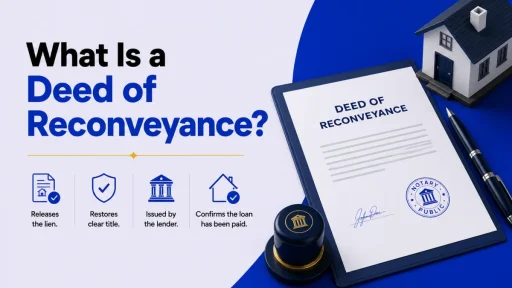
- A deed of trust is cleared with a deed of reconveyance, which returns title from the trustee to you.
Either way, that release is recorded so your title shows the loan is gone.
Conclusion
A deed of trust and a mortgage both do one job, securing your home loan so the lender can act if you don’t pay. The difference is the machinery: a mortgage is a two-party instrument where you hold title and foreclosure runs through a court; a deed of trust adds a neutral trustee who holds title, enabling a faster, non-judicial foreclosure. You don’t pick between them, your state and lender do. What’s identical is that both must be notarized and recorded, and both get released when you pay off the loan.
Signing a deed of trust or mortgage soon? Both need a notary, notarize your closing documents online with a commissioned notary on BlueNotary, 24/7. Want to understand the debt behind the security instrument? Read about the mortgage promissory note.
Frequently asked questions
What’s the difference between a deed of trust and a mortgage?
Both secure a home loan, but a mortgage has two parties and usually a judicial (court) foreclosure, while a deed of trust adds a neutral trustee who holds title and allows a faster non-judicial foreclosure.
Is a deed of trust the same as a mortgage?
Not exactly. They serve the same purpose, securing a loan but differ in structure and foreclosure. A deed of trust involves a trustee and non-judicial foreclosure; a mortgage does not.
Which states use a deed of trust vs. a mortgage?
It varies. Some states use mortgages with judicial foreclosure, others use deeds of trust with non-judicial foreclosure, and some allow either. Your state and lender determine which you sign.
Who holds the title in a deed of trust?
A neutral third party called the trustee holds legal title in trust until you pay off the loan. With a mortgage, you (the borrower) hold title while the lender holds a lien.
Does a deed of trust get notarized?
Yes. Like a mortgage, a deed of trust must be signed, notarized, and recorded with the county to be valid and to put the lien on public record.
How is a deed of trust released when you pay off the loan?
With a deed of reconveyance, which returns legal title from the trustee to you and is recorded. A mortgage is released instead with a satisfaction of mortgage.