


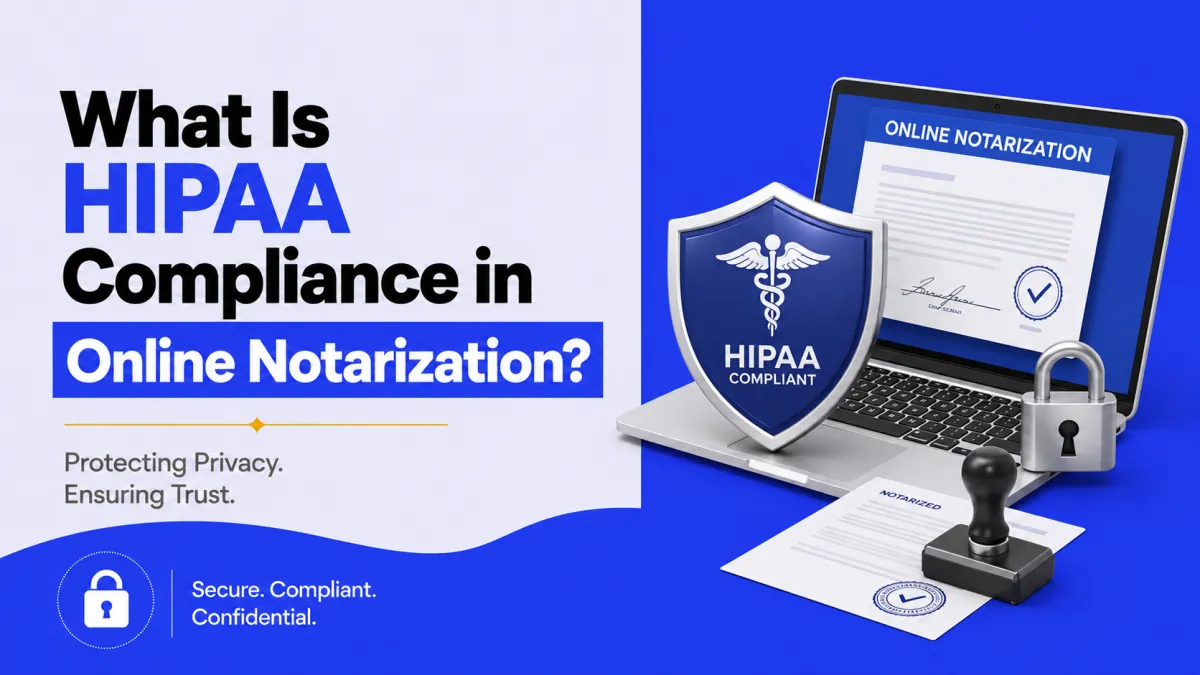

Quick answer: HIPAA protects your health information, and it matters when you notarize medical documents like a healthcare power of attorney. Notaries themselves usually aren’t HIPAA “covered entities,” but a HIPAA-compliant online notarization platform safeguards your data with encryption, access controls, and when working with healthcare providers, a Business Associate Agreement (BAA).
What is HIPAA (and what does it protect)?
HIPAA, the Health Insurance Portability and Accountability Act — sets national rules for protecting sensitive patient health data. Its Privacy and Security Rules govern how Protected Health Information (PHI), anything that identifies you and relates to your health, care, or payment can be used, shared, and safeguarded. You can read the official rules at HHS.gov’s HIPAA pages.
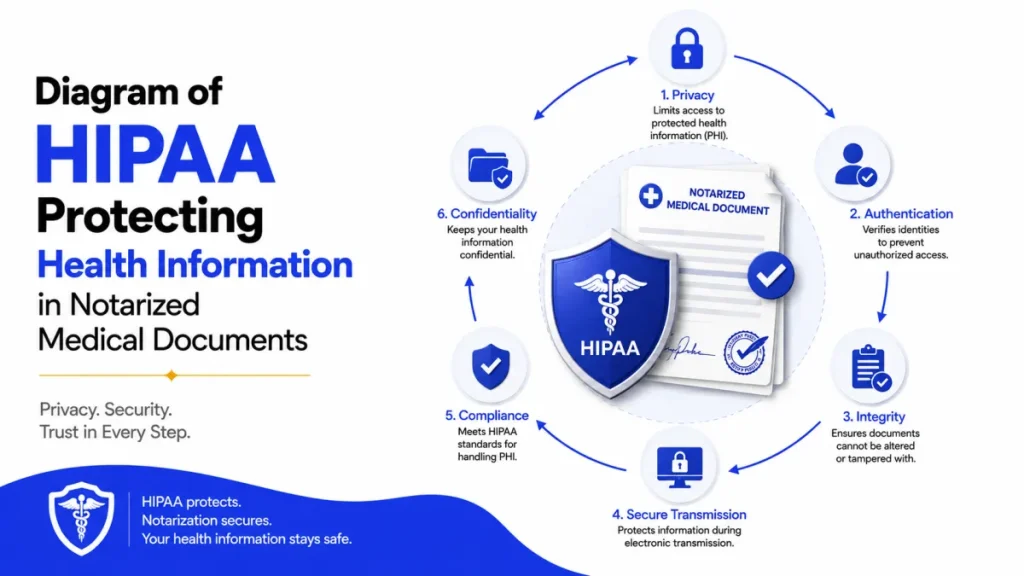
Why does this matter for notarization? Because some documents you notarize contain health information, a healthcare power of attorney, an advance directive, or a HIPAA authorization form. When those move through an online notarization platform, PHI is in play, and how it’s handled is a legitimate concern. The notary’s role is narrow — verify identity and witness the signature but the platform is where data protection lives.
When notarization involves health documents
HIPAA becomes relevant whenever the document itself is health-related. Common ones:
- Healthcare (medical) power of attorney: Names someone to make medical decisions for you; often notarized.
- Advance directive / living will: Your care wishes; frequently paired with a notarized self-proving affidavit.
- HIPAA authorization / release form: Authorizes a provider to share your records with a named person; sometimes notarized depending on the recipient.
- Guardianship of a person / caregiver authorizations: May include health details.
In each, the notary confirms who signed not the medical content. Still, the document carries PHI, so the platform storing and transmitting it should protect that data. Whether a specific form needs a notary depends on your state and the recipient; check the notarization requirements by state.
Are notaries covered by HIPAA?
Usually no, and this surprises people. HIPAA applies to covered entities (healthcare providers, health plans, and clearinghouses) and their business associates. A notary public, on their own, is none of those, so a notary isn’t automatically bound by HIPAA just because a document mentions your health.
There are two important exceptions:
- Business associate: If a notary or online notarization platform provides services to a covered entity (say, a hospital) and handles PHI on its behalf, it becomes a business associate, bound by HIPAA through a Business Associate Agreement (BAA). HHS explains the covered entity / business associate roles.
- State privacy laws: Even when HIPAA doesn’t apply, notaries and platforms must follow state data-protection and notary record-keeping rules.
So the practical takeaway: a good platform protects your health data regardless of whether HIPAA technically binds it.
What “HIPAA-compliant online notarization” means
When a platform calls itself HIPAA-compliant (or HIPAA-aligned), it should mean concrete safeguards, not marketing. Look for:
- Encryption of data in transit and at rest.
- Access controls so only authorized people can view your documents.
- Audit logs and a tamper-evident record of the session.
- Data minimization and retention limits, keeping sensitive PHI no longer than necessary.
- A BAA available for healthcare clients who need one.
- Breach-response protocols.
These overlap with the general security every trustworthy platform should have the same fraud-and-data protections covered in detecting notarization fraud. For a medical document, they matter even more.
How to keep your health data safe
Whether you’re an individual or a healthcare organization, protect your PHI with a few checks:
- Choose a platform with real security: Encryption, access controls, and a clear privacy policy, not just a “HIPAA” badge.
- Share only what’s needed: A notary needs your ID and signature, not your full medical history.
- Confirm retention: Ask how long the platform keeps your document and recording, and how it’s secured.
The notarization itself is quick, the data handling is what deserves your attention.
Conclusion
HIPAA matters in notarization because documents like a healthcare power of attorney or HIPAA authorization carry protected health information but the responsibility isn’t quite where people expect. Notaries generally aren’t HIPAA “covered entities,” and a notary only verifies your identity and signature, not your medical details. The real safeguard is the platform: a HIPAA-compliant online notarization service protects your data with encryption, access controls, data minimization, and a BAA when it serves healthcare providers. For your peace of mind, pick a platform with genuine security, share only what’s required, and if you’re a covered entity insist on a signed BAA.
Need to notarize a healthcare power of attorney or other medical document? Do it with a secure, HIPAA-aligned platform: BlueNotary offers online notarization with encryption and a tamper-evident audit trail, 24/7. (If you’re a healthcare covered entity, confirm a Business Associate Agreement before sending PHI.) Not sure your document needs a notary? Start with what documents require notarization.
Frequently asked questions
Is online notarization HIPAA compliant?
It depends on the platform. A HIPAA-compliant online notarization service protects health data with encryption, access controls, data minimization, and a Business Associate Agreement when it serves healthcare providers. Check the platform’s security, not just a badge.
Are notaries covered by HIPAA?
Usually not. HIPAA applies to covered entities and their business associates. A notary on their own isn’t a covered entity, but a notary or platform becomes bound by HIPAA if it handles PHI for a healthcare provider under a Business Associate Agreement.
Do you need to notarize a HIPAA authorization form?
Sometimes. A HIPAA authorization (release) form authorizes sharing your records and usually needs your signature; whether it must be notarized depends on the recipient and your state. Confirm with the provider requesting it.
What health documents need notarization?
Commonly a healthcare power of attorney, an advance directive’s self-proving affidavit, and certain guardianship or caregiver authorizations. HIPAA authorization forms are sometimes notarized depending on the recipient.
Is my medical information safe with online notarization?
With a secure platform, yes. The notary sees your ID and signature, not your medical history, and a HIPAA-aligned platform encrypts and access-controls your document. Always review the platform’s privacy and retention practices.
What is a Business Associate Agreement (BAA)?
A BAA is a HIPAA contract between a covered entity and a service provider (business associate) that handles PHI on its behalf. It requires the provider to safeguard the data, and it’s how a notarization platform becomes HIPAA-bound.