


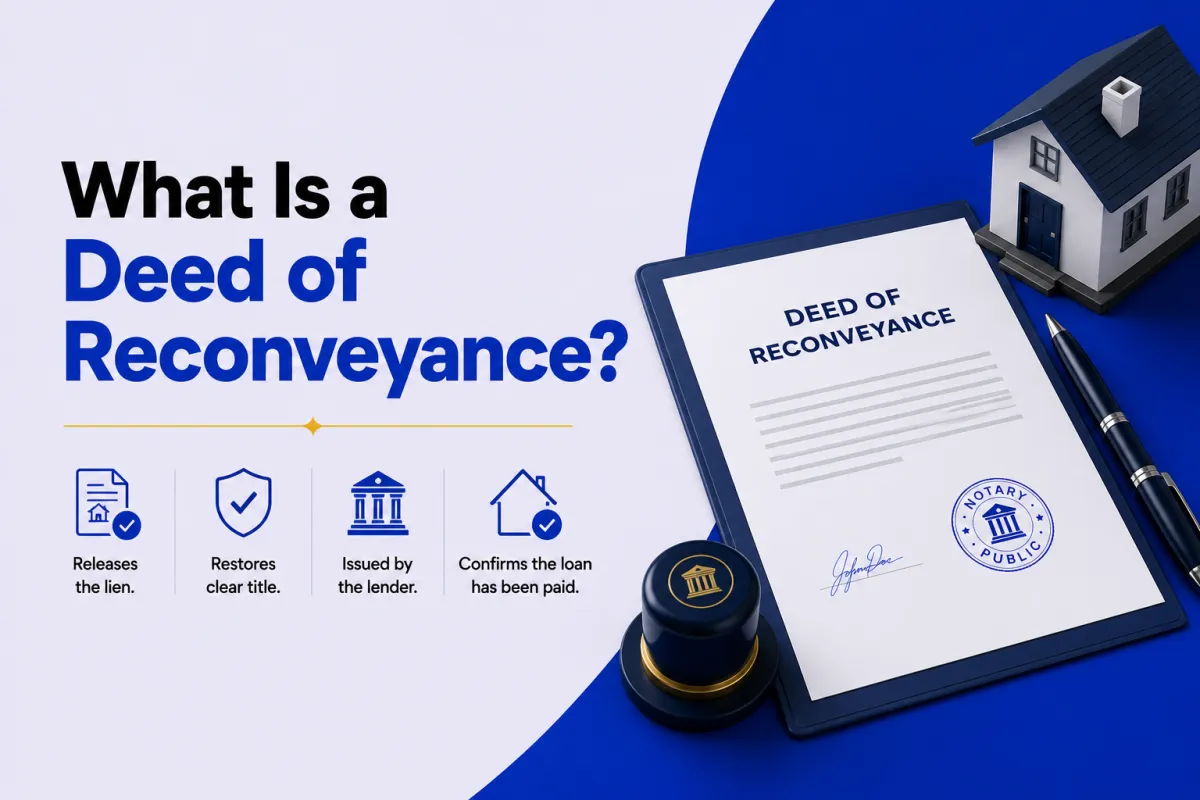

Quick answer: A deed of reconveyance is the document that releases your home’s title back to you once you fully pay off a deed of trust. The trustee signs it, it’s notarized and recorded, and it clears the lien from your title. In “mortgage” states, the equivalent document is a satisfaction of mortgage.
What is a deed of reconveyance?
A deed of reconveyance is a legal document that returns full title of your property to you once your loan is completely paid off. It’s the last step of a deed of trust, the security instrument used in many states, where a neutral trustee holds legal title while you’re paying the loan.
When you make your final payment, that title needs to formally come back to you, and the deed of reconveyance is how it happens. It releases the lender’s lien, confirming the loan is satisfied. It’s closely tied to the difference between a deed of trust and a mortgage, reconveyance is specifically the deed-of-trust release.
When you get one: deed of trust vs. mortgage states
Whether you receive a deed of reconveyance depends on which security instrument secured your loan:
- Deed-of-trust states: A trustee held title, so payoff triggers a deed of reconveyance to release it.
- Mortgage states: You held title with a lien, so payoff triggers a satisfaction of mortgage (also called a release of mortgage) instead.
They do the same thing, prove the loan is paid and clear the lien but the document name and mechanics differ because the underlying instrument differs. Your state’s approach determines which one you’ll see.
Who prepares and signs a deed of reconveyance?
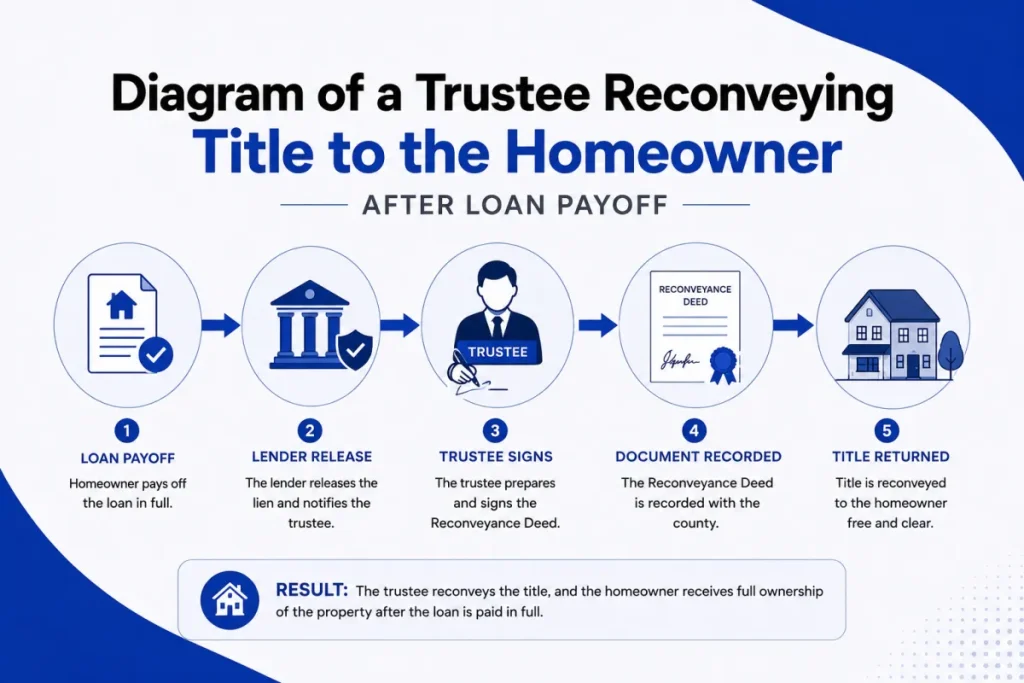
You don’t prepare it yourself. The process is:
- You pay off the loan in full.
- The lender (beneficiary) notifies the trustee that the debt is satisfied and requests reconveyance.
- The trustee signs the deed of reconveyance, and it is notarized.
- It’s recorded with the county recorder, becoming part of the public land records.
So the trustee’s signature is the one notarized here, not yours. Like other real estate instruments, it must be notarized and recorded to be effective; see what documents require notarization and your state’s rules.
Why it matters: clearing your title
Recording the deed of reconveyance is what makes your ownership clean. Until it’s filed, the public record still shows a lien against your property, even though you’ve paid. That stale lien can cause real problems:
- It can cloud your title when you try to sell the home.
- It can hold up a refinance, since a new lender wants clear title.
- It can create confusion years later about whether the loan was truly paid.
A recorded reconveyance removes all of that, showing the world your home is free and clear.
Full vs. partial reconveyance
There are two versions:
- Full reconveyance: Issued when the entire loan is paid off, releasing the whole property from the deed of trust. This is the common one.
- Partial reconveyance: Releases only part of the property from the lien, for example, when a developer pays off enough to free a subdivided parcel while the rest stays encumbered.
Most homeowners deal only with a full reconveyance at payoff. A partial reconveyance is a specialized tool for larger or divided properties.
What to check after you pay off your loan
Paying off the loan isn’t quite the finish line, confirming the release is. After your final payment:
- Watch for the deed of reconveyance: Your lender/trustee should prepare and record it within a state-specified window (often weeks to a few months).
- Verify it was recorded: Check with your county recorder that the reconveyance is on file against your property.
- Follow up if it’s missing: If it isn’t recorded in the expected time, contact your lender or servicer, they’re responsible for initiating it.
An unrecorded reconveyance is a common, fixable headache but only if you check.
Conclusion
A deed of reconveyance is the final release in a deed-of-trust loan: once you’ve paid in full, the trustee signs a notarized reconveyance that’s recorded to return title to you and clear the lien. It exists only in deed-of-trust states, “mortgage” states use a satisfaction of mortgage to do the same job. It matters because an unrecorded release leaves a stale lien that can block a future sale or refinance, so after your last payment, confirm the reconveyance was actually recorded with your county.
Have related payoff or property documents that need notarizing? Notarize them online with a commissioned notary on BlueNotary, 24/7. Want the bigger picture on the instrument being released? Read about the mortgage promissory note.
Frequently asked questions
What is a deed of reconveyance?
A deed of reconveyance is a document that returns full title of your property to you once you pay off a deed of trust. The trustee signs it, and it’s notarized and recorded to release the lender’s lien.
Who prepares a deed of reconveyance?
The lender directs the trustee to prepare and sign it after you pay off the loan. The trustee’s signature is notarized, and the document is then recorded with the county, you don’t prepare it yourself.
What’s the difference between a deed of reconveyance and a satisfaction of mortgage?
Both release a paid-off loan’s lien. A deed of reconveyance is used in deed-of-trust states where a trustee held title; a satisfaction of mortgage is used in mortgage states where you held title.
Does a deed of reconveyance get recorded?
Yes. It must be recorded with the county recorder to clear the lien from the public record. Until it’s recorded, the old lien still shows against your property even though the loan is paid.
What happens if a deed of reconveyance isn’t filed?
Your title stays clouded by a lien that’s already been paid, which can block a future sale or refinance. If it isn’t recorded in the expected window, contact your lender or servicer to fix it.
What is a full vs. partial reconveyance?
A full reconveyance releases the entire property once the whole loan is paid. A partial reconveyance releases only part of the property from the lien, common with subdivided or developed land.