



Quick answer: To notarize an affidavit, complete it (but don’t sign yet), appear before a notary with valid ID, swear or affirm the contents are true, and sign in the notary’s presence, then the notary adds a jurat and seal. Because affidavits use a jurat, you must sign live, never beforehand, and you can do it in person or online.
What is an affidavit (and why it uses a jurat)?
An affidavit is a written statement of facts that the signer, the affiant and swears is true before a notary. It’s used for things like proving identity, residence, financial support, or a small-estate claim. Because you’re swearing to the truth of the contents, an affidavit is notarized with a jurat, not an acknowledgment.
That distinction sets the whole process. A jurat requires two things a plain acknowledgment doesn’t, you must sign in the notary’s presence, and you must take a spoken oath or affirmation. So the single most important rule is simple. don’t sign the affidavit until you’re in front of the notary. More on the jurat itself in what is a jurat.
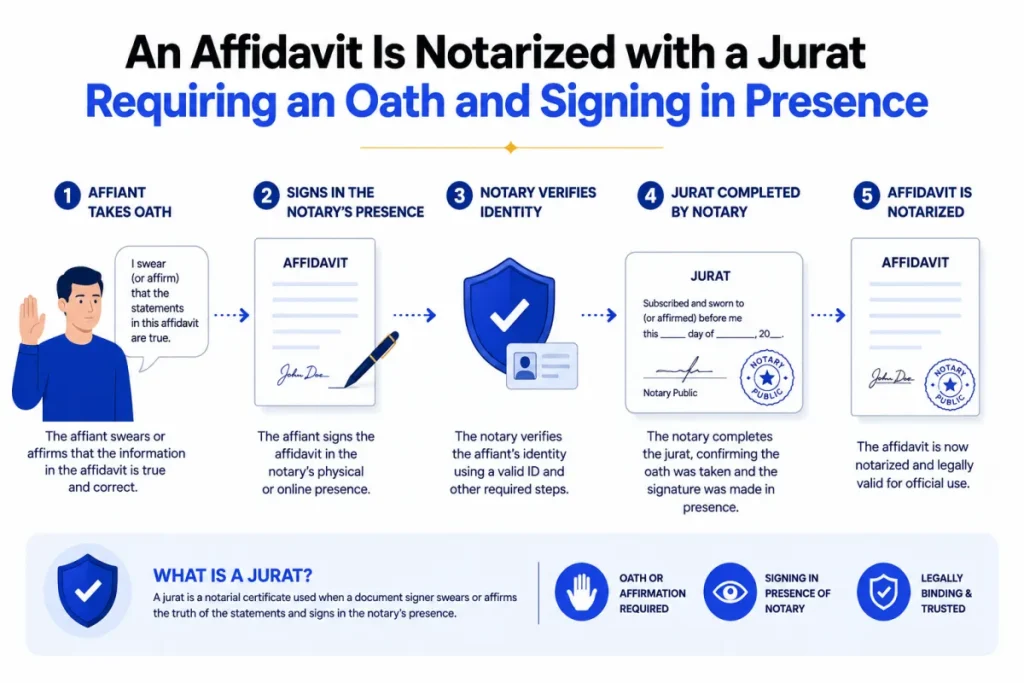
What you need to notarize an affidavit
Have these ready before you start:
- A completed affidavit, filled in but unsigned (you sign live).
- A valid, unexpired government photo ID (driver’s license, state ID, or passport), see what you need to notarize.
- Yourself, the affiant must personally appear (in person or on live video).
- A device with a camera if you’re doing it online.
That’s it, the notary supplies the jurat wording and the seal.
How to notarize an affidavit: step by step
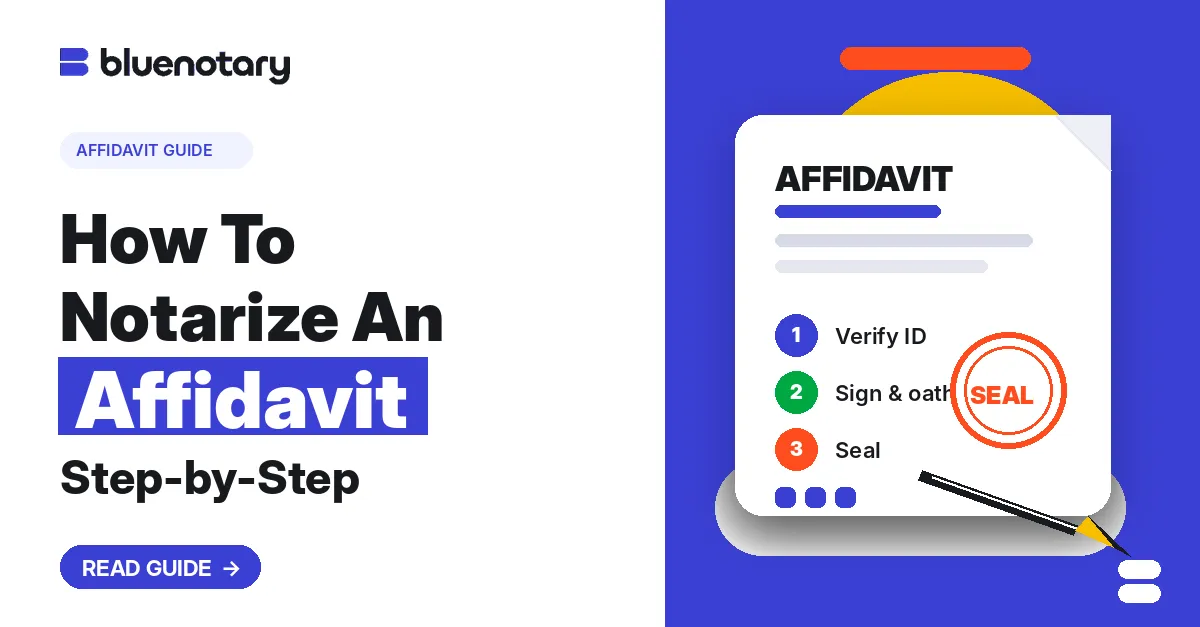
- Write or complete the affidavit, but leave the signature blank: Include all the facts you’re attesting to and make sure there are no blank spaces. The notary can’t notarize an incomplete document.
- Bring valid photo ID and appear before the notary: Meet the notary in person or over live video. The affiant must be present, you can’t send the document alone.
- Verify your identity: The notary examines your government photo ID (online, you’ll also complete credential analysis and KBA).
- Take the oath or affirmation: The notary asks you to swear or affirm the contents are true, you answer out loud. This spoken oath is what makes it a jurat.
- Sign the affidavit in the notary’s presence: Only now do you sign, the notary must watch you sign for the jurat to be valid.
- The notary completes the jurat and seal: The notary fills in the jurat certificate (“Subscribed and sworn to before me…”), signs, and applies the seal. You now have a notarized affidavit.
How to notarize an affidavit online
You don’t need to find a notary in person. To notarize an affidavit online:
- Upload the completed, unsigned affidavit to an online notary platform.
- Verify your identity with a photo ID (credential analysis + KBA).
- Join a live video call, take the oath, and sign on screen while the notary watches.
- Download the sealed affidavit with its jurat and electronic seal.
It’s the same jurat process, oath plus signing in the notary’s (virtual) presence, done over secure video. Here’s how remote online notarization works.
Affidavit (jurat) vs. acknowledgment, don’t confuse them
Affidavits trip people up because they use a different notarial act than most documents:
- Jurat (affidavits): You swear the contents are true and must sign in front of the notary.
- Acknowledgment (deeds, POAs): You confirm you signed willingly and you can often sign before meeting the notary.
If a form is an affidavit or sworn statement, it’s a jurat, so plan to sign live and take the oath. Using the wrong act, or pre-signing, is the top reason an affidavit gets rejected.
Common mistakes to avoid
- Signing before the session: A jurat requires signing in the notary’s presence; a pre-signed affidavit is void.
- Leaving blanks: Complete the document first.
- Skipping the oath: The affiant must actually swear or affirm; it’s not optional for a jurat.
- Expired or mismatched ID: Bring a current ID whose name matches the affidavit.
- Assuming it’s an acknowledgment: Affidavits use a jurat, which is stricter.
Conclusion
Notarizing an affidavit is straightforward once you know it uses a jurat: you fill out the affidavit but don’t sign it, appear before the notary with a valid ID, swear or affirm the facts are true, and sign in the notary’s presence, then the notary completes the jurat and seal. The one rule that matters most is to sign live, never beforehand. Whether you handle it in person or online, that sequence is the same.
Need it done now? Notarize your affidavit online with a commissioned notary on BlueNotary in about 15 minutes, 24/7. Upload it, verify your ID, take the oath, and sign on video. Not sure your document is an affidavit or needs a notary? Start with what documents require notarization.
Frequently asked questions
How do you notarize an affidavit?
Complete the affidavit without signing, appear before a notary with valid ID, swear or affirm the contents are true, and sign in the notary’s presence. The notary then completes a jurat and applies the seal.
Does an affidavit need to be notarized?
Usually yes. An affidavit is a sworn statement, and notarization with a jurat is what makes the oath official. Some courts or recipients specify it, so confirm what the requesting party needs.
Do you have to sign an affidavit in front of a notary?
Yes. Affidavits use a jurat, which requires you to sign in the notary’s presence. A pre-signed affidavit is not valid, you must sign live, in person or on video.
What’s the difference between an affidavit and a jurat?
An affidavit is the sworn document, a jurat is the notarial act used on it. The jurat certifies you swore the contents are true and signed in front of the notary.
Can you notarize an affidavit online?
Yes. You can notarize an affidavit through remote online notarization, upload it, verify your ID, take the oath on a live video call, and sign on screen while the notary watches.
What do you need to notarize an affidavit?
A completed but unsigned affidavit, a valid government photo ID, and yourself (in person or on video). The notary provides the jurat wording and the seal.